
Translation result.
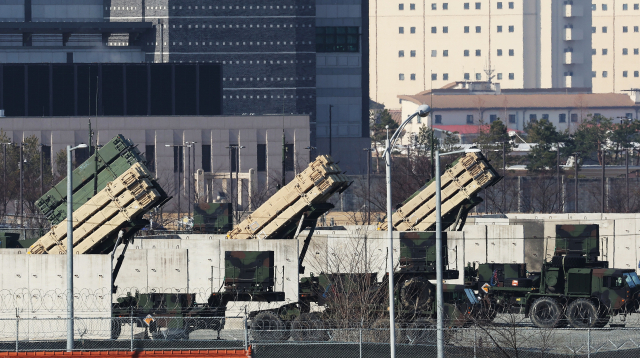
Analysts say Iran’s recent retaliatory strikes on U.S. bases in the Middle East signal that, in a future Taiwan Strait conflict, China could similarly target U.S. bases across Asia — including those in South Korea.
On the 12th (local time), the Hong Kong-based South China Morning Post cited analysts who argued Iran’s attacks on U.S. facilities across the Middle East provide a preview of how China might operate against U.S. bases in Asian countries if a cross-strait crisis erupts.
Since the 28th of last month, Iran has launched missiles and drones at U.S. installations in Gulf states such as Saudi Arabia, Qatar and Kuwait in response to large-scale U.S. and Israeli airstrikes. The strikes hit Al Udeid Air Base in Qatar — the largest U.S. base in the Middle East and a key hub for U.S. Central Command.
On the 11th, the New York Times, citing an anonymous U.S. government official, reported that the attacks damaged at least 11 U.S. bases or facilities in the region — roughly half of the U.S. hubs there.
Experts say the strikes could illustrate the kinds of strategies China might use if a conflict breaks out in the Taiwan Strait. They warn Beijing could target military facilities in U.S. allied countries where American forces are stationed, including Japan, the Philippines and South Korea.
Lyle Goldstein, a senior fellow at Brown University’s Watson Institute for International and Public Affairs, said Iran’s attacks on nearby U.S. bases in the Persian Gulf make clear that, in a Taiwan crisis, China could aim at U.S. bases across the Indo-Pacific. It has long been evident, he added, that U.S. forces in Japan, the Philippines and South Korea could be vulnerable to a large-scale Chinese strike.
A 2024 report from the U.S. Congressional Research Service found 24 permanent U.S. bases and 20 additional facilities available to the Department of Defense in the Indo-Pacific. Key facilities include Kadena Air Base on Okinawa and Camp Humphreys in Pyeongtaek, Gyeonggi Province, South Korea. In 2023, the Philippines expanded U.S. access to nine facilities, some on Luzon Island, which lies close to Taiwan.
Lyle Morris, a senior researcher at the China Analysis Center of the Asia Society Policy Institute, predicted China could inflict far greater damage than Iran. He said Beijing could strike U.S. bases in Asia with much greater precision and effect than Iran has managed in the Middle East. The crucial point, he warned, is that if the United States uncovers vulnerabilities to Iranian missile strikes in the Gulf, it will face far more serious challenges against China’s missile threat in Asia.
Goldstein also warned that China’s military capability is significantly stronger. If it chose to, he said, China has the means to inflict serious damage on regional U.S. bases within the first few hours of a conflict.
Experts cautioned, however, that Beijing’s actual course of action would depend on the level of U.S. and allied involvement. Goldstein said he believes that if the United States decides not to intervene in a cross-strait conflict, China would likely exercise restraint and refrain from attacking nearby U.S. bases.
He noted that, unlike the Gulf states, Japan and South Korea are powerful allies with substantial military and political influence. On one hand, they contribute stronger firepower and defensive capacity to a conflict; on the other, that makes them primary targets for the People’s Liberation Army, he said. By contrast, the Philippines — like the Gulf states — grants U.S. access to bases but has relatively limited military, economic and diplomatic clout.




Most Commented