
Is Daegu’s ‘Milano Project’ Failing? A Deep Dive into the Textile Industry’s Struggles
Daniel Kim Views
Translation result
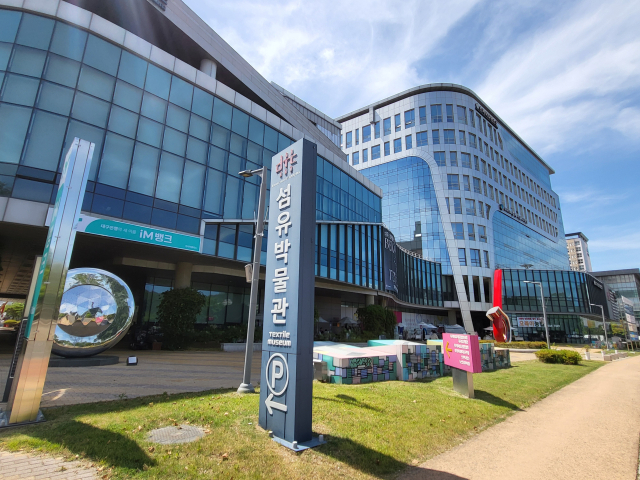
The once-ambitious “Milan Project,” launched to turn Daegu into a global fashion city, now reads more like a hollow promise more than two decades later, critics say. Its flagship building, the Daegu Textile Complex (DTC), houses fewer than one in five textile tenants, and the Korea Fashion Industry Institute — the organization charged with the industry’s “soft” infrastructure — has been dissolved.
According to Daegu city data from January, just 21 of the DTC’s 121 leased spaces are occupied by textile-related firms, a 17.4% share. Sixty-one units (50.4%) are used by other industries, while public bodies such as the Daegu-Gyeongbuk Free Economic Zone Authority occupy 32 spaces (26.4%). Seven units, or 5.8%, remain vacant.
The textile presence has actually declined in recent years. The number of textile companies dropped from 25 in 2023 to 20 in both 2024 and last year, and this year the total sits at 21. That pushed the textile share down from 20.7% to 17.4%. Overall occupancy is high at 93.4%, but commercial facility leasing lags at 75.9%.
Operations are heavily dependent on city support. From 2023 through 2025, Daegu provided operating funds of 1,140,000,000 KRW per year (about $855,000). That budget covered service contracts, utilities and other building maintenance costs. During the same period, rental income ran about 1,000,000,000 KRW a year (about $750,000).
Opened in 2015 in Dong-gu’s Isiapolis, DTC was built to back Daegu’s textile and fashion industries. Designed as the Milan Project’s global fashion-marketing hub, the site spans 13,732㎡ (about 147,810 sq ft) with a total floor area of 49,667㎡ (about 534,609 sq ft).
But Isiapolis has fallen short of becoming the global fashion cluster its planners envisioned. The Korea Fashion Industry Institute, responsible for supporting the sector’s software and development, was dissolved in 2024 amid financial strain and shrinking backing — keeping questions about the Milan Project’s achievements alive.
Back in 2005, the Board of Audit and Inspection reviewed Daegu’s textile promotion efforts, including the Milan Project, and cautioned that officials pressed ahead despite a fragile industry base. The board said the initiative emphasized hardware — building industrial complexes — while offering insufficient R&D support, such as new-material development, making it unlikely the project would meet its goals.
※Milan Project = A national initiative to raise the value of the Daegu-Gyeongbuk textile industry and nurture it into a “world-class textile and fashion city.” The program was carried out in two phases: Phase 1 (1999–2003) focused on infrastructure and hardware, and Phase 2 (2004–2008) emphasized products, marketing and software.



Most Commented