
Translation result
Five years after the Stalking Punishment Act took effect, relationship-based crimes continue unabated. Institutional safeguards are in place, but analysts say police complacency and the judiciary’s passive application of the law have allowed these crimes to persist. Experts call for active monitoring and decisive measures for perpetrators who pose a high risk of reoffending.
Three-quarters of requests for electronic anklets and detention denied — custodial investigations remain difficult
According to the Gyeonggi Northern Provincial Police Agency, police arrested 1,206 suspects last year in the region for relationship-based crimes such as stalking. Police filed requests for provisional measure 3-2 (electronic location-tracking device) in 22 cases (1.8%) and for measure 4 (detention) in 133 cases (11%). Officers pursue measures 3-2 and 4 when suspects violate orders banning them from approaching a victim’s residence or using communications to contact a victim, or when a case is especially severe.
But courts denied roughly three-quarters of the police’s applications. Last year, judges approved measures 3-2 and 4 at only 27.3% and 27.1%, respectively — a sharp drop from 2024’s approval rates of 37.5% (3-2) and 49.2% (4). The rate at which courts issued arrest warrants fell to 58.3% last year, down 3.9 percentage points from 62.2% the previous year.
Police say they struggle to pursue custodial investigations because courts require solid evidence before ordering detention or custody. In the Namyangju stalking murder, Guri Police Station was still waiting for the analysis of a suspected tracking device found on the victim’s car — a key piece of evidence — when the killing occurred. Guri had planned to apply for an arrest warrant and provisional measure 4 once that analysis concluded.
Kim Young‑mi, a lawyer at Sungin Law Firm and a member of the Korean Women Lawyers Association, said provisional measures 1–3 in stalking cases are typically issued quickly, but cases that warrant detention are scrutinized strictly by prosecutors and courts. Even when police apply for detention, she said, requests are often blocked at the prosecution stage, and even if they reach court the likelihood of approval is low.

Not dead yet? — Courts must consider victims’ perspectives
Although the Stalking Punishment Act took effect in 2021 and created institutional safeguards, critics say courts still rule too passively. Judges have largely rejected measures that restrict basic rights — like electronic anklets and detention — rendering those tools ineffective in practice, and courts rarely impose prison sentences on stalking perpetrators. Experts argue judicial decisions have not kept pace with social awareness or the existing legal framework.
Yunho Lee, a professor of police administration at Dongguk University, criticized the judiciary’s complacent attitude. One reason officials avoid vigorous law enforcement, he said, is the logic that “the victim didn’t die or get physically hurt.” Victims nonetheless live in fear and anxiety; weakening enforcement simply because there is no visible injury is a grave problem.
He added that even when prosecutors pursue cases to trial, most end with fines — an outcome victims find unacceptable. On paper, the law and the penalty levels are adequate, he said, but the people who operate the system fail to use them effectively.
Jiseon Kim, a senior research fellow at the Korea Institute of Criminal Justice and Policy, said the gap between how police perceive severity on the ground and how courts evaluate cases on paper is large. She noted that police try to respond strictly under institutional measures, but applying those measures in practice remains difficult.

‘Namyangju stalking murder’ met detention criteria — police should manage high‑risk cases proactively
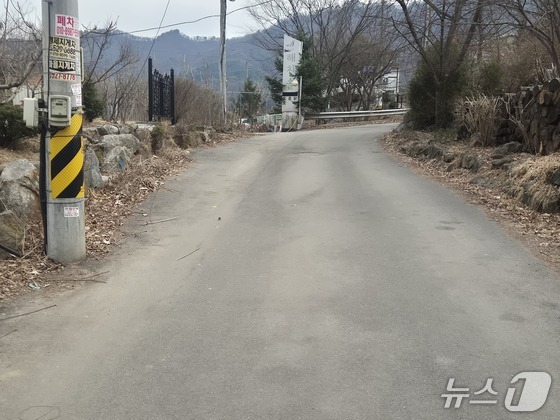
Police drew heavy criticism for their lax response to the stalking murder that occurred on the 14th in Onam‑eup, Namyangju. Investigators say the case met the criteria for detention: the victim reported multiple warning signs to police, and the suspect’s prior record provided grounds for custody.
A provincial deputy prosecutor said this case, unlike typical incidents, showed several signs of repeat offending before the crime occurred. “We had secured enough evidence, and given the suspect’s criminal history, the court likely would have issued an arrest warrant,” he said, adding that it was regrettable police failed to use the available measures.
Experts urged authorities to identify stalking cases with a high risk of reoffending and monitor them closely. Do Jin‑su, managing attorney at Jinsu Law Firm, said detectives handle as many as 70–80 cases each, creating a heavy workload for police. For high‑risk stalking cases, he recommended selecting those incidents for separate, intensive management.









Most Commented