
Translation result
|
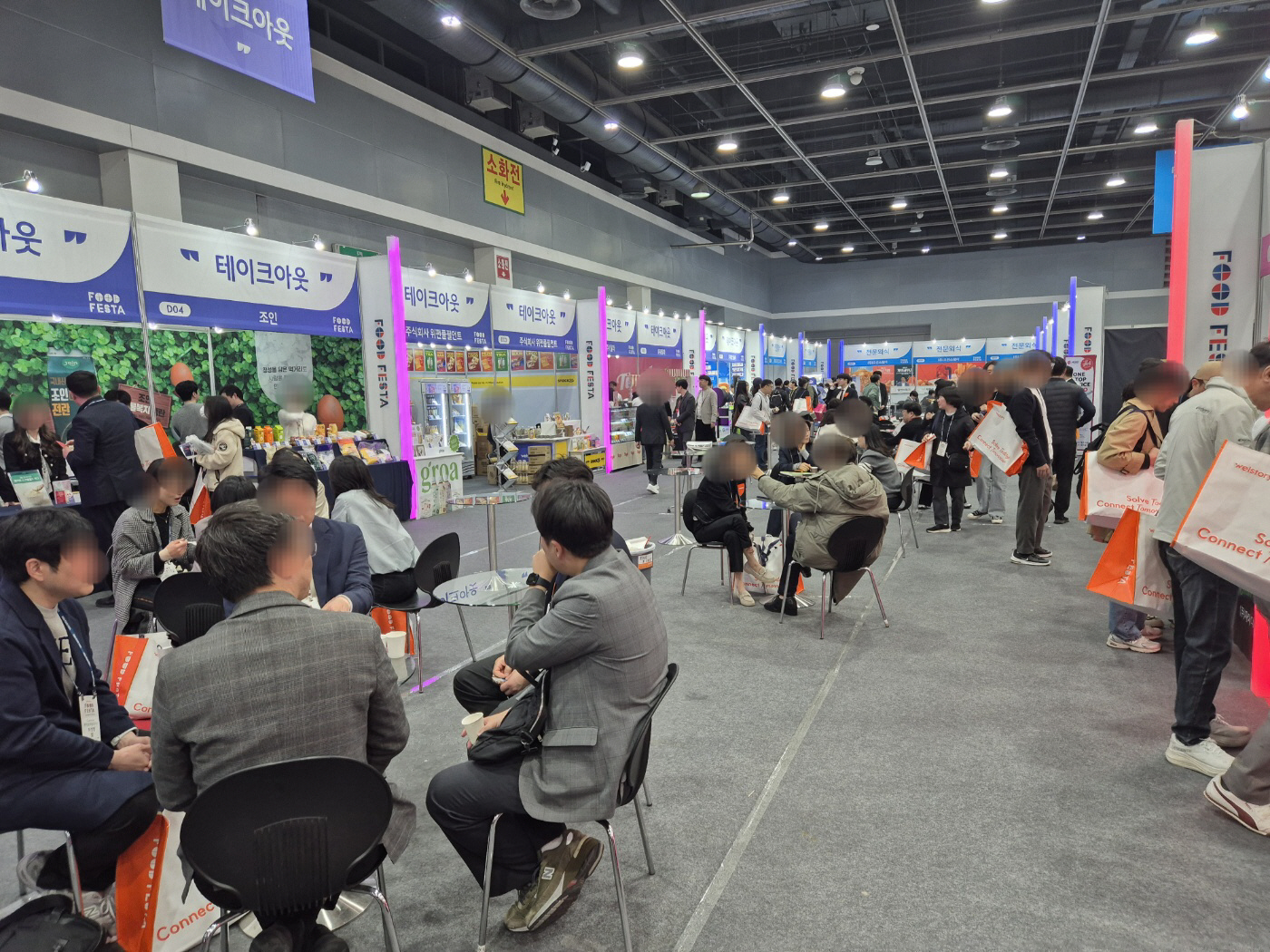
Climate change and skyrocketing prices have made ingredient supply chains shaky. Restaurants today need more than reliable deliveries — they’re looking to ‘robotic foodservice’ to cut labor costs and to consulting solutions that help scale their businesses.
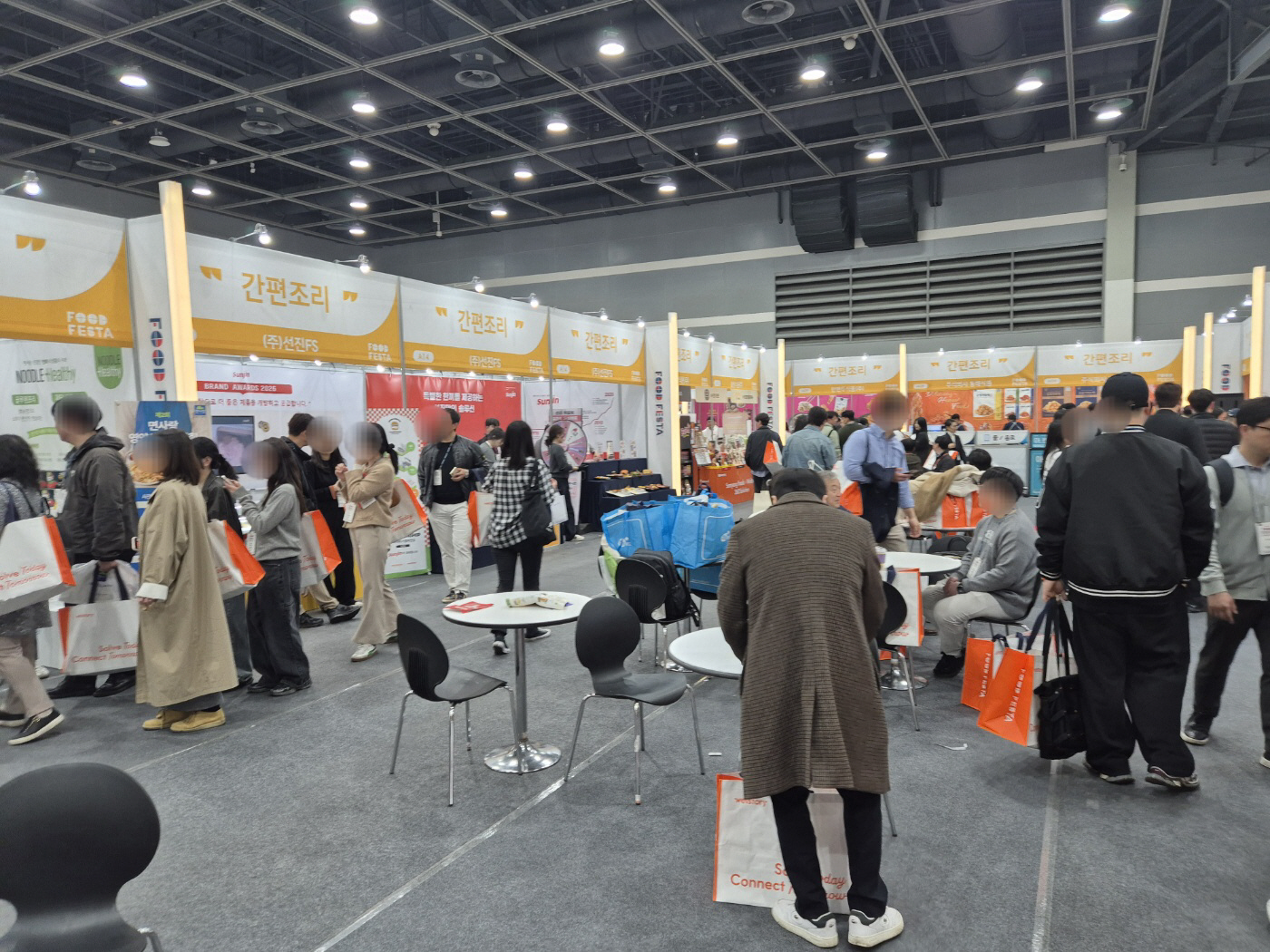
That was the message at the 2026 Wellstory Food Festa, which opened April 8 at the aT Center in Yangjae-dong, Seoul. Now in its eighth year, the country’s largest B2B foodservice expo saw preregistrations jump 30% over last year and was packed from the start. Hospitality pros descended on the show searching for practical fixes to the twin headaches of inflation and hiring shortages.
At the entrance to Exhibit Hall 1’s K‑Restaurant Pavilion, the \”Trend\” booth stopped people in their tracks. Samsung Wellstory showcased nine industry trends there, pairing market context and data with real-world company examples for an analytical, insight-driven display.
|
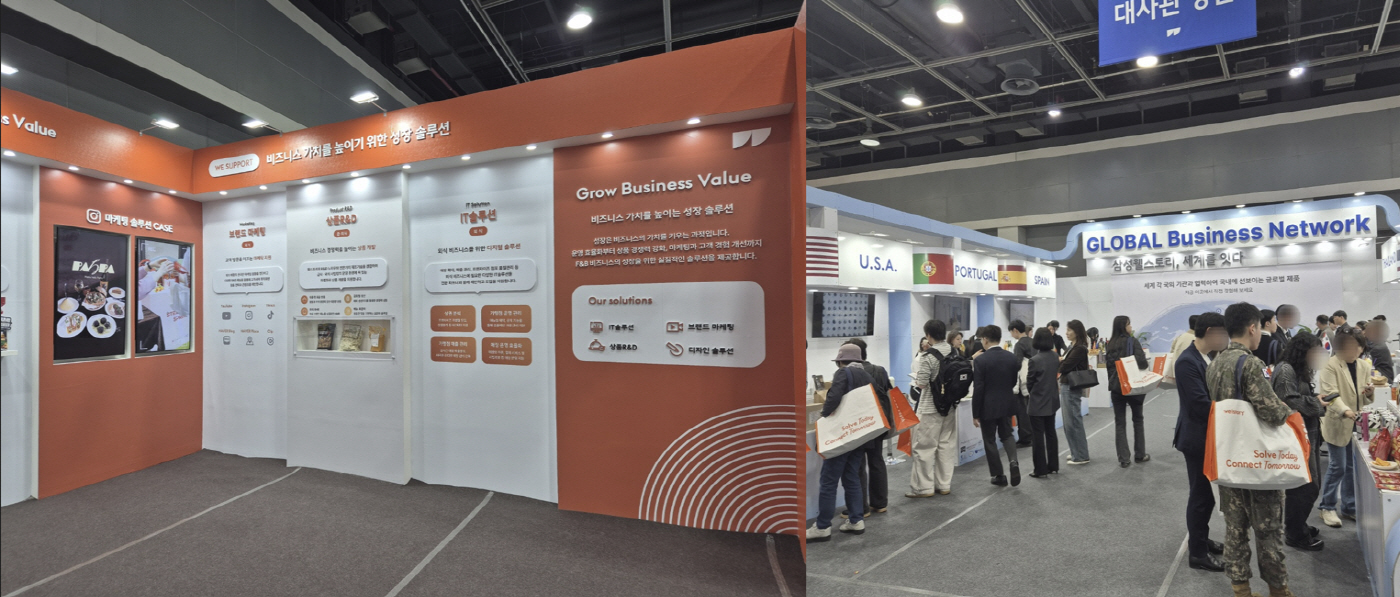
The show’s standout was the \”360 Solution\” area. Visitors crowded around as exhibitors explained ten support programs — from PR and marketing to IT, overseas expansion help, and menu and operations consulting. One operator summed up the mood: you can’t win on flavor alone anymore. Restaurants are hunting for partners who will handle marketing and operations as well.
Global sourcing competition was intense. The \”Global Embassy\” booths, featuring institutions and companies from eight countries including the U.S., Italy and Thailand, were actively pitching their ingredients to buyers. With prices up and supply chains still fragile, reliably securing ingredients has become a top priority.
|
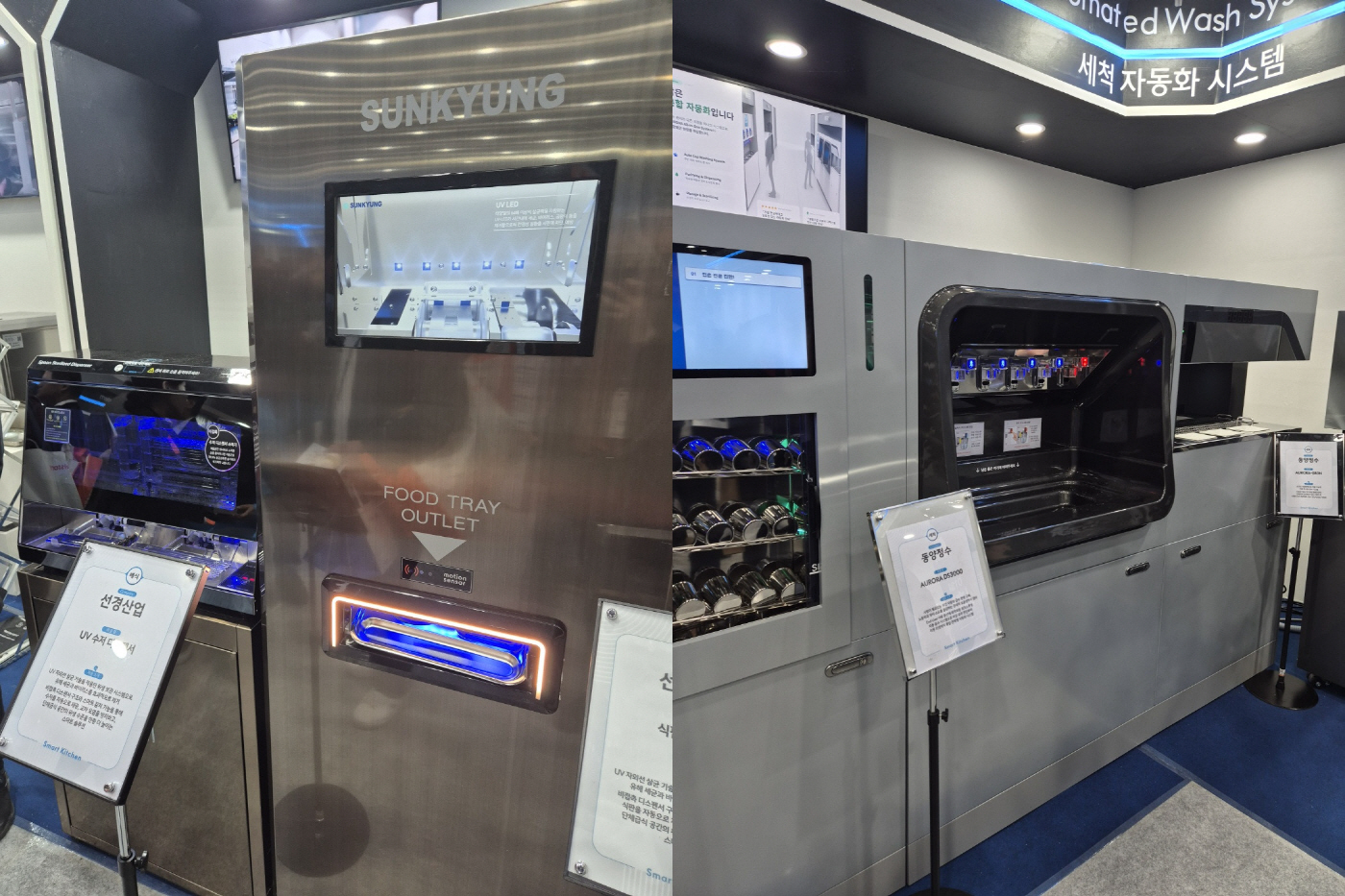
Exhibit Hall 2, the K‑Catering Pavilion, had a different energy. A \”Smart Kitchen\” demo running from the entrance pulled people in: about 30 types of equipment automated the entire workflow — from ingredient receiving and prep to cooking, serving and washing — making robotic foodservice feel very real.
Among the smart kitchen gear, show reps highlighted the rapid spread of UV utensil dispensers and automated washing systems. Demonstrations featured a dispenser that sterilizes and stores flatware with UV light before auto‑dispensing, and systems that automatically wash and dry trays and cookware. Both solutions promise better hygiene and lower labor costs, which is why attendees reacted so positively — they address staffing gaps and sanitation concerns at the same time.
|
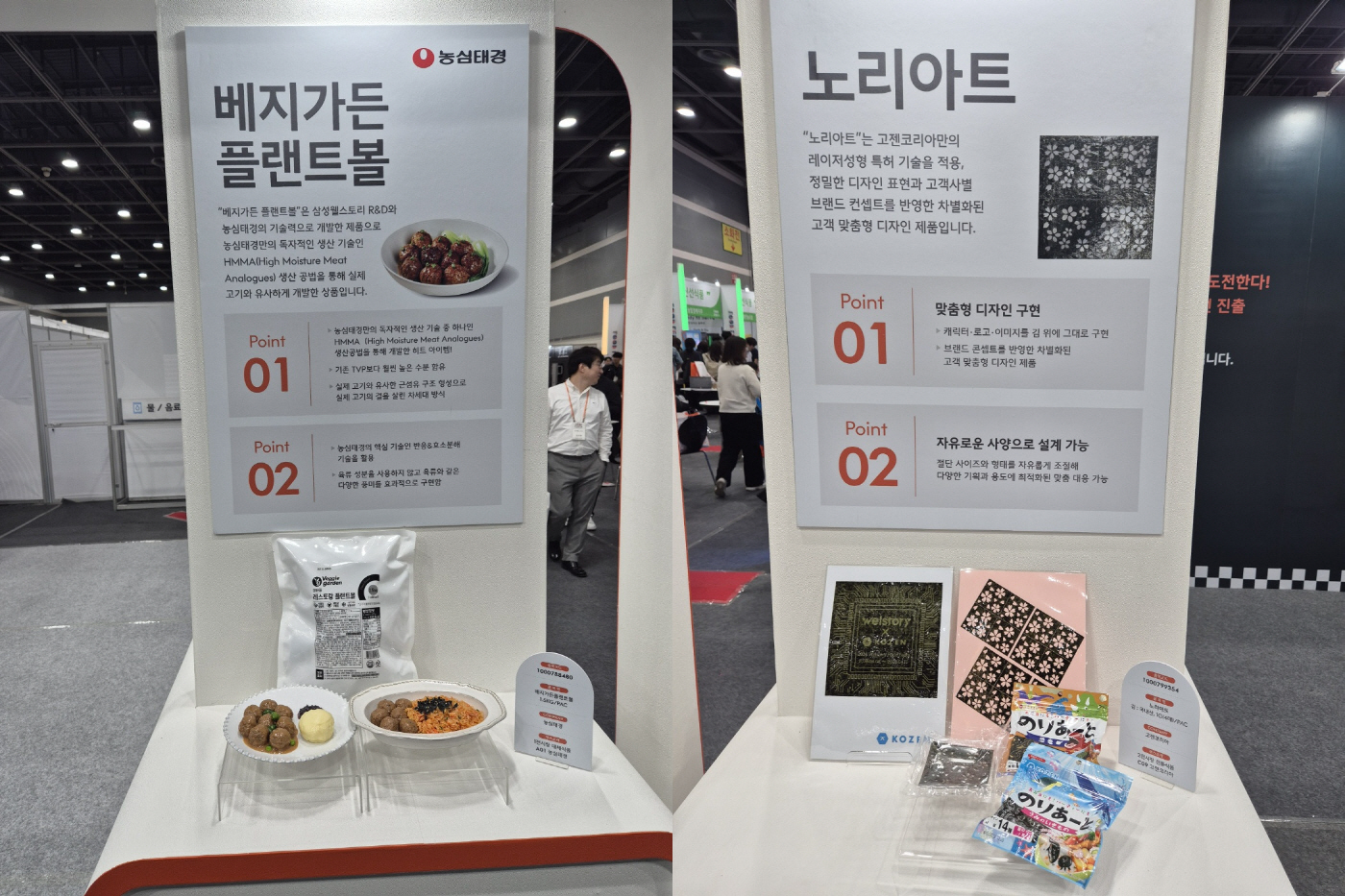
The \”Top 10 Innovative Products\” corner also drew a crowd. Curators picked ten items out of roughly 4,000 B2B food products presented by more than 100 partners. Standouts included soybean noodle \”Kongdambak Noodles,\” designer seaweed \”NoriArt,\” high‑moisture plant meatballs made with a special process, and a halal‑certified bloodless sundae — all examples of the differentiated products buyers are hunting for.
Seminars and events kept the energy up. Opening day featured a cooking show by Michelin one‑star Chef Kim Do‑yoon and a lecture by Narohoe Chairman Choi Jung‑yoon titled \”Korean Cuisine and the Economics of Fine Dining.\” On April 9 the Korea Burger Championship finals take center stage, and the final day will host a seminar on AI marketing and customer strategy for restaurants.
The trend on the floor was unmistakable: a sector that used to focus on ingredient delivery is rapidly evolving into a solutions business. That shift reflects broader structural changes in the market.
An industry source estimated the domestic food‑ingredient distribution market at about 60–64 trillion KRW (approximately $45–48 billion), but noted that corporate‑style distribution led by large firms still makes up only around 10% — small operators continue to dominate. Samsung Wellstory is pushing to reshape the market with an integrated service that combines global sourcing, logistics and consulting. Recent reports suggest the distribution segment is growing faster than institutional catering.
Institutional catering itself has entered a new growth phase, as consumers shift to more price‑competitive catering options amid rising restaurant prices.
A Samsung Wellstory representative said both dining out and catering are facing tough conditions, but combining technology, data and a global network can open fresh growth opportunities. They hoped the event would be a practical breakthrough for the industry.
|





Most Commented