
Translation result
Anthropic Unveils Vulnerability-Detection AI ‘Mythos’
Tool Could Find Zero-Day Flaws Before Patches Are Available
Experts: Reassess How Humans and AI Split Security Roles
Government Holds Emergency Review, Urges Tighter Defenses
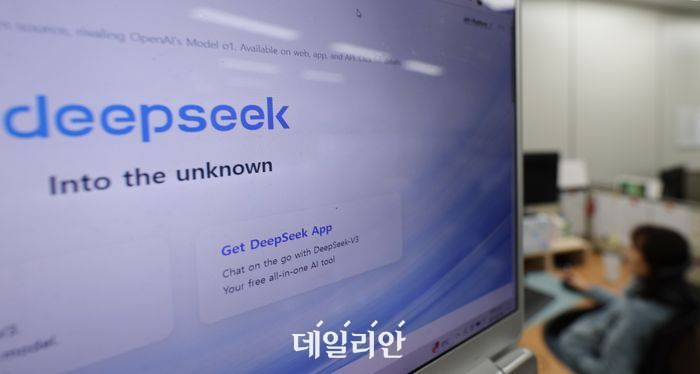
Concerns about AI-driven threats to critical systems and national infrastructure have resurfaced after the introduction of Claude Mythos, a model capable of locating previously undisclosed security flaws and, potentially, enabling their weaponization. The announcement has unsettled cybersecurity practitioners and prompted heightened attention from government agencies.
With AI adoption accelerating in South Korea, experts say organizations must rethink how humans and machines collaborate on defensive tasks. The government has begun proactive threat management to prepare for the possibility that zero-day vulnerabilities could be discovered and exploited by AI tools.
‘Claude Mythos’ surfaces…zero-day attack risk rises

Anthropic, an AI startup, unveiled a model called Claude Mythos that analyzes source code to detect security vulnerabilities. Mythos can identify zero-day flaws—vulnerabilities for which no patches yet exist—making it valuable for security audits but also potentially useful to adversaries seeking to weaponize undisclosed bugs.
Zero-day attacks occur when threat actors exploit a vulnerability before the vulnerability is publicly known or before a fix is available.
Normally, vendors release patches after vulnerabilities are identified, and users apply updates to mitigate risk. In a zero-day scenario, attackers strike before mitigations are available, leaving defenders with no immediate remedy.
Anthropic has not made Mythos generally available. The company is distributing preview versions to selected corporate partners.
“Mythos can detect vulnerabilities that previously only skilled adversaries could find,” said Kim Hyung-jong, professor of Intelligent Information Security at Seoul Women’s University. “If Mythos identifies weaknesses in government networks, major enterprises, or financial systems, those findings could be turned into operational attacks. Once a vulnerability is discovered and disclosed, it can quickly become the basis for a zero-day attack.”
Bug-bounty model at risk…“Reevaluate human–AI cooperation”
Before tools like Mythos, organizations leaned on bug-bounty programs—structured incentives that pay researchers for responsibly disclosing security flaws in services and software. First launched by Netscape in the early 1990s, bug bounties have helped organizations leverage external expertise to find issues internal teams might miss.
Experts worry a tool like Mythos lowers the barrier to discovering exploitable flaws. Defensive capabilities can be repurposed for offense, increasing the risk that vulnerabilities will be rapidly weaponized.
Those concerns are amplified by rising domestic AI adoption. Nearly seven in 10 Koreans have used AI services. According to the Ministry of Science and ICT’s 2025 Internet Usage Survey published April 14, AI service experience reached 67.0% as of July last year, up 6.7 percentage points from 60.3% a year earlier.
On questions about AI skills and ethical use, 47.3% said they were aware of risks such as algorithmic bias, misinformation, and privacy violations—the most common response. Only 38.0% said they use AI services and devices ethically while considering those risks, a notable gap between awareness and responsible behavior.
“If Mythos takes on tasks now performed by humans, powerful cyber capabilities become widely accessible,” Kim warned. “Ordinary users could employ the model to find vulnerabilities and then generate scripts or code that make exploitation straightforward.”
The emergence of Mythos could threaten not only system security but also the positions of developers and analysts who now handle vulnerability discovery and mitigation.
Experts say Mythos should trigger a broader reassessment of human–AI collaboration in cybersecurity.
“Security professionals are confronting questions about job security because of models like Mythos,” Kim said. “We need to define how humans and AI will work together.”
He urged AI developers to design systems that assume human collaboration from the outset. The security sector should redraw the boundary between tasks that must remain human-led and those AI can handle, then plan role assignments accordingly.
Government watches tech trends, urges stronger security measures

The government convened an emergency review meeting to discuss countermeasures.
The Ministry of Science and ICT called the meeting after Anthropic and others announced projects applying advanced AI models to cybersecurity work.
The ministry urged chief information security officers (CISOs) across industry to monitor AI-driven threats and carry out urgent security checks. It asked CISOs to report unusual AI-enabled attacks to the Korea Internet & Security Agency.
Under Second Vice Minister Ryu Je-myeong’s leadership, the ministry held an emergency review with CISOs from the three major telecom carriers and platform companies including Naver, Kakao, Woowa Brothers, and Coupang. Officials were urged to assess cyber readiness for advanced AI and watch for shifts in security architectures.
Officials also consulted domestic AI security experts to gather assessments of the projects, the quality of AI security services, and their potential impact on South Korea.
Deputy Prime Minister and Minister of Science and ICT Bae Gyeong-hoon said, “We must protect our companies and critical infrastructure from exposure to threats while strengthening cyber defense capabilities.” He called for public-private cooperation to advance Korea’s cybersecurity ecosystem.
©(Co.) Dailian — Unauthorized reproduction and redistribution prohibited
- Jang Dong-hyeok flies to the U.S. with only Kim Min-soo—Has he chosen his own path?
- Lim Young-woong proves he’s the ‘trot king’…last year’s settlements: 14.5 billion KRW (approximately $10.88 million) +α
- People Power Party—do they lack the will to defend Daegu?
- ‘Make it in the U.S.,’ they said…Hyundai, Kia aim to break into the U.S. pickup market, the ‘final stronghold’
- Former Super Junior member Kangin saved Lee Jin-ho’s life after a cerebral hemorrhage





Most Commented