
The Arctic Icebreaker Race: How South Korean Firms Could Capture Up to 10 Trillion Won
Daniel Kim Views
Translation result
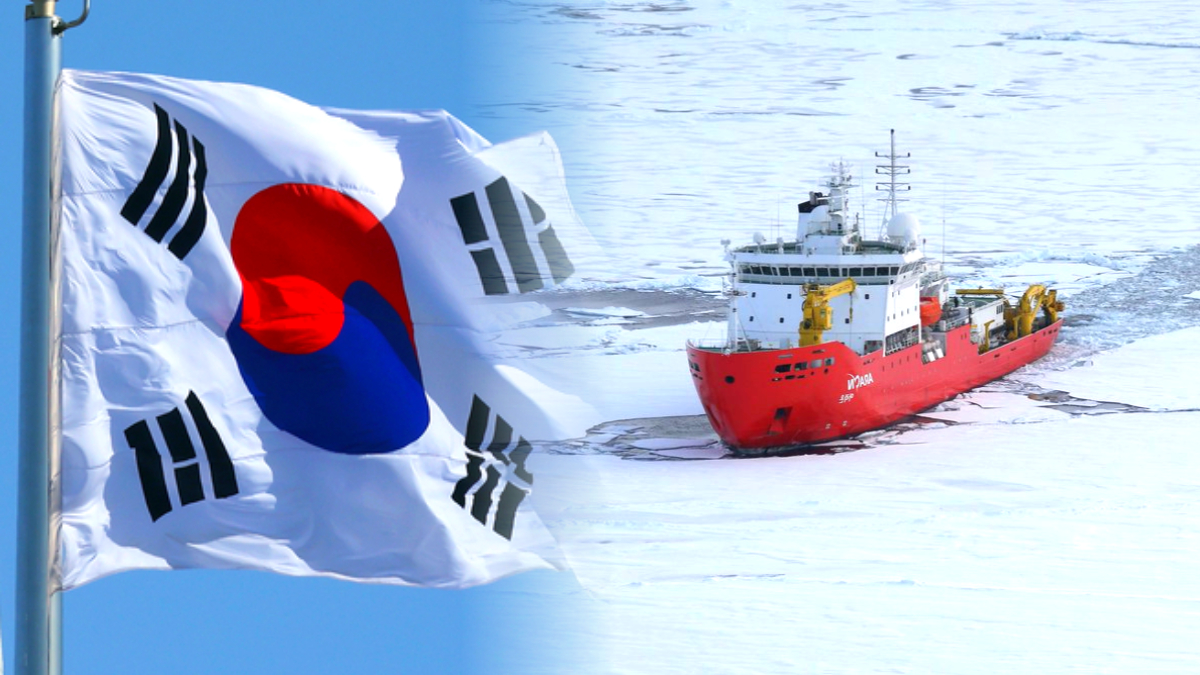
The United States, Europe, Russia and China are engaged in a low-profile contest to control Arctic shipping lanes — a quiet “icebreaker war” with clear strategic stakes.
In this narrowly specialized theater — where access to energy resources and strategic positioning matter — South Korean shipbuilders and defense firms such as HD Hyundai Heavy Industries and Hanwha Ocean are positioning themselves to capture very large contracts.
Outside the usual K-defense portfolio, the market for specialized icebreaking vessels — which can cost from several hundred billion KRW (hundreds of millions USD) to multiple trillion KRW (multiple billions USD) per hull — could give Korean firms between about 2 trillion KRW and 10 trillion KRW (approximately $1.5 billion to $7.5 billion) in business. Industry executives describe it as a potentially lucrative “sea gold mine.”
Sky-high per-ship prices — roughly 3 trillion KRW apiece (about $2.25 billion) — open a 70-trillion KRW market (about $52.5 billion)
Icebreakers sit in a different price class from ordinary commercial vessels.
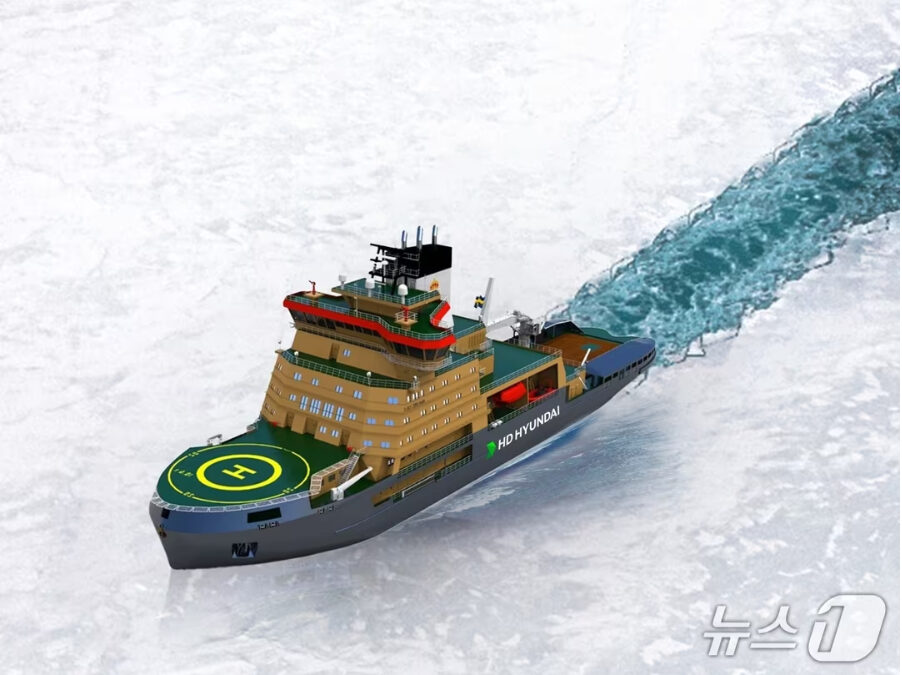
Hanwha Ocean won a domestic contract to build a next-generation icebreaking research vessel valued at roughly 279.4 billion KRW (about $209.6 million). HD Hyundai Heavy Industries secured a PC4-class icebreaker for Sweden at approximately 514.8 billion KRW (about $386.1 million).
Military-adapted medium icebreakers for the U.S. (ASC) run about 800 billion KRW each (roughly $600 million), while Canada’s large polar icebreaker — driven up by domestic construction costs — approaches the 3 trillion KRW mark per ship (about $2.25 billion).
Those price points are reshaping procurement plans. The U.S., Canada and Finland recently signed the ICE Pact to jointly develop and operate 70 to 90 polar-class icebreakers over the next decade.
Using the U.S. medium icebreaker as a baseline, a 90-ship program would represent an estimated market of roughly 73 trillion KRW (about $54.8 billion).
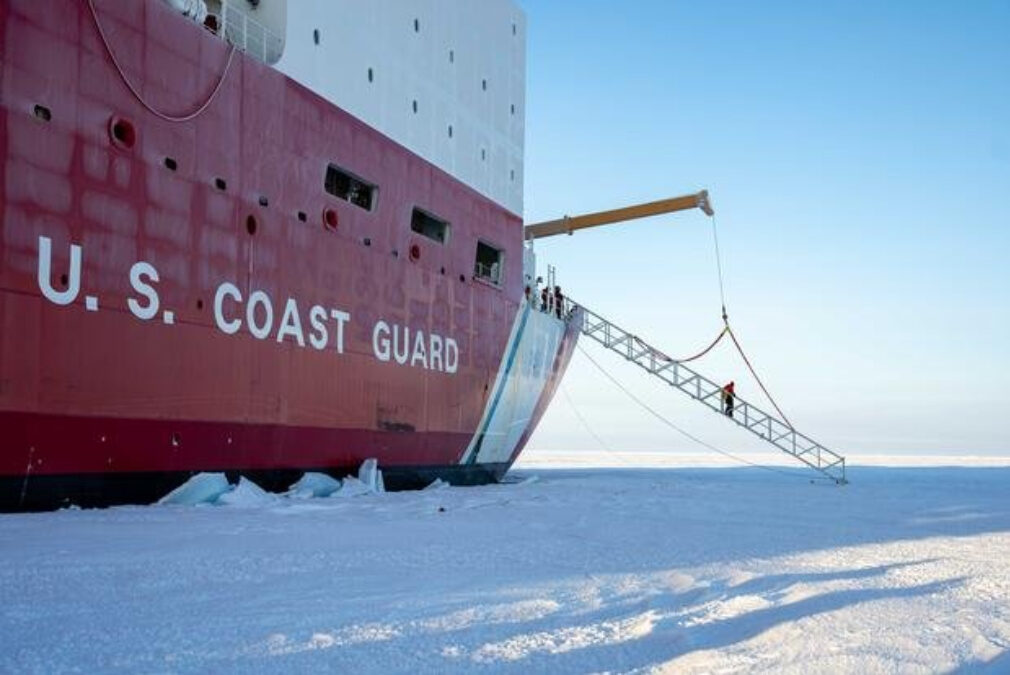
For Washington, which aims to counter deepening ties between China and Russia in the Arctic, building an icebreaker fleet is now an immediate national-security priority.
Korean shipbuilders breach Finland’s turf — what the real returns could be
Korea won’t sweep the entire 70-trillion KRW opportunity. U.S. law, including the Jones Act, creates strong legal barriers that favor domestic yards for Coast Guard platforms.
Still, HD Hyundai’s win — the first Korean firm to break into the Nordic icebreaker market long dominated by Finland and Norway — is a strategic milestone.
Having demonstrated technical capability and reliable delivery, Korean builders are well positioned to capture follow-on work as European nations begin replacing aging icebreaking fleets.
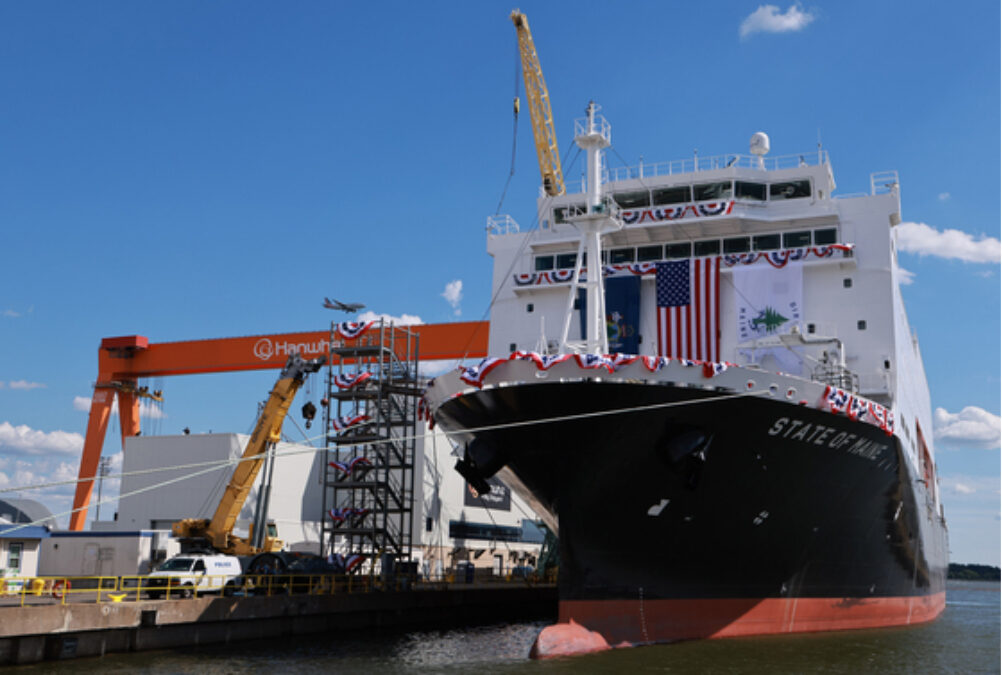
Hanwha Ocean’s acquisition of U.S. shipyards, aimed at locking in local maintenance, repair and overhaul (MRO) capacity and block-production facilities, could also prove decisive for winning U.S.-linked work.
Analysts estimate that if Korea secures roughly 10% of the ICE Pact’s value chain — through hull sections, maintenance contracts or specialized electric-propulsion systems — it could create new business on the order of 5 to 7 trillion KRW (about $3.75–$5.25 billion).
Experts argue that geopolitical tensions surrounding the Arctic are unlikely to ease soon. Given the high barriers to entry and the exceptional per-unit value, the polar-specialized ship market could become a high-value growth vector that significantly broadens K-defense’s strategic and economic footprint.






Most Commented