
How Munich Philharmonic’s Emergency Protocol Saved Brahms’ Symphony No. 4 Performance
Daniel Kim Views
Translation result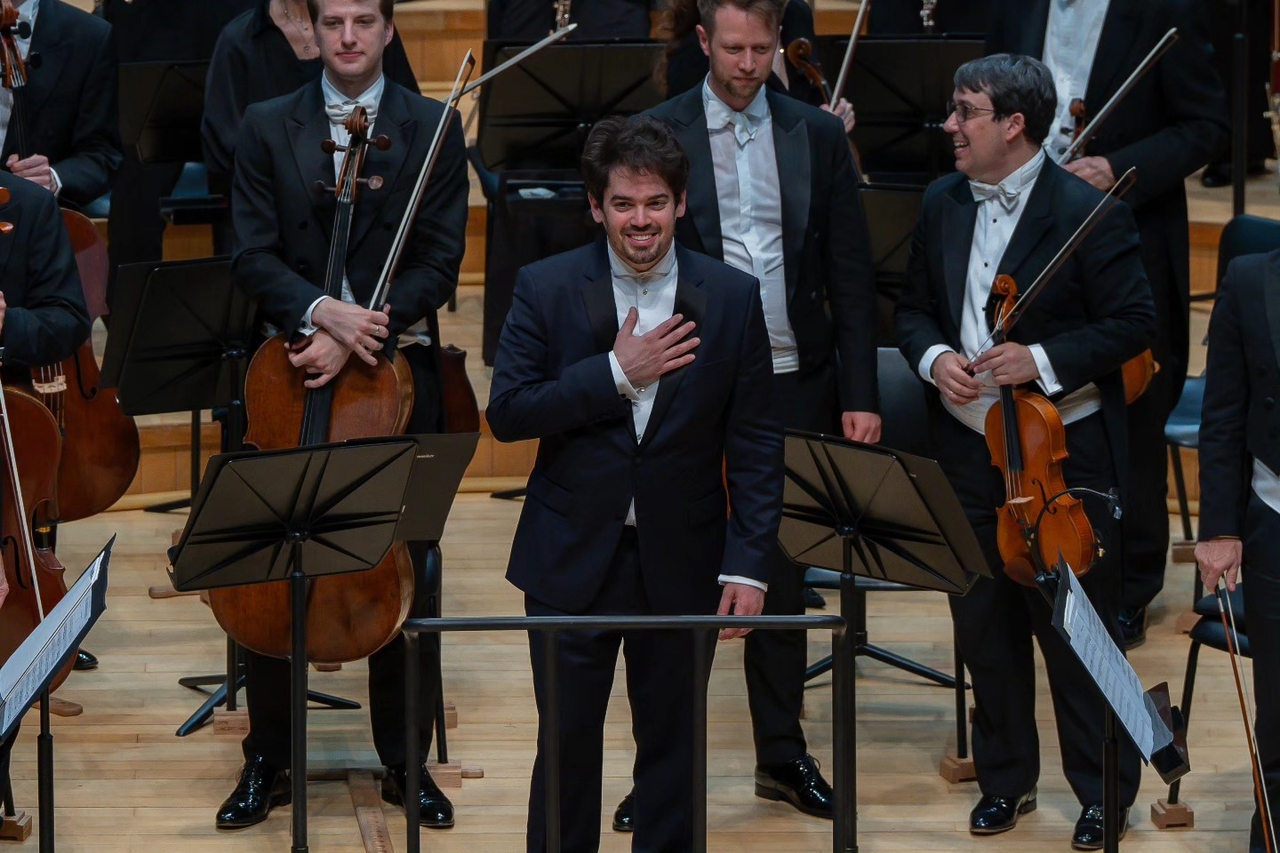 [Herald Economy=Seung-hee Go] Brahms was reborn—utterly. Lahav Shani recast the Munich Philharmonic’s thick orchestral textures and authentic German timbre with a modern sensibility.
The second movement, which Richard Strauss likened to “a funeral procession moving quietly beyond a moonlit hill,” proved the evening’s highlight. Woodwind and string pizzicatos opened on a hushed, beautiful principal theme, and mid-movement the viola took up that line. As the viola’s dark, velvety tone sank like moonlight and the music tapered, the stage slipped into a stunned silence.
Right after the Andante moderato ended, principal violist Jano Lisboa leaned toward a back-row player. In an instant the last-chair musician swapped instruments with him. Because the exchange came at the movement’s close, conductor Lahav Shani watched and allowed the routine to play out. Only after the musician who had taken the faulty instrument left through a stage door and headed backstage did the third movement resume.
That moment was more than a hiccup. It was the orchestra’s emergency protocol—developed over centuries—activating in real time. Behind flawless phrasing, there is always a gritty world of crisis management.
Brahms’s Fourth Symphony gives the viola one of its most beautiful—and most precarious—spots. The movement begins in the mysterious Phrygian mode, and mid-way the viola carries the core theme.
This passage is a staple of viola auditions because it demands exact intonation and rich, sustained bowing to support the melody. The violist must maintain a pulsing triplet accompaniment and arpeggiated figures throughout. That requires continuous bow control and refined left-hand fingering. As the texture thickens, so does the physical strain on the strings and bridge.
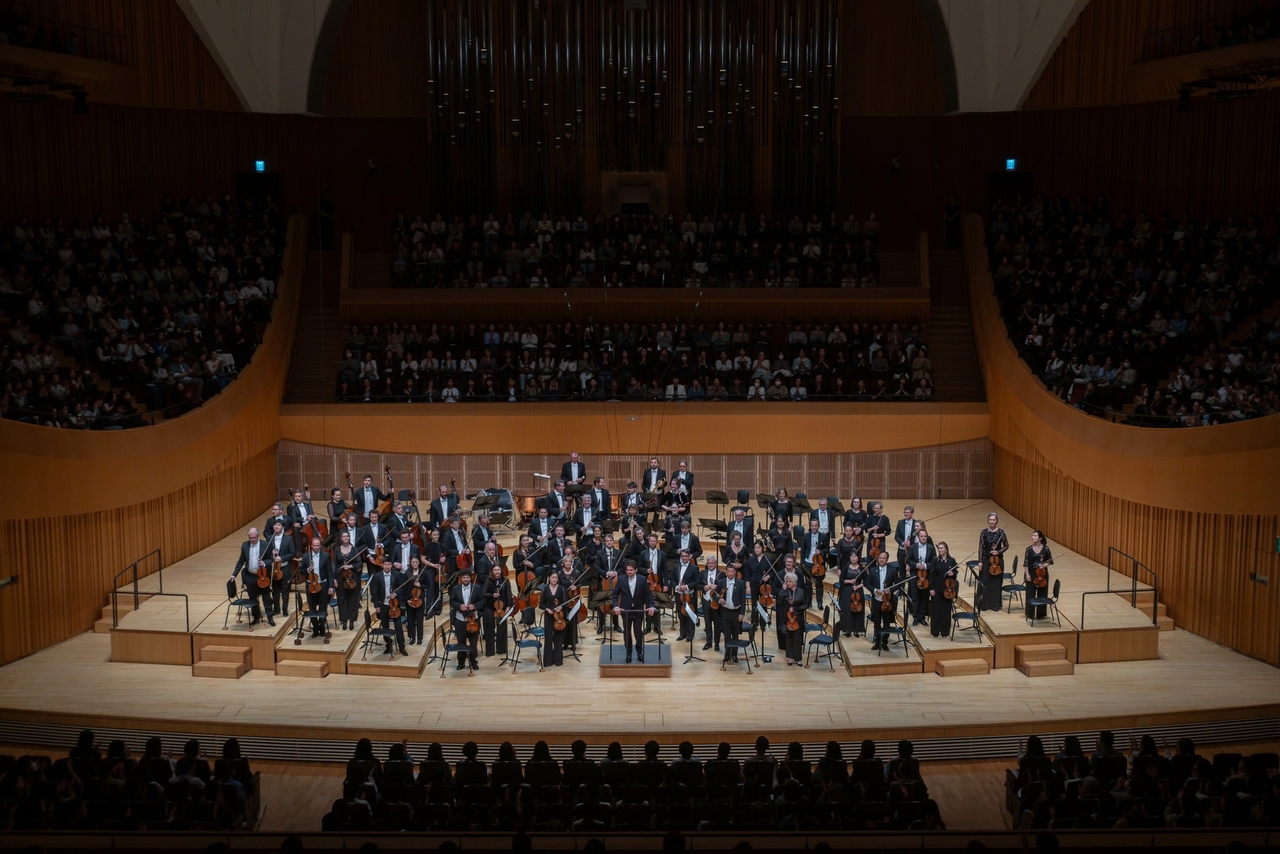 The performance environment also works on the instrument. Strong stage lights and dry air put severe stress on strings and the wooden body. In the viola’s register—especially the A and D strings—tension can feel especially acute against the movement’s stillness. The Munich Philharmonic was performing this program in Korea for the third time that season, having played it at Incheon Arts Center on the 6th, so many instruments had already been through considerable wear.
After the second movement, Jano Lisboa likely judged his instrument couldn’t reliably survive the demands of the third and fourth movements. Brahms No. 4 only intensifies: the third movement calls for violent, fast motion; the fourth is a tragic, monumental chaconne that requires the orchestra to summon extreme energy. That is when the orchestra’s customary hierarchical instrument-exchange kicks in.
When an instrument fails in an orchestra, musicians follow a “top-down” protocol. The guiding principle is simple: to preserve musical continuity, the section leader should always have the best playable instrument in hand.
What the Munich players did was textbook. The principal’s faulty instrument moved to the section’s last chair, the principal accepted a replacement, and immediately plunged into the third movement’s storm.
The same hierarchy applies when a soloist’s instrument falters during a concerto. The ensemble moves at once to supply the soloist with the best-performing instrument available so the soloist can continue without losing momentum.
If a soloist’s string snaps, the soloist either keeps playing or pauses only briefly, then hands the defective instrument to the concertmaster and takes the concertmaster’s violin. As the orchestra’s leader, the concertmaster is obliged to provide an instrument the soloist can trust.
The concertmaster then hands the faulty instrument to the associate or assistant concertmaster beside them. That exchange ripples down the line until the defective instrument reaches the last-chair player.
The last-chair musician quietly replaces a string on stage or—if necessary—takes the instrument offstage for repair and returns it. The entire sequence unfolds with as little disruption as possible. Expert players can change a string and retune within 30 seconds. At the Munich concert on the 9th, the last-chair violist did not return until the movement concluded.
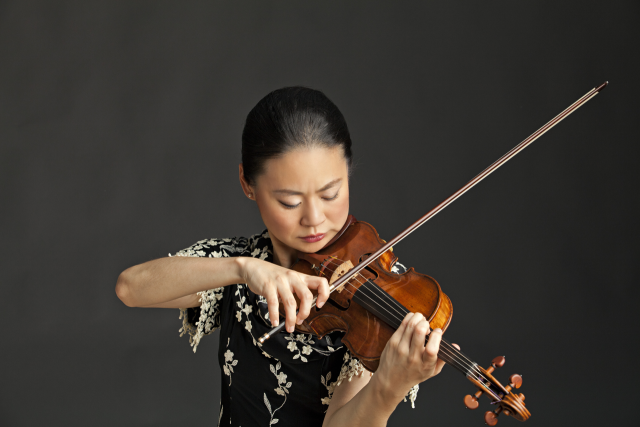
Instrument failures during performances aren’t rare, and classical music history includes legendary responses. One famous story involves a 14-year-old who finished a performance on three different violins.
In July 1986 at Tanglewood, Japanese prodigy Midori Goto was performing Bernstein’s Serenade with the Boston Symphony when the E string on her 3/4-size violin broke. She calmly borrowed the concertmaster’s Stradivarius—then, staggeringly, that instrument’s string snapped too. Midori completed the piece on the associate concertmaster’s Guadagnini.
The New York Times ran the headline: “14-Year-Old Conquers Tanglewood with Three Violins.” The episode remains a prime example of how orchestra members cooperatively protect a soloist during a crisis.
Star violinist Ray Chen had a similar moment in 2021 with the Seattle Symphony during a Tchaikovsky concerto, when his E string broke mid-performance. He handed his violin to the concertmaster, took the concertmaster’s instrument, and continued. Notably, Chen had a spare E string in his pocket; during a brief pause he passed it to the associate, who installed it onstage and retuned. Chen later reclaimed his original instrument and finished the concert—a case of meticulous preparedness for humidity shifts and the stresses of travel.
Strings can borrow another instrument, but wind and percussion problems are often more complicated.
Double-reed instruments such as oboe and bassoon live and die by reeds and pads. In 2017, when the London Symphony’s principal oboist’s reed split just before a solo, he grabbed a colleague’s instrument and continued; that colleague then fitted a fresh reed and returned the principal’s oboe.
 Double-reed players typically bring a reed case on stage with several verified reeds—anywhere from three to more than ten—so they can swap one during a short rest if necessary.
Brass instruments like trumpets or horns can become unusable if a valve seizes; an assistant player then steps in. If the principal’s instrument fails or the principal loses embouchure control, the assistant immediately covers the passage.
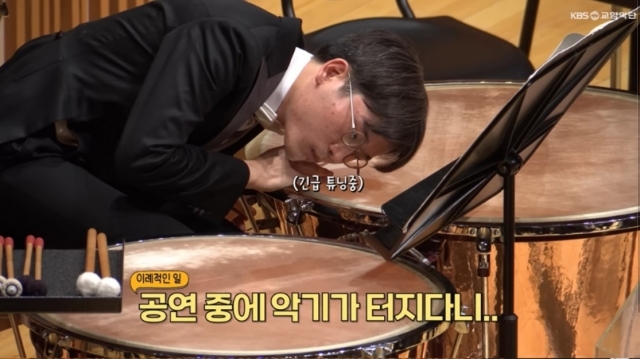
Percussionists, particularly timpanists, often must improvise alone. In 2023, Lee Won-seok, principal timpanist of the KBS Symphony, tore a drumhead during the orchestra’s 787th subscription concert while performing Shostakovich’s Symphony No. 11. With no spare drum available, he retuned the remaining three timpani and reallocated parts to complete the performance. Maestro Eliahu Inbal applauded him with a beaming smile afterward, and the timpanist became a celebrated figure in his country’s orchestral scene.
Pianos are usually the venue’s responsibility rather than the orchestra’s, so unexpected failures happen there too: caster locks can slip and allow the instrument to move, or a stuck sustain pedal can make notes drone—both are real hazards in live performance.
Brazilian pianist Eliane Rodrigues once faced a stuck sustain pedal mid-performance. Without stopping, she moved the piano offstage, switched to another instrument, and returned—an unforgettable display of stagecraft.
![[헤럴드경제DB]](https://cdn-union.tenbizt.com/contents/crawler-dev/image/2026/05/CP-2023-0083/image-0ed0a647-cdd2-4e1e-b83f-6fe100c5e8f8.gif)





Most Commented