
Translation result
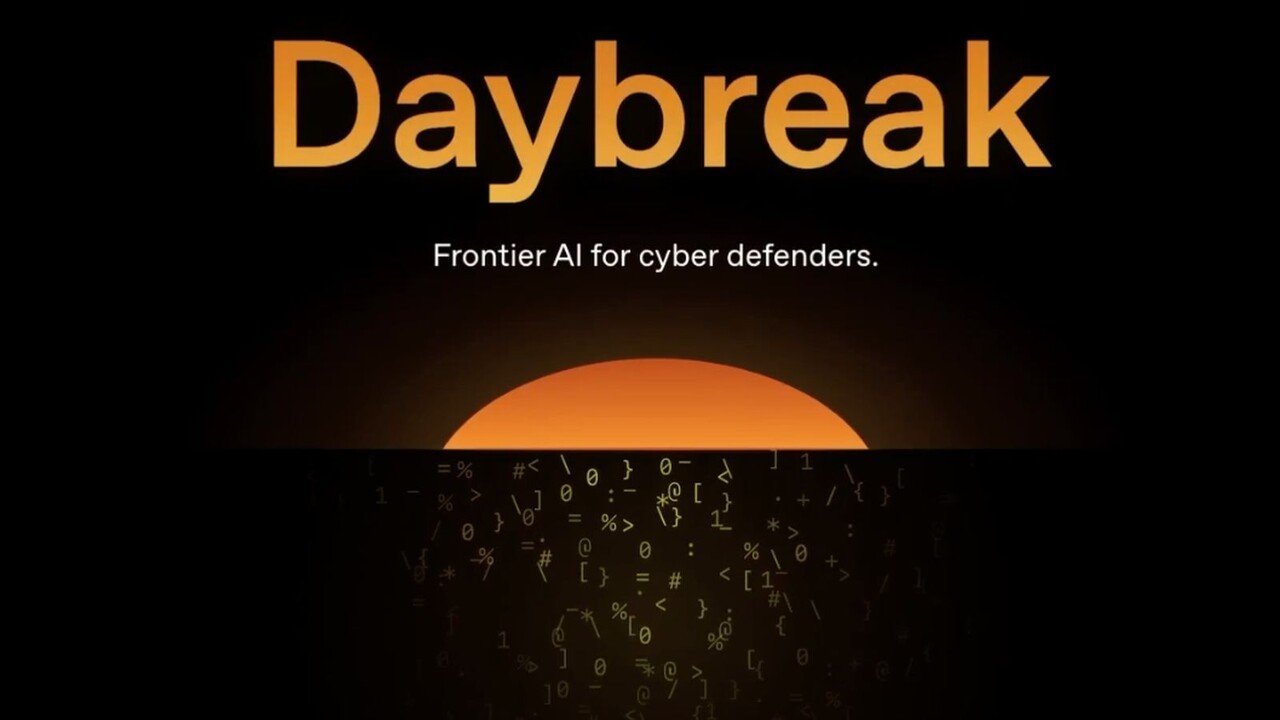
OpenAI has launched Daybreak, a cybersecurity-focused AI platform, as it moves to capture the market for AI-driven defenses. With concerns rising that generative AI can be abused for hacking and vulnerability exploitation, OpenAI is betting on AI as a defensive tool to keep software continuously secure.
CEO Sam Altman introduced Daybreak on X on May 11, calling it “our effort to accelerate cyber defense and continuously secure software.”
“AI is already very capable in cybersecurity and is about to get much better,” Altman wrote. “We want to help as many companies as possible use AI to continuously harden their defenses.”
Daybreak pairs OpenAI’s GPT-family models with Codex and a network of external security partners. The platform aims to do more than locate flaws: it ties together code review, threat modeling, dependency analysis, patch verification, and automated detection and response.
OpenAI is launching Daybreak, our effort to accelerate cyber defense and continuously secure software.
AI is already good and about to get super good at cybersecurity; we’d like to start working with as many companies as possible now to help them continuously secure themselves.
— Sam Altman (@sama) May 11, 2026
OpenAI says AI can now analyze entire codebases to spot subtle vulnerabilities, verify fixes and reason about unfamiliar systems. The company emphasized its goal is to sharply reduce the time between discovery and response.
Where traditional cyber operations rely on analysts parsing logs and chasing incidents, Daybreak is designed to embed AI throughout the software development lifecycle to detect and remediate risks earlier. OpenAI frames this as a shift from reactive incident response to security built in from the design stage.
The announcement comes amid growing industry concerns about AI-enabled attacks. Anthropic recently unveiled a high-performance cyber model called Misos but limited public access over misuse risks. Mozilla reported using Misos to find 271 previously undisclosed vulnerabilities in Firefox.
Google also said it detected the first known cases of attackers using AI to find and weaponize zero-day flaws. Google’s Threat Intelligence Group (GTIG) reported evidence that AI models were used to discover and weaponize an undisclosed vulnerability that could bypass multi-factor authentication (MFA). Security experts warn AI could greatly accelerate both vulnerability discovery and malware development.
OpenAI acknowledged those risks but insisted Daybreak embodies a “defense-centric approach” that integrates trust, verification and safety controls. The company plans to roll out more powerful cyber AI models gradually and in coordination with government and industry partners.
OpenAI described Daybreak as “the first light of morning,” saying the platform is meant to detect threats sooner, accelerate response and make software intrinsically more resilient.
Chan Park, Reporter cpark@aitimes.com









Most Commented