
Translation result

Five missiles struck an area about the size of 18 soccer fields — threat shifts from ‘point’ strikes to ‘area’ strikes
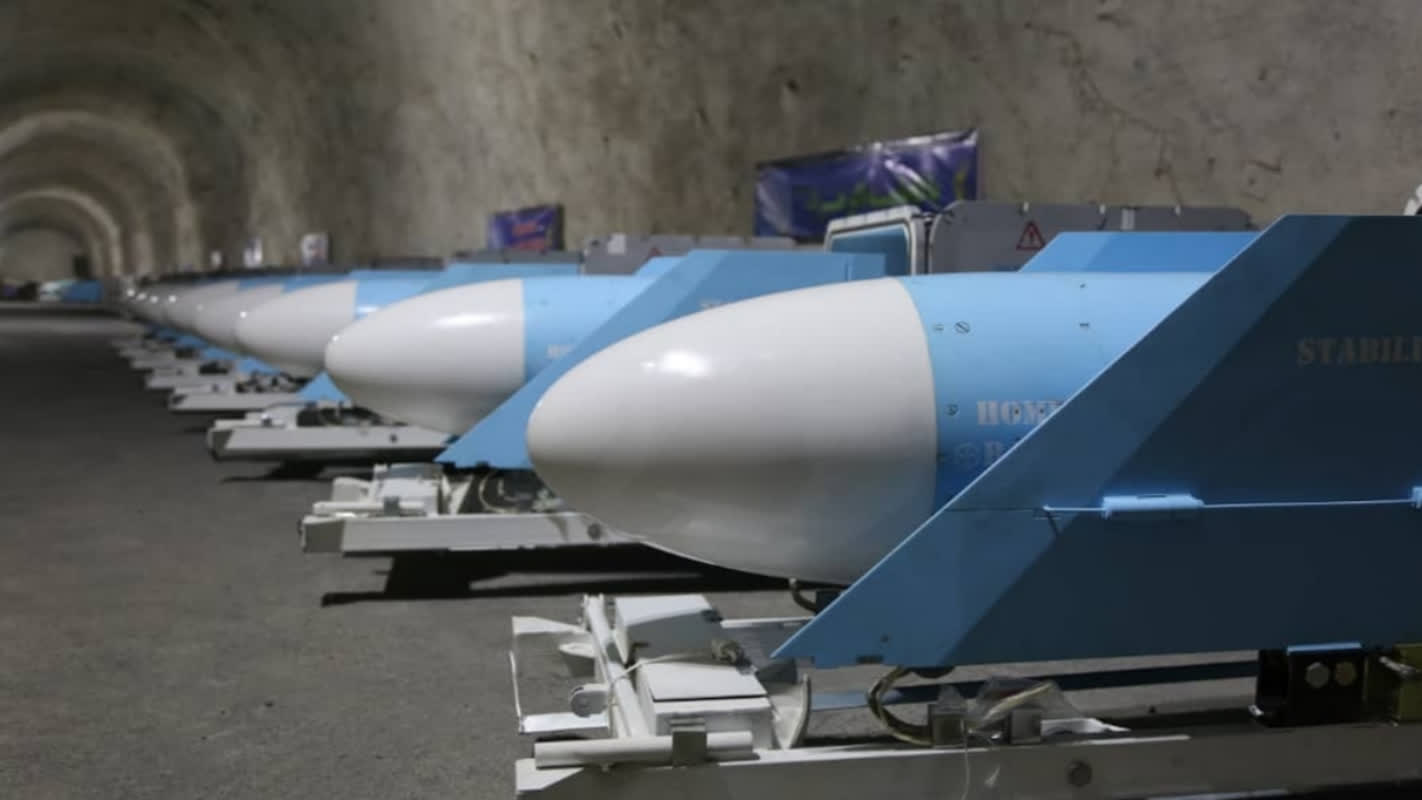
North Korea on the 19th claimed it successfully tested a short-range ballistic missile, the Hwasongpho-11Ra, equipped with a dispersal (cluster) warhead. State media KCNA and military statements said five missiles were launched from near Sinpo in South Hamgyong toward the East Sea and “struck a densely packed area” of roughly 12.5–13 hectares (about 31–32 acres, roughly 130,000 m²) centered on an island some 136 km (about 84.5 miles) away. That footprint — roughly 18 soccer fields — underscores a shift from single-warhead, point strikes to wide-area, sweeping ‘area’ attacks.
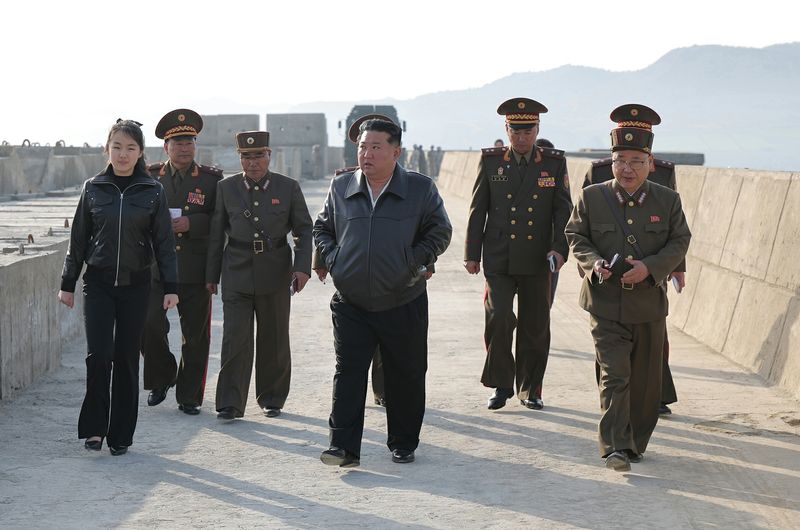
Kim Jong Un and Kim Ju-ae observed the test — lethal footprint about double earlier this month
KCNA said Chairman Kim Jong Un and his daughter, Kim Ju-ae, observed the trial, which it described as a check on “the combat power of the improved ground-to-ground tactical ballistic missile Hwasongpho-11Ra warhead.” Earlier this month, a related 11Ga variant was reported to disperse submunitions across roughly 6.5–7 hectares. The 11Ra’s claimed pattern would roughly double that lethal footprint. Defense analysts say Pyongyang appears to have rapidly increased its area-strike capability by adjusting the number of submunitions and their dispersal patterns in a short time.
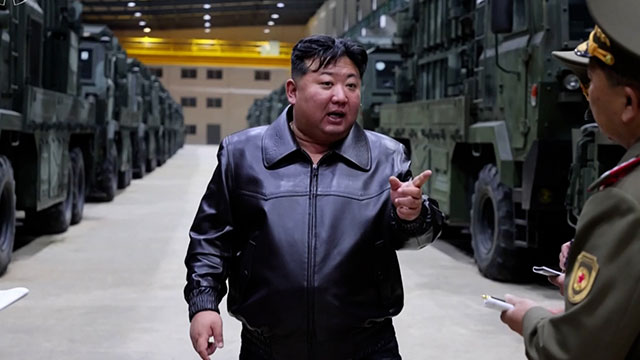
Cluster warhead breaks into submunitions in flight — designed to exploit interception gaps
The Hwasongpho-11Ra’s defining feature is its warhead. Rather than a single penetrating warhead, the tested cluster warhead is reported to detonate at a predetermined altitude and scatter dozens to hundreds of submunitions like a curtain. Reporting and specialist analyses suggest Pyongyang is mixing fragmentation-type bomblets with high-explosive submunitions. Some of those submunitions may fail to detonate and behave like mines, denying access to an area for an extended period and complicating clearance and operations. Analysts say the design appears intended to exploit how systems such as the Patriot (PAC-3) and Cheongung-II are optimized to engage a single, consolidated warhead.
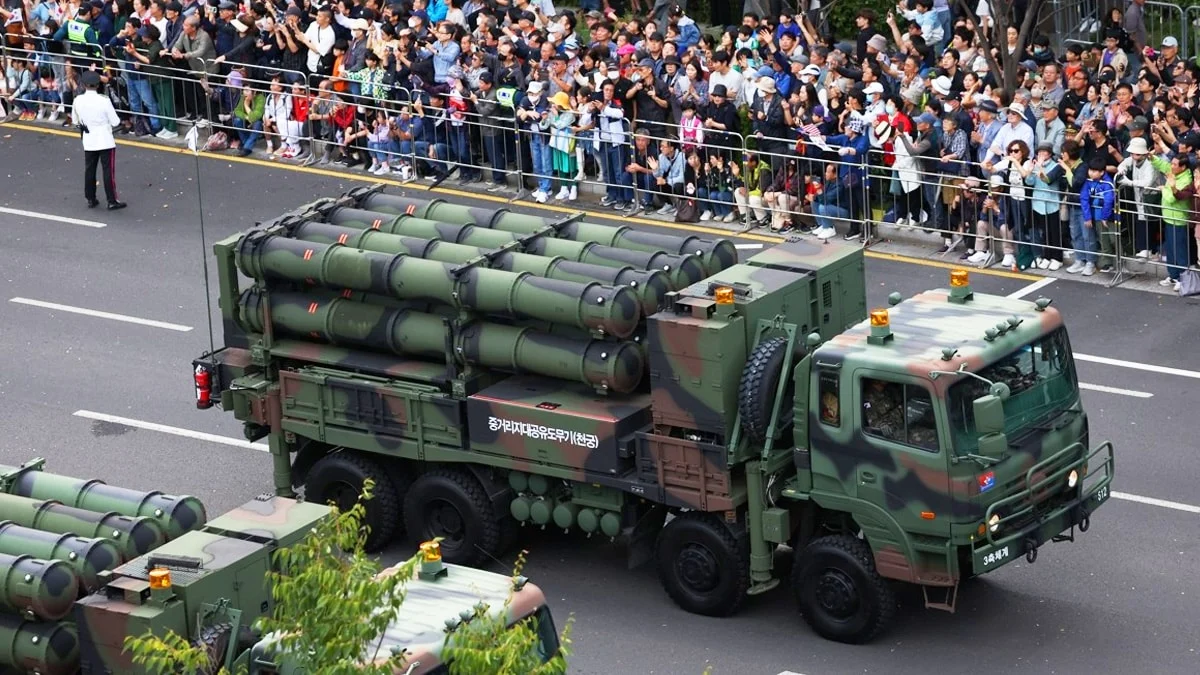
PAC-3 and Cheongung-II can intercept a warhead but struggle to stop dispersed submunitions
South Korea’s missile defense architecture centers on terminal interceptors — Patriot (PAC-3), Cheongung-II and the planned L-SAM — layered beneath early-warning radars, Aegis ship radar, and airborne warning platforms. L-SAM is intended for high-altitude engagement, with PAC-3 and Cheongung-II handling lower-altitude terminal intercepts. If a warhead breaks apart into many submunitions before intercept altitude, defending against thousands of separate threats becomes effectively impossible. Should submunitions fall on forward assembly areas, airbase runways, or around command nodes, explosions and the need to clear unexploded ordnance could delay aircraft sorties and unit movements, severely constraining operational continuity.
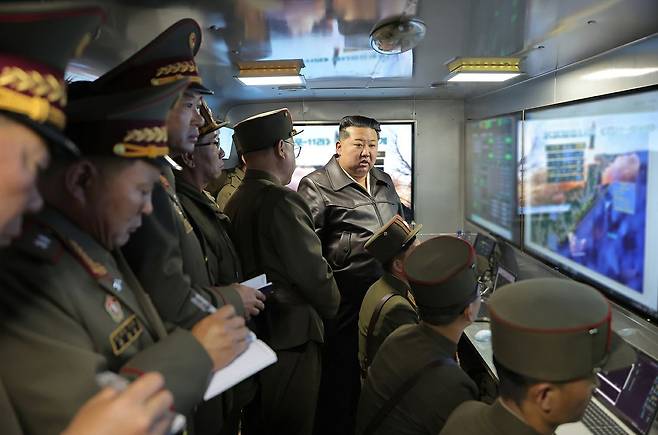
Seoul-area defense concepts must evolve — “Interception alone cannot negate this threat”
Military experts characterize the Hwasongpho-11Ra as a qualitative threat that requires structural changes to the defense concept for the Seoul metropolitan area. South Korea’s missile defense framework (KAMD) has been built around a phased response: pre-launch destruction (Kill Chain), in-flight interception (KAMD), and punitive strikes on launch sites (KMPR). Missiles that fragment into many submunitions during the terminal phase make it difficult to drive casualties and damage toward zero through interception alone. Experts argue authorities must amplify resilience and damage-mitigation measures — including pre-launch detection and strikes, hardening and dispersal of forces and facilities, and facility lightening. Immediate priorities include moving key bases, command centers and air-defense assets underground or dispersing them; securing runway-repair and alternative runway capabilities; and revising billet and assembly practices for forward units.

Fear that “Seoul can’t be defended” vs. the need for a sober, balanced assessment
Some outlets have used alarmist headlines such as “We can’t defend the capital area like this,” but analysts caution against conflating exaggeration with operational reality. North Korea’s 13-hectare claim represents the combined footprint of five missiles, not the area covered by a single round. The South Korean military has bolstered its pre-launch detection and strike capacity with Aegis ships, early-warning radars, multilayer interceptors, reconnaissance satellites, drones, and long-range precision strike assets to improve pre-launch indication and counterstrike options. Even so, Pyongyang’s move to arm short-range ballistic missiles with cluster warheads and anti-personnel submunitions — creating area effects and long-term denial — is a clear signal that South Korea’s air-defense and force-protection concepts need reassessment.






Most Commented