
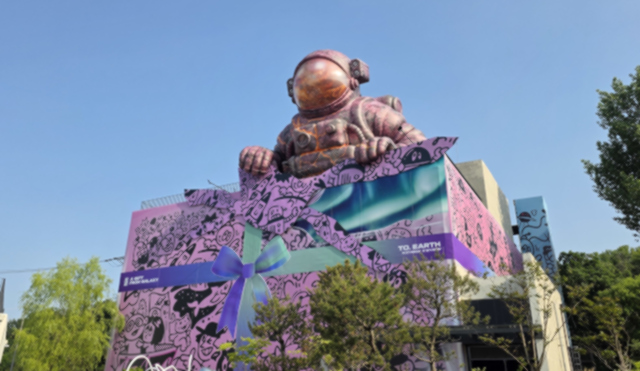
The era of AI confined to smartphones is coming to an end. A new age is dawning in which physical AI—robots—will live alongside people and engage with them.
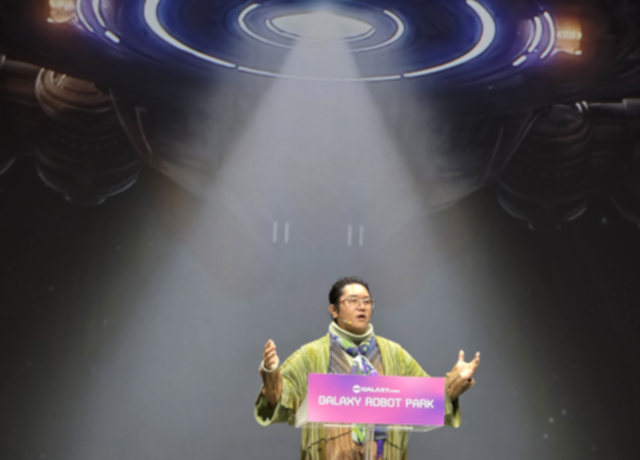
On May 15 at Galaxy Robot Park in Godeok-dong, Gangdong District, Seoul, robots filed onto a stage pulsing with K-pop and launched into synchronized routines. Spectators lifted their phones in unison to record the machines as they raised their arms and repeated rotating movements to the beat. Watching the performance, Galaxy Corporation CEO Choi Yong-ho said, “This is where people can first experience a future in which humans and robots coexist.”
Physical-AI entertainment company Galaxy Corporation unveiled the world’s first robot-integrated cultural space, Galaxy Robot Park, proposing a new content-industry model that blends K-pop with robotic technology.
The Robot Park occupies roughly 5,000 pyeong (about 178,000 sq ft, or 4.1 acres) and combines a performance arena, interactive content zones and technology demonstration areas. Visitors don’t just watch shows; they can dance with robots, move alongside them, or try hands-on activities such as boxing and mirroring exercises. The company positions the venue as an experiential content platform rather than a passive exhibition space.
Choi described the facility as more than a technology showcase: “It’s a new content platform that brings together performances, hands-on experiences and industry,” he said, adding that it will be the starting point for a cultural future shaped by K-pop and physical AI.
Galaxy Corporation plans to stage year-round K-pop robot performances at the venue, aiming for up to six shows a day and more than 1,000 performances annually, with expansion into tourism-oriented offerings. The company intends to diversify revenue by combining ticketed shows, interactive programs and IP-based licensing.
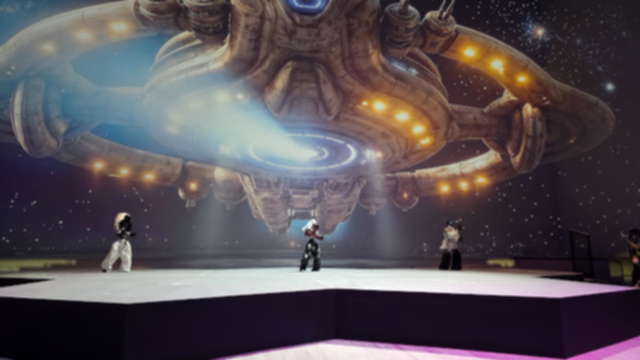
The day’s robot performance featured music by G-Dragon and SHINee. The machines executed synchronized choreography based on pre-learned motion data, focusing on repeating key dance segments rather than performing entire songs. The demonstration aimed to test technical feasibility and showcase the current capabilities of the technology rather than present a finished production.
Choi pointed to simultaneity as the robots’ core advantage. Unlike human artists, who must tour country to country, robots can present the same content in multiple locations at the same time.
“Robots trained on G-Dragon’s choreography could perform the same show simultaneously in Korea, Japan, China and Dubai,” he said, announcing plans to launch a K-pop robot concert world tour later this year. He added that the approach could create a new performance ecosystem even in places where physical travel is difficult.
Galaxy Corporation is collaborating with Chinese robotics firm Unitree, using motion-capture methods to teach robots human movement data.
Industry observers caution that the current shows remain in the demonstration phase. To evolve into permanent attractions, the project will need to raise content quality, broaden expressive range, secure intellectual property and develop large-scale operational capacity.
▶ Is the era of robot performances dawning? … Galaxy Corporation unveils K-pop experimental stage
▶ High-ranking Romanian military officials attend … Hanwha Aerospace showcases manned and unmanned combat systems locally
▶ KAI labor and management sign win-win pact … cooperation to deliver KF-21 and Miron on schedule









Most Commented