
Translation result
|
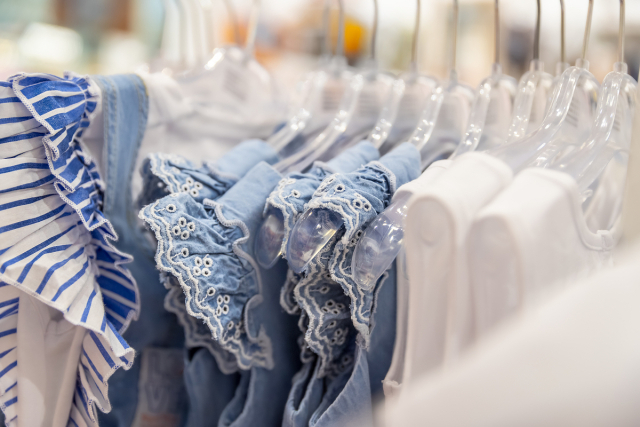
South Korea’s broader fashion market may be cooling, but kids’ clothing is on fire. Trend-savvy MZ parents—think early-to-mid-1990s births—are splurging on premium and designer labels. And with families often choosing to focus resources on a single child instead of several, that concentrated spending is fueling growth in the kidswear sector.
Industry sources said on the 12th that the core consumer base for children’s apparel has shifted to parents born in the early to mid-1990s. Statistics Korea found that among last year’s 238,000 births, mothers aged 30–34 made up the largest share at 48%. Comfortable in digital environments, these parents use social media, parenting forums and dedicated apps throughout childcare—and when shopping for kids’ clothes, they prioritize trend and style over basic function.
Parenting attitudes have changed too. Rather than raising multiple children, many families now lavish attention and resources on one “precious” child, investing not only in education and nutrition but in fashion and lifestyle as well.
You can see the shift in the numbers. Market researcher Euromonitor reports that last year Korea’s infant and children’s clothing market totaled 2.539 trillion KRW (about $1.90 billion), up roughly 38% from 2020 (1.841 trillion KRW (about $1.38 billion)). That growth stands in contrast to the wider apparel market, which struggled during the same recessionary period.
|
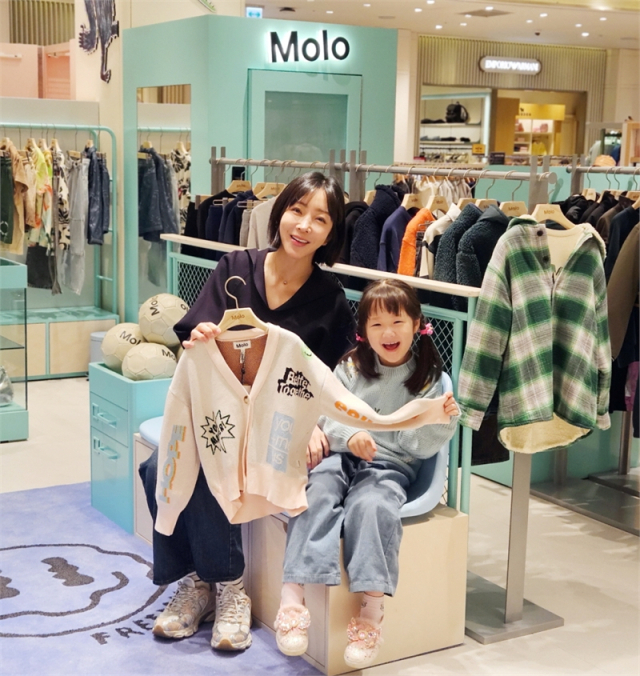
Department-store sales are climbing, too. From January through August, Lotte Department Store’s children’s category rose 15% year over year, Hyundai Department Store’s increased 15.4%, and Shinsegae Department Store’s grew 13%. Lotte’s flagship pop-up for premium knitwear brand Misha & Puff boosted new-customer traffic by about 60% during the event. Hyundai introduced social-media favorite Apricot Studio at its Chungcheong branch, and Shinsegae brought Danish premium label Molo to its Gangnam store—surpassing sales targets by 25% in just three months.
Online platforms are beefing up their kids’ assortments as well. 29CM, operated by Musinsa, opened Igukids Seongsu in Seongsu-dong and curated a lineup of domestic and international designer brands, including Dtamiproject, Searang and Jelly Mello.
An industry insider noted, “We’re seeing more ‘VIBs’—Very Important Babies—whose parents don’t hesitate to spend. Even in an era of low birthrates, consumption of kids’ products is expanding.” The source predicts the kids market will broaden beyond foreign labels into content and lifestyle sectors.
- Jung Dong-won says he was ‘threatened with 200 million KRW (about $150,000)’ amid the ‘driving at 16’ controversy
- City councilor faces ‘double-dating’ allegations after ‘leaving his fiancée’
- Loitering during school dismissal… Cho Doo-soon, after damaging his ankle monitor, finally



Most Commented