
How Matin Kim Became a Global Fashion Brand: Insights from Hong Jung-woo at WDSS 2025
Daniel Kim Views
Translation result
Flexible Structures Matter More Than Rigid Formats
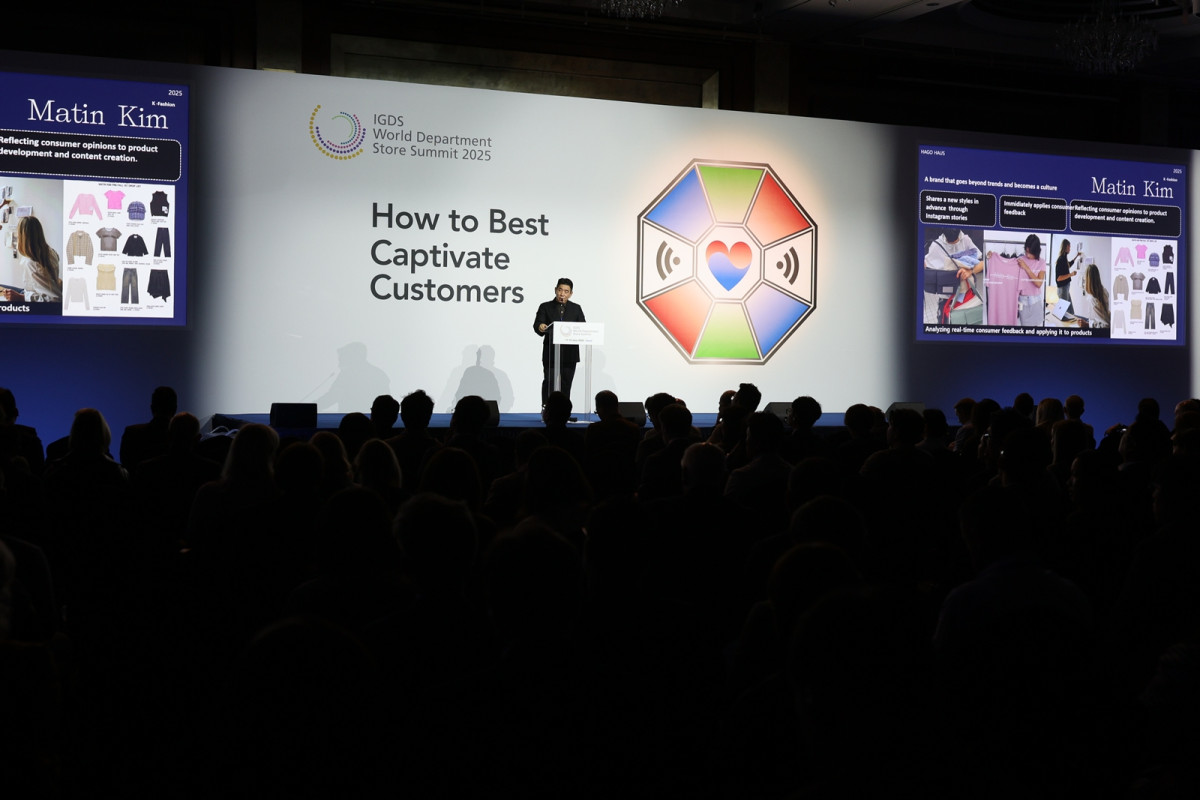
Hong Jung-woo, CEO of Hago House, said, \”We’re now in an era where customers co-create fashion products.\”
At the WDSS session on June 12 at Lotte Hotel Seoul, Hong used Hago House’s flagship label Mateng Kim as an example, explaining how the company solicited customer feedback on designs and then revised products accordingly.
Hago House invested in designer labels such as Mateng Kim, DeFound, and Uniform Bridge, scaling them into major brands. Mateng Kim started as a niche online label but, after Hago House’s 2021 investment, became a global brand with annual sales around 150 billion KRW (about $112.5 million).
#16’s inventory-free store was another of Hong’s experiments. He said the team piloted an online-to-offline concept at Lotte Department Store’s Dongtan branch: they opened a shop with no back stock, stocked only one item per size from each brand, and had customers order online for home delivery—a deliberate break from traditional retail approaches.
He acknowledged the risk, but said the O4O (Online for Offline) model taught them that rigid, standardized formats don’t work — flexible structures do.
Hong added that the same principle applies to global expansion. Instead of fixating solely on a fixed brand identity, companies should focus on brand flexibility and listen to local customers in each target market.








Most Commented