
Translation result.

① “We just thought of it as picnic food.” A dish Koreans know all too well
Think back to school picnics or field days — there’s always one food that shows up.
It’s easy to carry and eat, which makes it a go-to for train rides and day trips.
Because it’s so familiar, many Koreans don’t see it as anything special.
But reactions overseas can be completely different.
It’s kimbap.

② Why did it suddenly trend in the U.S.?
Recently, Korean food content has been spreading fast across social platforms and video apps.
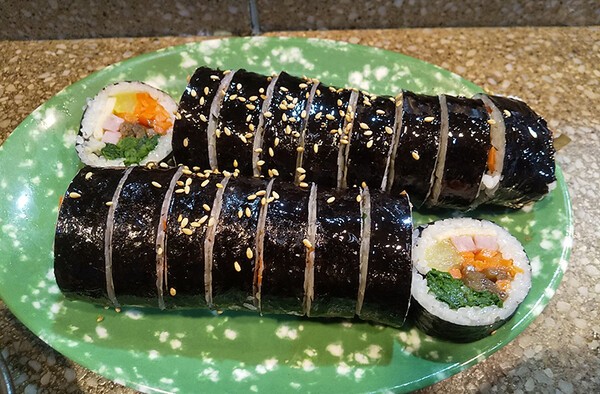
Kimbap caught people’s attention for its variety of fillings and its neat, Instagram-ready look.
Viewers loved the colorful cross-sections, and many creators pitched it as a healthy option.
There were even reports of kimbap selling out at some U.S. grocery stores — a moment that helped turn it into a trending topic.

③ Why doesn’t it feel special in Korea?
In Korea, kimbap is everyday food.
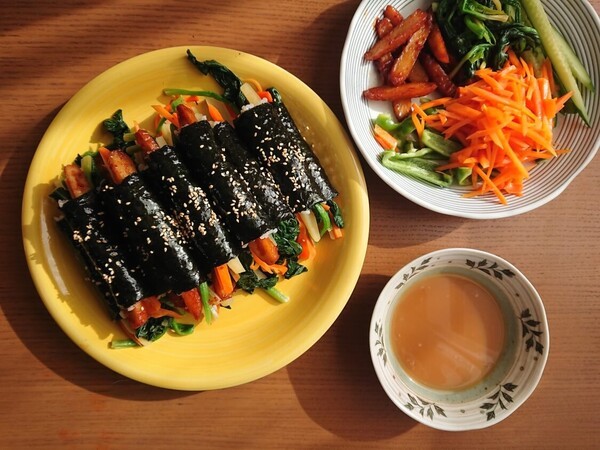
You’ll find it at convenience stores and snack shops, and many people make it at home.
So when foreigners get excited about it, Koreans are often surprised.
Abroad, the idea of wrapping rice in seaweed can seem novel — and that novelty changes how people see the dish.

④ What surprises people most
Surprisingly, many people abroad frame kimbap as a kind of “healthy fast food.”
Because it combines vegetables and protein, it’s often seen as a lower-guilt option.
The fact that you can eat it with your hands also makes it appealing to overseas consumers.
Those qualities helped interest in the U.S. build faster than expected, which is why the trend keeps getting coverage.
⑤ What people often miss
Koreans sometimes take kimbap’s familiarity for granted.
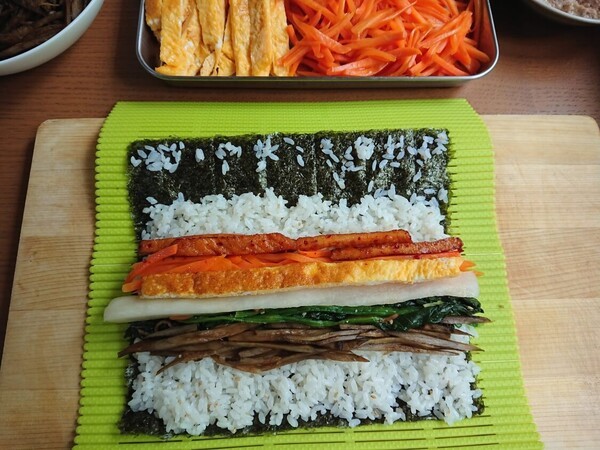
For many foreigners, the idea of eating a variety of ingredients all at once feels new and exciting.
Kimbap also comes in many varieties, with big differences in flavor and fillings depending on the type.
That’s why it’s increasingly introduced abroad as a perfect “first taste” of Korean cuisine.
Those cultural differences spark some really interesting reactions.

⑥ Why does it show up in so many travel videos?
Travel videos about Korea often feature kimbap.
You can grab it at airports and train stations, so tourists can try it without any fuss.
Interest has even grown to the point where people post reviews of convenience-store kimbap.
Among foreign visitors, kimbap is becoming a “must-try” — a trend that helps shape how people think about Korean food.
⑦ In the end, it’s about familiarity
We often fail to notice the value of the foods we eat every day.
To someone from another country, what we consider ordinary can look special.
Simple dishes like kimbap carry pieces of culture in each bite, which makes that perspective even more powerful.
It’s a reminder to look again at the everyday foods we take for granted.
⑧ The lasting takeaway
Around the world, foods that seem ordinary in one place can spark crazes in another.
Kimbap is everyday fare in Korea, but abroad it’s being embraced as a fresh example of Korean cuisine.
Many were surprised to hear that U.S. stores sold out — a sign of how big the interest has become.
Now’s a good time to reappraise the value of the foods we casually enjoy every day.






Most Commented