
Iran’s Missile Strike: Betting Scandal Exposed! How $23 Million Was Wagered on a War Outcome
Daniel Kim Views
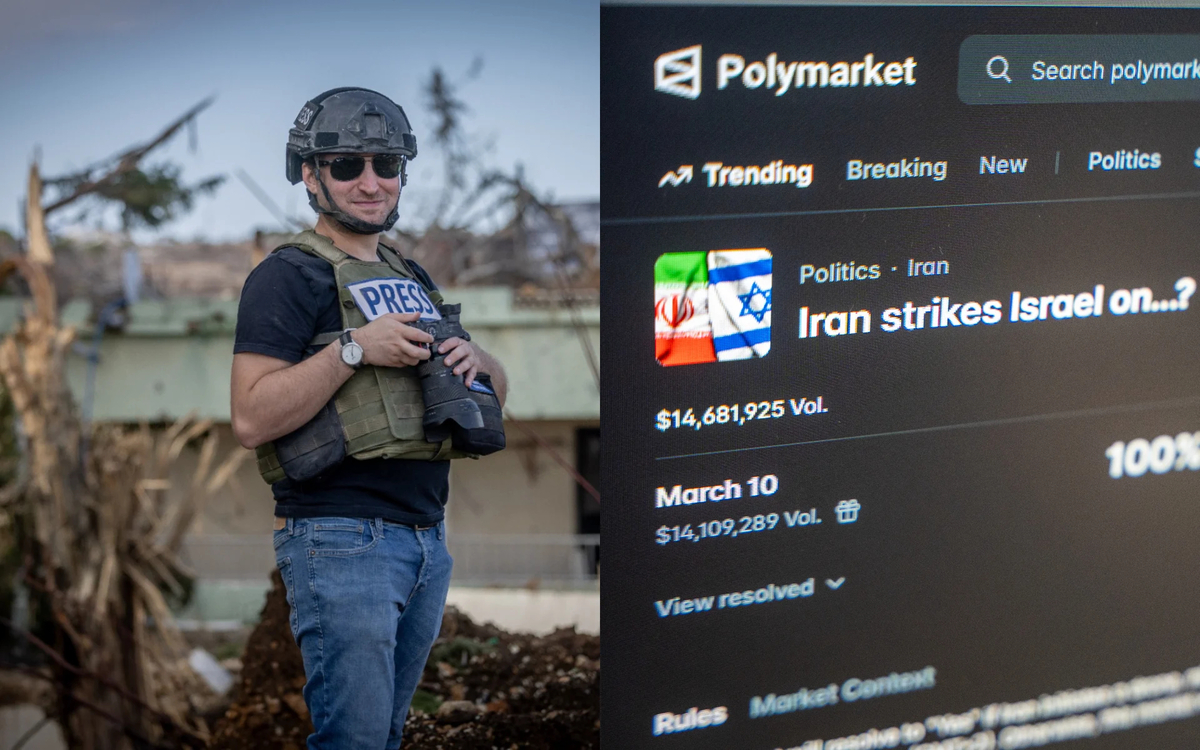
Gamblers Who Bet ‘It Won’t Hit’ Tried to Bribe and Threaten the Reporter
People who had wagered on whether Iran would strike Israel during the U.S.-Iran confrontation attempted to bribe and threaten the reporter who first covered the incident after a strike appeared to have occurred.
On March 16, The Times of Israel reported that its correspondent Emmanuel Fabian, who first filed the account of Iran’s strike on Israel, was the target of those intimidations.
On March 10, when a missile fell into a wooded area roughly 500 meters from a residential neighborhood outside Beit Shemesh, west of Jerusalem, and produced a large explosion, Fabian reported that “a missile fell into an open field outside Beit Shemesh.”
In the five days after that dispatch, he said he was inundated with harassment and death threats via WhatsApp and other social platforms.
Initially, someone claiming to represent Beit Shemesh municipal authorities messaged politely asking him to correct the story, saying the object that fell was not an interceptor missile but “interceptor missile debris.”
Fabian responded that, when combined with Israeli Defense Forces intelligence and the explosion footage, the evidence indicated a warhead detonation rather than mere debris. He noted the video showed an explosion consistent with a warhead weighing several hundred kilograms — a blast ordinary fragments would not produce.
The following day, another person demanded a retraction, insisting, “your incorrect reporting is causing a chain of errors.”
One sender escalated to threats: “I lost $900,000 (approximately 1.2 billion KRW) because of you. I’ll spend the same amount to ruin you. I know where you, your parents and your family live. You have exactly 30 minutes to fix your lie,” then flooded Fabian with minute-by-minute messages.
On other platforms, including X, users pressed him for verification: “India’s business daily cited your piece but said most were intercepted,” and “Do you have actual footage of the explosion?” among other requests.
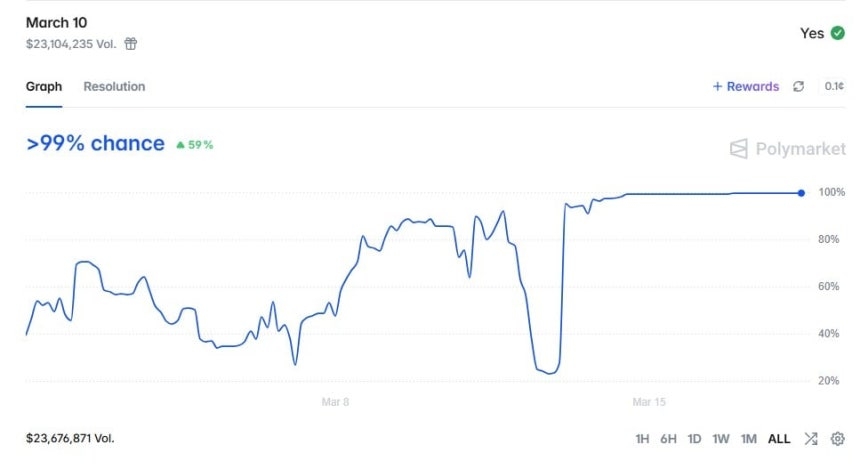
Fabian said he didn’t understand why so many people fixated on what seemed a minor factual point. By checking the identities of those contacting him, he discovered they were bettors who had placed wagers on Polymarket on the question “Will Iran strike Israel on March 10?” Polymarket is one of the world’s largest prediction markets, where users stake money on the likelihood of future events.
The market drew more than $23 million in bets (approximately 30.67 billion KRW). Under Polymarket’s rules, a strike counted as “Yes” only if Iran hit Israel with a drone, missile or aircraft; attacks that were intercepted did not qualify as “Yes.”
Fabian’s report that “an Iranian missile struck an open area” therefore produced losses for those who had bet “No.”
He said some people even offered to share a portion of their winnings if he amended his report.
A caller identifying himself as a lawyer told Fabian on the phone that “a U.S. company has asked me to investigate whether you were involved in manipulating bets on Polymarket.”
Fabian said he considered changing the story under pressure but ultimately stood by his reporting, reported the threats to police, and published an account of the episode on The Times of Israel website.
Polymarket issued a statement condemning the threats as unacceptable, saying it suspended the related accounts and will provide information to law enforcement.



Most Commented