
Iran’s Retaliation: $800 Million Damage to US Military Bases in the Middle East Revealed
Daniel Kim Views
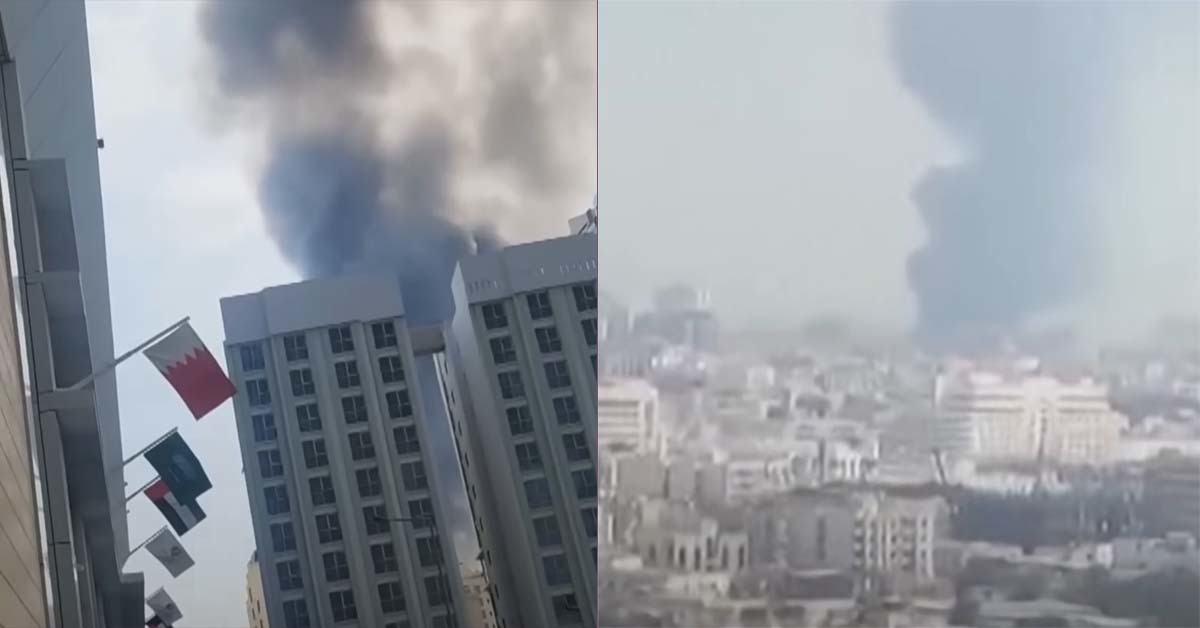
An analysis released March 21 by the BBC and the U.S. Center for Strategic and International Studies (CSIS) found that U.S. military bases in the Middle East suffered about $800 million in damage from Iranian attacks during the first two weeks after the outbreak of war (about 1.2052 trillion KRW).
Mark Cancian, a CSIS senior adviser and co‑author of the report, said the damage to U.S. bases in the region has been underreported. \”The scale appears substantial, but we need more information to determine the full extent,\” he said. The Pentagon directed the BBC to U.S. Central Command for comment; Central Command declined to respond.
Much of the damage occurred during Iran’s initial retaliatory strikes, launched soon after U.S. and Israeli strikes on Iran on the 28th of last month. Iran targeted U.S. bases across the Middle East — including facilities in Jordan and the United Arab Emirates — and concentrated strikes on air‑defense and satellite‑communications systems.
The largest single loss was to the AN/TPY‑2 radar for the THAAD (Terminal High Altitude Area Defense) system at a Jordanian air base. CSIS reviewed Defense Department budget documents and put the radar’s value at roughly $485 million (about 730.6 billion KRW). CSIS also confirmed THAAD radar damage at a UAE base, a hit that prompted the U.S. to redeploy some THAAD assets from South Korea to the Middle East. Damage to base buildings and infrastructure added about $310 million (about 467 billion KRW).
BBC Verify, the broadcaster’s fact‑checking unit, analyzed satellite imagery and found Iran repeatedly struck at least three sites: Kuwait’s Ali Al Salem base, Qatar’s Al Udeid base, and Saudi Arabia’s Prince Sultan air base. From the start of the conflict, Iran focused on radars and satellite‑communications systems — the \”eyes and ears\” of modern military operations. Satellite photos show radar facilities at Kuwait’s Arifjan base and Saudi Arabia’s Sultan base were struck, and smoke was observed rising from THAAD radar components. There were also reports that Russia shared information on U.S. movements with Iran.
Major satellite‑image providers have restricted releases of Iran‑related imagery, complicating efforts to assess the full scope of the damage.
Damage from Iran’s retaliatory strikes represents only part of the war’s total cost. The Pentagon told Congress it incurred $11.3 billion in costs during the first six days after the war began (about 17.0234 trillion KRW), and CSIS estimates total costs over 12 days could reach $16.5 billion (about 24.8572 trillion KRW).
The Defense Department has requested an additional $200 billion in war funding from Congress (about 301 trillion KRW). Defense Secretary Pete Hegseth said, \”The numbers may change, but there is a cost to rooting out bad actors.\”
So far the U.S. has lost 13 service members since the fighting began. The Iran human‑rights group Hrana estimates nearly 3,200 people — including about 1,400 civilians — have died in the conflict. President Trump told a White House event on the 21st, \”We are doing very well in Iran.\” But with the Strait of Hormuz effectively closed, global markets are already being shaken, and uncertainty remains over how long the war will last and whether ground troops will be deployed.
Your daily personal horoscope report! How will your day go?




Most Commented