
Translation result.
|
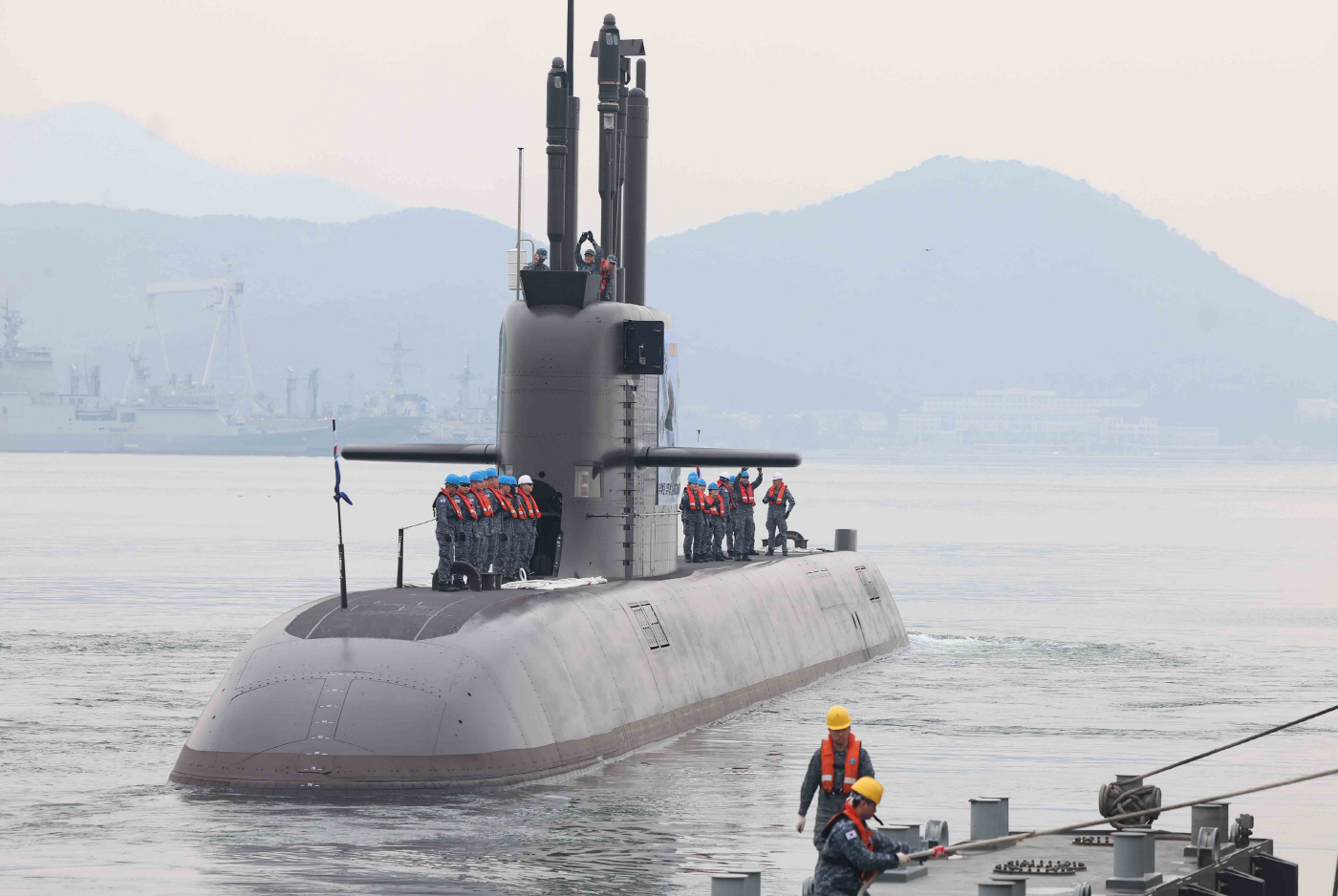
A domestically designed and built submarine is crossing the Pacific. On March 25, the Republic of Korea Navy’s 3,000-ton-class (about 3,307 short tons) Dosan Ahn Chang-ho departed Jinhae and began an approximately 14,000 km (about 8,700 miles) transit to Victoria on Canada’s west coast.
This is not a routine training deployment. The navy describes the voyage as a strategic mission to demonstrate the Korean design’s combat-ready, long-range operational capability and to strengthen Seoul’s bid for Canada’s Canadian Patrol Submarine Project (CPSP).
While the deployment is officially framed as a Korea-Canada cooperative exercise, the navy says it functions as a package-style demonstration: verifying submarine operational interoperability with the Royal Canadian Navy, assessing prospects for local maintenance and logistics support, and showcasing sustained operational endurance.
A South Korean defense industry official said the era of winning bids with proposals and mock-ups is over. “Now contracts are decided by sea demonstrations that prove how long, quietly and reliably a submarine can operate,” the official said.
A former admiral of the Submarine Command outlined three core objectives for the voyage.
First, to demonstrate long-range submerged endurance. The aim is to prove the boat has overcome the range limits long cited as a weakness of diesel-electric submarines.
Second, to validate integrated weapons and sensor operations in a combat-like environment. This vessel is the lead ship of South Korea’s 3,000-ton-class submarine program, a platform that has been described as capable of operating submarine-launched ballistic missiles (SLBMs).
Third, to show alliance and partnership interoperability. Canada’s navy operates in close coordination with the United States and the United Kingdom, and interoperability with those systems is a key selling point.
Rear Admiral Gwak Gwang-seop, the navy’s deputy chief of staff who oversaw the send-off, said the voyage will be an opportunity to demonstrate the superior operational performance of South Korean submarines on the international stage. Defense industry officials interpret the deployment as a real-world showcase aimed at winning export contracts.
Canada’s CPSP is a mega-project, worth tens of trillions of KRW (equivalent to tens of billions of USD), intended to replace aging submarine forces. South Korea is competing on price-performance, fast delivery schedules, and offers of local production and technology transfer. Seoul also plans to apply the “package industrial cooperation” model it used in the K2 tank sale to Poland to the submarine bid.
A military source said the outcome of this voyage could reshape the global standing of South Korean submarines. “If the mission succeeds, K-defense could move beyond being a weapons exporter to becoming a maritime security partner,” the source said.
One submarine has set out across the Pacific. At the end of its route waits not just a port of call, but the next major market for South Korea’s defense industry.






Most Commented