
Translation result
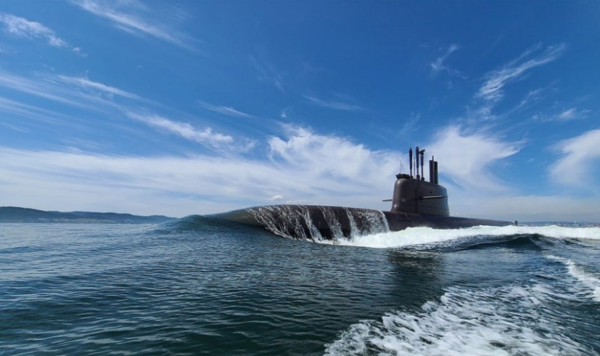
[The Public — Reporter Hong Chan-young] As competition intensifies between Hanwha Ocean and Germany’s Thyssenkrupp Marine Systems (TKMS) for Canada’s Coastal Patrol Submarine Project (CPSP)—a program valued at up to 60 trillion KRW (about 396 million USD)—analysts say the outcome will hinge less on corporate technology and more on government-level support.
Both bidders are expanding local partnerships to boost their evaluation scores. But observers say Seoul needs to match Germany’s government-driven package approach by strengthening offset arrangements and diplomatic backing.
Defense industry sources say that after submitting its CPSP proposal, Hanwha Ocean moved quickly to broaden cooperation with Canadian firms.
Hanwha Ocean has signed partnerships with five companies—OSI Maritime Systems, EMCS Industries, Texsol Marine, Zastram Technologies, and Curtiss-Wright—establishing collaboration across key submarine systems such as navigation, detection, propulsion power and maintenance.
Each partner covers capabilities directly tied to submarine operations. OSI Maritime Systems will provide electronic navigation systems for underwater positioning and route planning. EMCS Industries will supply hull corrosion protection and biofouling suppression technologies.
Texsol Marine will handle power-system integration and automation. Curtiss-Wright will deliver towed-sonar operation systems. Zastram Technologies plans to support operational readiness using local shipbuilding and naval networks.
Hanwha Ocean’s push to deepen local ties reflects how CPSP is scored. Maintenance, repair and logistics account for 50% of the evaluation, while platform performance is 20%. Because both bidders already possess world-class platforms, those technical categories offer limited separation.
That makes “economic contribution” — roughly 15% of the score, covering industrial and technology benefits (ITB), job creation and supply-chain linkages — a decisive factor.
TKMS has also accelerated its Canadian partnerships. It teamed with defense firm CAE to develop trainer and simulation systems and partnered with aerospace company Magellan on torpedo production and operational support. TKMS is working with Canadian suppliers and indigenous organizations to build an industrial and workforce base.
With both bidders converging on local engagement, industry analysts say the race will ultimately turn on each government’s capacity to deliver a national package. Germany, in particular, leverages NATO ties and actively uses offsets—such as integrating Canadian combat management systems into its own navy—to present a state-level offer.
By contrast, South Korea’s effort has been dominated by company-driven B2B outreach, which industry observers say leaves it at a disadvantage. They call for a whole-of-government push that pairs expanded offset commitments with linked diplomatic and security cooperation.
The Defense Acquisition Program Administration has begun preparing an agreement that outlines whole-of-government support policies. Seoul and Ottawa have previously signaled cooperation through industrial forums, but industry sources warn that declarations of intent won’t be enough: tangible package proposals are needed to secure the contract.
In short, the CPSP competition has evolved beyond a technical duel into a state-versus-state contest that blends industrial and economic promises with diplomatic weight.







Most Commented