
Is Palantir the Future of Warfare? Unpacking Its Explosive Growth and Ethical Dilemmas
Daniel Kim Views
Translation result.
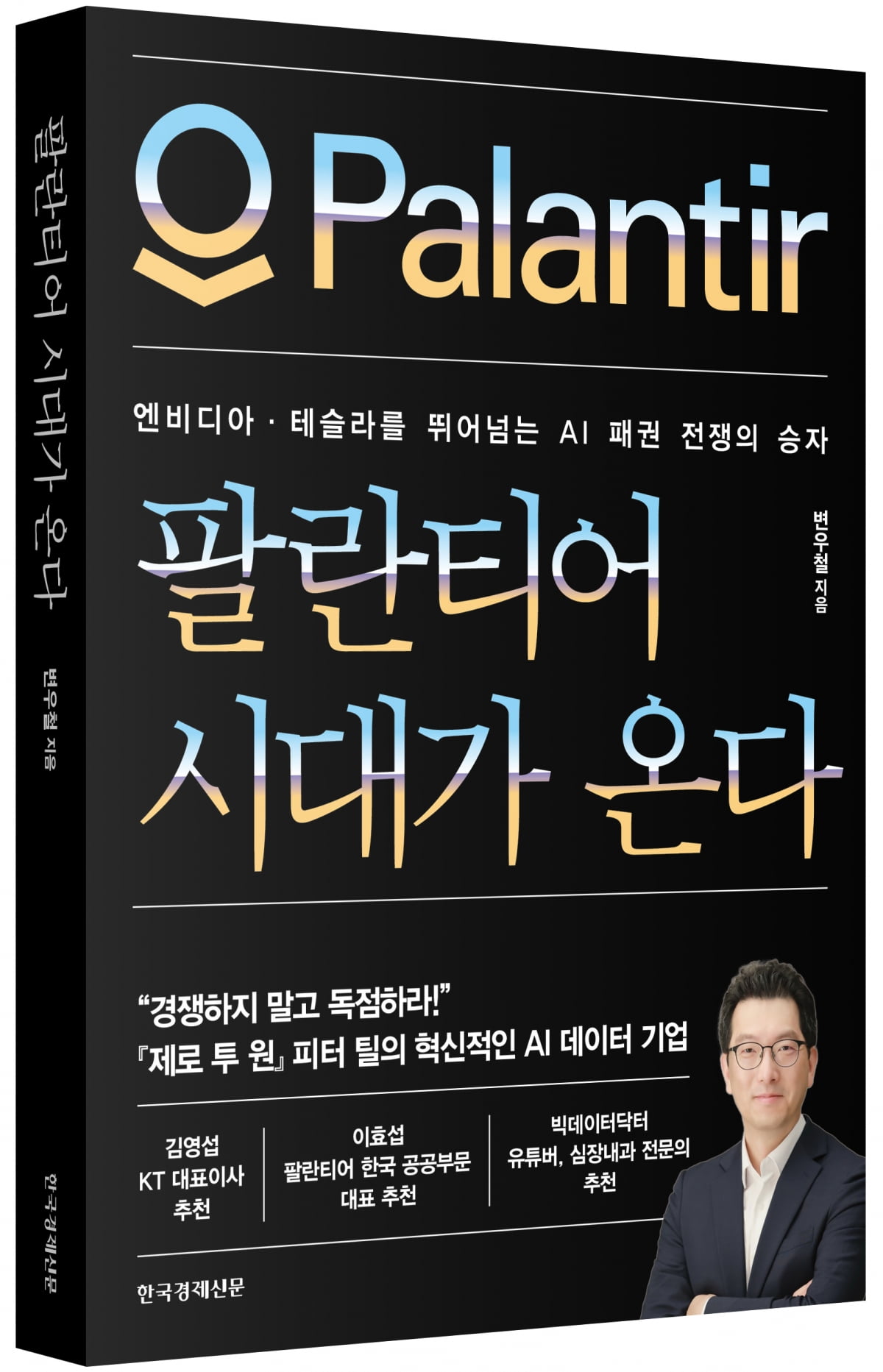
By Byeon Woo-chul │ Hankyung │ 23,000 KRW (≈ $17.25)
On Feb. 28, 2026, the United States and Israel launched a large-scale military campaign against Iran. Within 24 hours, U.S. Central Command said it had struck more than 1,000 targets. Officials also confirmed that artificial intelligence played a central role. The Washington Post, citing multiple sources, reported the use of Palantir’s military AI, the Maven Smart System. By integrating and analyzing the torrent of data from satellites, drones and sensors to generate strike intelligence, the system made clear that AI is changing the mechanics of warfare worldwide.
This book drew strong interest from investors when it first appeared last year. But the reasons to reopen it today are different. What was once a company to watch has now proven itself both in financial results and on the battlefield. In the fourth quarter of 2025, Palantir posted revenue of $1.4 billion, up 70% year over year, while its U.S. commercial revenue rose 137% year over year. The company’s fiscal 2026 revenue guidance of about $7.2 billion exceeds Wall Street estimates by more than $900 million.
What underpins that explosive growth? This book provides the most systematic answer. Author Byeon Woo-chul spent seven years working alongside Palantir and led three separate deployments of Palantir systems at major Korean firms — a rare, hands-on record anywhere in the world. He exposes the paradox of investors calling Palantir a must-own stock while still not understanding what the company actually does, and he dissects Palantir’s technology and business model from an insider’s perspective. The book helps readers move beyond short-term market noise and fragmented assessments to see Palantir’s structural advantages and founding philosophy.
At the core of the book is the concept of “ontology.” Ontology models real-world business entities as objects and maps the relationships between them, giving data meaning and operational purpose. It’s essential for collecting, processing and applying the right data in real-world services. Palantir’s ability to fuse vast battlefield data in the Maven system is built on this ontology technology.
Chapters 1 and 2 analyze why Palantir’s stock surged and why its high valuation can be justified — reading them now underscores how prescient the author’s analysis was. Chapters 3 and 4 use narrative case studies to describe how Palantir systems were implemented at major Korean corporations, offering concrete examples of how data technology is applied across industries. Chapter 5 projects how Palantir could secure a “zero to one” lead and become a singularly dominant company by leveraging ontology and Foundry technologies.
Questions remain. The stock’s price-to-earnings ratio, which exceeds 200, keeps valuation concerns alive, and the company’s heavy dependence on government contracts — more than half its revenue — is a structural risk. Above all, the Iran campaign has intensified ethical debate over the weaponization of AI.
At the AIPCon9 conference in March, CEO Alex Karp argued that AI gives the U.S. and its allies a strategic edge. Yet as AI is increasingly used to identify and prioritize strike targets, the question of who bears responsibility for those systems grows weightier.
Palantir founder Peter Thiel wrote in Zero to One, “Don’t compete — monopolize.” If you want to assess what it means for Palantir to be consolidating near-monopolistic influence in both markets and battlefields — as an investor and as a citizen — now is a good time to reopen this book.
Namgoong Hoon, Editor, Hankyung BP









Most Commented