
Palantir vs. Traditional Warfare: Is AI the Future of Military Decision-Making in Asia?
Daniel Kim Views
Translation result
|
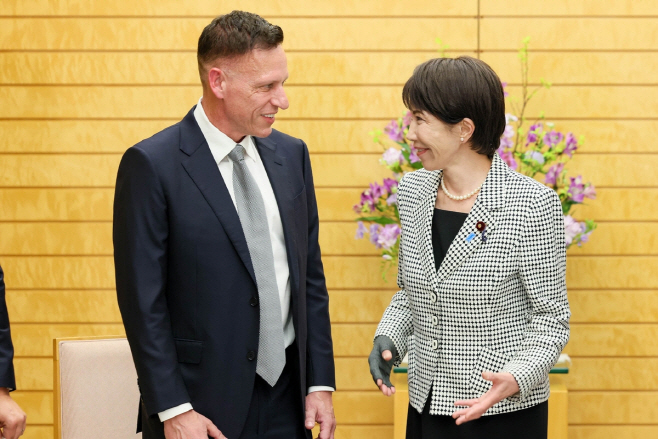
Data‑analytics company Palantir Technologies has emerged as a central AI targeting tool for U.S. forces in operations involving Iran.
The Mainichi reported on the 25th that Palantir provides and operates the primary system for the Defense Department’s military AI program, Project Maven. The company reportedly analyzes massive military datasets to recommend targets and weapons‑employment plans. The report also noted that Palantir co‑founder and chairman Peter Thiel met Prime Minister Sanae Takaichi on March 5, highlighting growing ties with Tokyo.
Palantir expanded with backing from In‑Q‑Tel, the CIA’s venture arm, and has built platforms that fuse extensive government, military and intelligence data to support decision‑making.
According to Mainichi, under Project Maven the U.S. military combines Palantir’s platform with Anthropic’s AI to fuse satellite, drone, communications and reconnaissance feeds. The resulting system not only helps pick targets but also estimates fuel and ammunition needs, runs cost comparisons, and recommends weapons and operational plans.
◇AI changing the speed of war
Reuters reported last month that the Defense Department has decided to formally adopt Palantir’s Maven AI system as a core U.S. command‑and‑control platform. A memo signed by Deputy Secretary of Defense Steve Pineberg elevated Maven to a formal program with long‑term funding and an operational mandate. The system is charged with analyzing large volumes of data from satellites, drones, radars and sensors to identify potential threats.
This reflects a shift in how wars are fought. Previously, analysts and operations staff often took days to process intelligence, classify targets and set strike priorities. Now AI can filter vast datasets in minutes or hours, leaving commanders to review and approve the results.
Palantir stresses that humans make final lethal decisions, but critics warn that when decision timelines compress dramatically, human review risks becoming a procedural checkbox rather than a meaningful safeguard.
The connection with Japan has drawn attention. The Prime Minister’s Office said on March 5 that Prime Minister Takaichi met with Peter Thiel, and the Foreign Ministry said the two sides exchanged views on the state and prospects of advanced U.S.‑Japan technologies.
As Tokyo pushes both defense upgrades and AI industry growth, interactions with U.S. defense and data firms like Palantir point to broader security‑technology cooperation rather than a routine corporate visit.
Palantir’s rise as an AI war company is not just a distant concern for South Korea. In a contingency on the Korean Peninsula, U.S. intelligence, surveillance and targeting systems will be closely linked with Republic of Korea operations. If the U.S. rapidly fields AI‑enabled command‑and‑control, Seoul will need to update rules on data sharing, target verification, civilian‑harm mitigation and accountability.
At the same time, Palantir‑style platforms can increase defense efficiency. But if those tools are expanded into domestic policing, immigration controls or broad surveillance programs, debates over privacy and civil liberties will inevitably follow.
The key issue is not simply whether to use AI, but who controls it and under what standards. The U.S. has opened the door to AI warfare, and Japan is widening its access to that technology. South Korea now faces the task of balancing the security benefits of AI cooperation with democratic oversight and legal safeguards.







Most Commented