
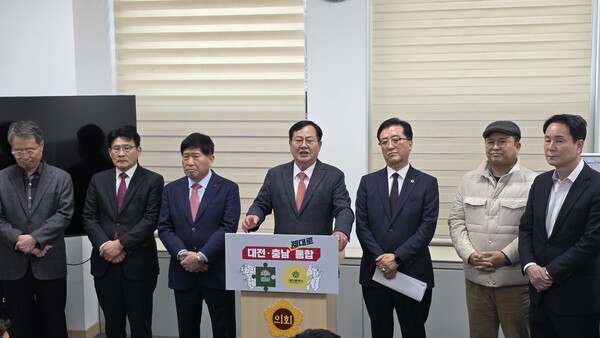
[The Public = Kim Jong-yeon, Reporter] According to local political sources on the 10th, a press conference at the Daejeon City Council featured key figures including Lee Eun-kwon, chairman of the People Power Party’s Daejeon City chapter; Kang Seung-kyu, chairman of the Chungnam Provincial Party; Jo Won-hui, chairman of the Daejeon City Council; and Hong Sung-hyun, chairman of the Chungnam Provincial Council. They emphasized, “The proposed administrative merger is a critical issue that will shape our region’s future for generations.” However, they criticized the current approach, stating, “Both the content and process are deeply flawed and fall far short of meeting citizens’ expectations.”
The People Power Party specifically targeted the Democratic Party’s integration bill, arguing it was rushed through without adequate scrutiny. They highlighted that compared to similar discussions in regions like Gwangju and Jeonnam, the bill fails to ensure equity in national financial commitments and the extent of power devolution. The party described the financial support measures as “promises that look like declarations but lack legal teeth” and warned that the transfer of authority could be hampered by government negotiation clauses.
They cautioned against the potential pitfalls of a “pass now, fix later” approach. Citing the case of Gangwon Special Self-Governing Province, where the law passed but effective power transfer remains contested, they argued that Daejeon and Chungnam could face similar challenges.
The call for a public referendum is gaining traction in local councils. People Power Party members in the Daejeon City Council have announced plans to introduce a resolution urging a referendum, effectively initiating the voting process. Democratic Party councilors countered, questioning the legality of convening a special session for this purpose. Reports indicate that public opinion on the merger is becoming increasingly polarized.
However, experts note that the actual referendum may not materialize. If the Daejeon mayor requests a vote, the Ministry of Interior and Safety must review its necessity. The Residents Voting Act requires the process to be completed by April 4, 60 days before the June 3 local elections, raising concerns about the tight timeline.
In the National Assembly, the schedule for reviewing the special law has been set, intertwining debates over expedited passage and procedural legitimacy. The National Assembly’s Administrative Safety Committee has outlined plans for legislative hearings, followed by subcommittee reviews and a plenary vote. Daejeon Mayor Lee Jang-woo and Chungnam Governor Kim Tae-heum are reportedly lobbying central political figures to include special provisions for authority and finances.
The People Power Party’s Daejeon and Chungnam branches have a clear message: If the merger is truly a “hundred-year plan,” then securing public consent and establishing implementation mechanisms should take precedence over rushing the bill through. They argue that a public referendum is essential to achieve this. The Democratic Party, conversely, suggests examining the feasibility of a referendum based on procedural, scheduling, and legal considerations. Consequently, the integration debate is likely to continue grappling with both the special law review and the referendum proposal as parallel issues for the foreseeable future.








Most Commented