
Will the Upcoming US-China Trade Talks Lead to Progress? Key Insights Ahead of Trump’s Visit
Daniel Kim Views
Translation result
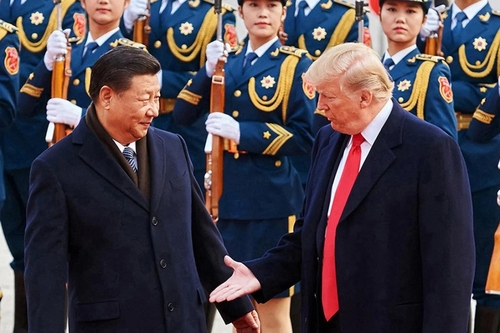
Chinese President Xi Jinping and U.S. President Donald Trump[SCMP capture. Redistribution and DB use prohibited][SCMP capture. Redistribution and DB use prohibited]
State-run Chinese media said progress in the high-level U.S.-China economic and trade talks scheduled for the 15th–16th (local time) in Paris will depend largely on the United States.
In a commentary on the 15th, state-run Xinhua wrote that whether the upcoming talks yield progress will be determined mainly by the U.S. side.
It urged the United States to take a reasonable and pragmatic approach to negotiations and to act according to principles that support stable economic relations between China and the U.S.
The meeting comes ahead of President Trump’s planned visit to China starting on the 31st of this month and is widely seen as preparatory for a leaders’ summit.
Xinhua described the talks as both an opportunity and a test. It said the two sides should emphasize long-term cooperation and mutual respect to narrow differences, broaden cooperation, and secure outcomes that benefit both countries and the global economy.
The commentary noted the talks carry added weight amid an uneven global recovery and rising uncertainty. It said the world expects both sides to move toward each other and help restore greater stability to global trade and growth.
Xinhua emphasized that exchanges between the two leaders since last year have helped shape bilateral ties. It also pointed to U.S.-China delegation meetings held in Kuala Lumpur ahead of the Busan leaders’ summit last October, saying those talks produced several understandings.
Recalling the Kuala Lumpur discussions, the commentary said the sides found common ground on issues including U.S. Section 301 measures targeting China’s shipping, logistics and shipbuilding sectors; extensions of mutual tariff forbearance; tariffs and cooperation on fentanyl and drug control; trade expansion; and export controls. It added that both sides have maintained close communication and exchanged views on economic and trade concerns in a timely manner.
However, Xinhua acknowledged that tensions between Washington and Beijing are unlikely to be resolved quickly.
The commentary argued that the structural, deeply rooted differences accumulated over years in U.S.-China economic and trade relations cannot be solved overnight. It criticized the U.S. decision to open Section 301 investigations under the Trade Act into 16 economic entities, including China, on grounds such as alleged excess manufacturing capacity—moves that Xinhua said have once again increased uncertainty in global trade.
It said China is closely monitoring developments and will conduct a comprehensive assessment of U.S. measures. Xinhua asserted that China reserves the right to take all necessary steps to firmly defend its legitimate rights and interests.
Observers read the commentary as underscoring the importance of U.S.-China cooperation amid instability in the Middle East. The piece followed President Donald Trump’s call for key countries, including South Korea, China and Japan, to dispatch warships to protect shipping through the Strait of Hormuz.
On the 14th (local time), Trump wrote on Truth Social that several countries—particularly those affected by Iran’s attempts to block the Strait of Hormuz—would send warships alongside the U.S. to keep the strait open and safe, naming China, France, Japan, South Korea and the U.K.
#Trump #U.S. #XiJinping #China #Xinhua #Iran #war
Yonhap News TV story tips and inquiries: KakaoTalk/Line jebo23
Bae Gyu-bin (beanie@yna.co.kr)








Most Commented