
Gwangju’s Representation Crisis: How Will Upcoming Special City Status Affect Local Governance?
Daniel Kim Views
Translation result.
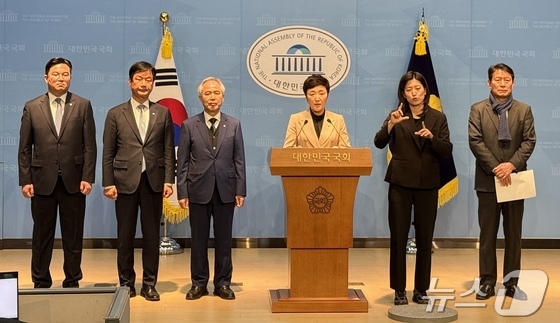
Gwangju lawmakers from the Democratic Party called for measures to correct a disparity in metropolitan council representation between Gwangju and Jeonnam ahead of the July launch of the Jeonnam–Gwangju Special City.
On the 16th, Yang Bu-nam, chair of the Gwangju party branch, and other local lawmakers held a press conference at the National Assembly briefing room, saying that as the Special City’s launch approaches, imbalances in regional representation must be examined.
They said the special law’s enactment will proceed using the current metropolitan council seat allocations, and that the National Assembly’s Special Committee on Political Reform will subsequently consider an increase in Gwangju city council seats. They added that the special law requires reasonable adjustments to reflect the population ratio and regional characteristics of Gwangju and Jeonnam.
The lawmakers noted that Gwangju has about 1.39 million residents and 23 city councilors, while Jeonnam has roughly 1.77 million residents and 61 provincial councilors — a population gap of about 380,000 but a 2.7-fold disparity in seats. They warned this mismatch could produce representational inequities when the integrated Special City council is formed.
Pointing to the Constitutional Court’s guidance that population variance across local council electoral districts should be kept within a 3:1 ratio, they urged the National Assembly’s Special Committee on Political Reform to make a responsible decision before the Special City’s launch to ensure Gwangju residents’ representation is properly protected.








Most Commented