
South Korea Triumphs in Schindler ISDS Case: What This Means for Future Investments
Daniel Kim Views
Translation result
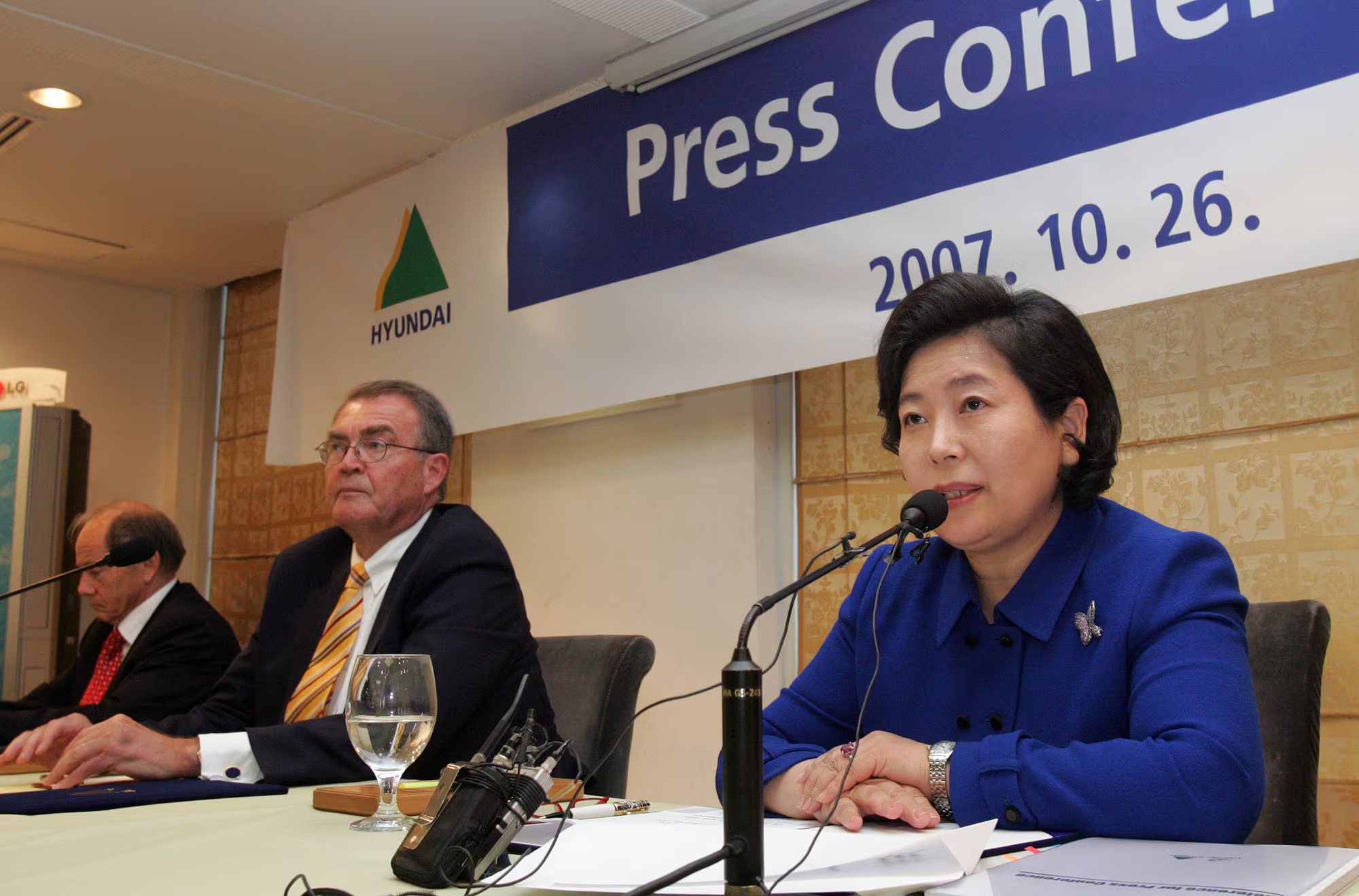
The government prevailed on all claims in the international investment dispute (ISDS) filed by Swiss elevator company Schindler Holding AG (hereafter, Schindler). Seoul avoided Schindler’s demand for ₩320 billion (about $240 million) in damages and is set to recover legal fees of ₩9.6 billion (about $7.2 million) spent over eight years of litigation.
Justice Minister Jeong Seong-ho told reporters at the Government Complex Seoul on the 14th that “at around 2:03 a.m. today, the arbitral tribunal of the Permanent Court of Arbitration (PCA) dismissed all of Schindler’s claims.”
◇Schindler arrived as a ‘white knight’ at first…then sought control of Hyundai Elevator
Schindler is the world’s second-largest elevator maker. Hyundai Elevator is the market leader in South Korea. Schindler first appeared as a “white knight” during a family management dispute within Hyundai Group between Chair Hyun and her uncle by marriage, Jeong Sang-young, the honorary chair of KCC.
In 2006 Schindler bought a 25.5% stake in Hyundai Elevator from KCC, becoming the company’s second-largest shareholder. When concerns arose about a potential hostile takeover, Schindler pledged to support Hyundai Elevator’s board and management, including Chair Hyun. Hyun and Alfred Schindler even visited Mount Kumgang together.
But Schindler later sought control of Hyundai Elevator on multiple occasions. South Korea’s elevator market ranks third worldwide after China and India.
Hyundai Group was embroiled in conflicts over control of Hyundai Heavy Industries, KCC and Hyundai Merchant Marine (now HMM). To defend control of Hyundai Merchant Marine, Chair Hyun used Hyundai Elevator to enter derivative contracts with financial investors. Those contracts secured friendly shares while promising to cover losses if the share price fell below the purchase price.
When the shipping market weakened and Hyundai Merchant Marine’s share price plunged, Hyundai Elevator had to compensate financial investors for losses totaling several hundred billion won.
In 2014 Schindler filed a shareholder derivative suit against Chair Hyun, alleging she caused roughly ₩700 billion (about $525 million) in losses. In March 2023 the Supreme Court ordered Chair Hyun to pay ₩170 billion (about $127.5 million) to Hyundai Elevator; with accrued interest the total reached ₩270 billion (about $202.5 million).
Soon after the Supreme Court’s final ruling, Schindler moved to enforce its claim against Chair Hyun’s shares—an action widely seen as an attempt to seize control of Hyundai Elevator. Chair Hyun avoided losing control by using a loan from M Capital to pay the damages in full.
Although Hyundai Elevator generated operating profit from its core business, the derivative contracts produced large losses. The company conducted several rights offerings to raise necessary funds; Schindler did not participate. Its stake fell from 35% in 2012 to 30.9% in 2013 and then declined into the mid-teens as additional shares were issued.
In November 2015 Hyundai Elevator issued convertible bonds worth ₩205 billion (about $153.8 million) through third-party allotment. In 2016 it exercised a call option to early-redeem ₩82 billion (about $61.5 million), representing 40% of those bonds. On the same day, the company separated the call option from the convertible bonds and sold that option to Chair Hyun and Hyundai Global for ₩7.8 billion (about $5.9 million). Hyundai Global is wholly owned by the Hyun family. Chair Hyun also exercised part of the convertible bonds and converted them into shares directly.
◇Schindler challenged Korean regulators’ handling of the rights offerings and the call-option transfer
Schindler argued that Hyundai Elevator’s rights offerings were carried out to defend Chair Hyun’s control and that Korean financial regulators failed to sanction those moves properly, which led to dilution of Schindler’s stake and financial harm.
Schindler also contended that the 2016 transfer of the call option was an unfair transaction carried out at a price favorable to Chair Hyun, and that the Korea Fair Trade Commission failed to penalize the deal, violating investor protection duties.
Schindler brought these complaints to an ISDS tribunal in 2018. The arbitral tribunal, however, found it difficult to conclude that Korea’s financial and fair-trade supervision breached the investor-protection standards under the relevant international investment treaty and rejected Schindler’s claims in full.
The tribunal determined that actions by the Korea Fair Trade Commission, the Financial Services Commission and the Financial Supervisory Service were legitimate exercises of authority and reflected adequate investigation and review rather than arbitrary or discriminatory conduct. Because the government did not violate the investment treaty, the tribunal found no state responsibility under international law and dismissed all of Schindler’s compensation demands.
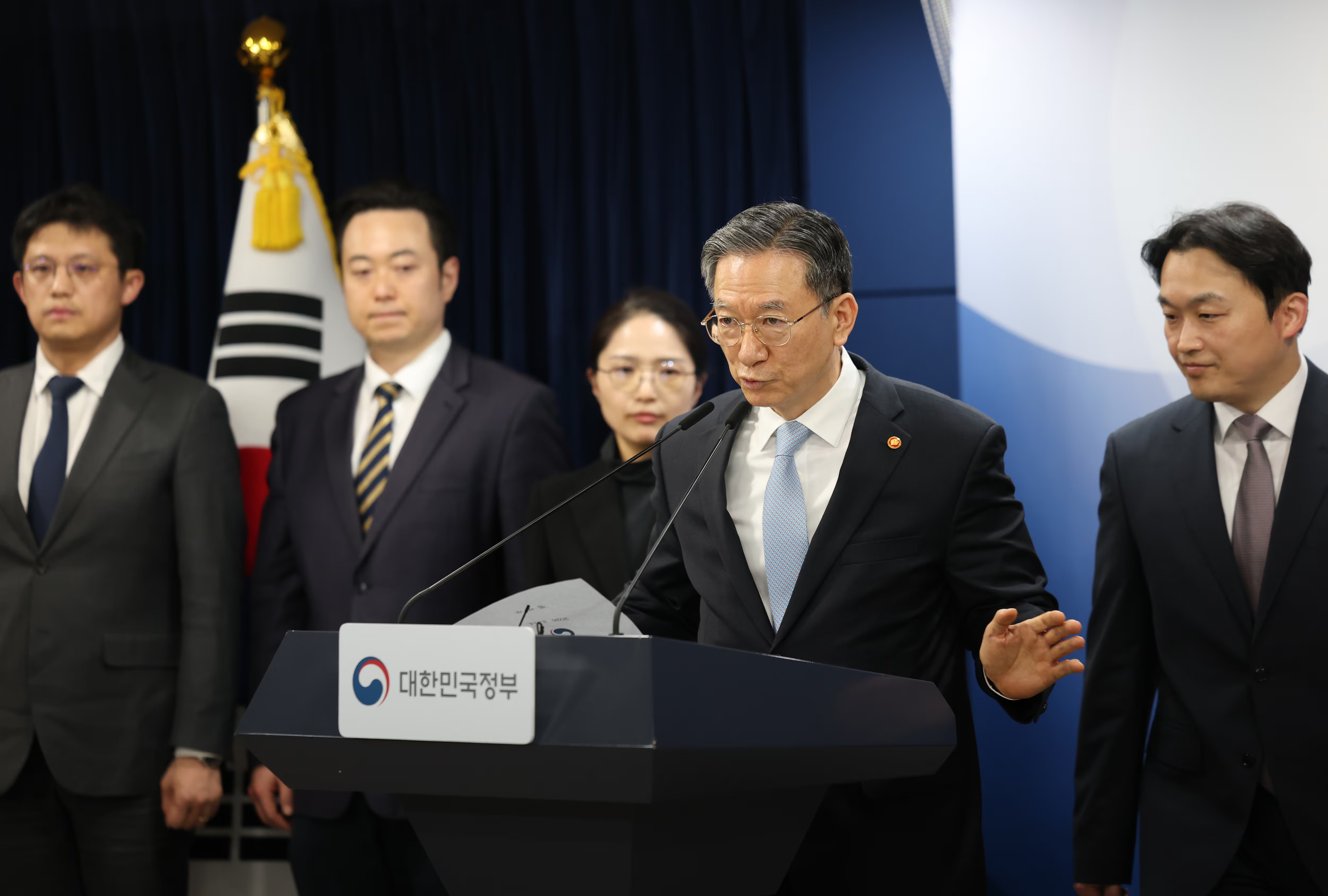
◇Jeong Seong-ho: “I’m pleased to bring good news amid political unrest”
On Facebook, Minister Jeong described the ruling as “a victory that protected the state’s finances by blocking attempts to shift a private corporate control dispute and shareholders’ private conflicts onto the state.”
He said experts from the Ministry of Justice’s International Legal Affairs Bureau, relevant ministries and the government’s lead law firms responded methodically and thoroughly, achieving another international win following cases involving Lone Star and Elliott. “This is the second time in history South Korea has won an ISDS case that proceeded to a full merits hearing,” he said.
At the briefing he noted, “Politics has been a bit unsettled and people are worried about the war in Iran, so I’m very glad to bring some good news.” Legal Affairs Director Seo Jeong-min, international-investment-disputes chief Jo A-ra, and prosecutor Yang Jun-yeol from the international-investment-disputes unit attended the briefing.
Over eight years, law firm Taepyeongyang represented the government with a special response team of experts in international arbitration, finance and competition law. Lead counsel Kim Jun-woo (Judicial Training Institute, class 34) said, “This ruling marks an important milestone for successfully defending legitimate state policy choices in major investment disputes.”
Taepyeongyang also assisted the government in last year’s ISDS annulment case brought by U.S. private-equity firm Lone Star. Lee Jun-gi, Taepyeongyang’s lead attorney, said, “Following the Lone Star case, our work on the Schindler dispute again demonstrated our firm’s integrated crisis-response strategy and contribution to national risk management.”






Most Commented