
Translation result
Police in Namyangju, Gyeonggi Province, say the man in his 40s accused of killing a former common‑law partner is unconscious, making it difficult to file for a pretrial detention warrant.
On the 15th, the Namyangju Northern Police reported that hospital staff advised the suspect, identified as A, remains unconscious and will likely require several days of inpatient treatment.
That development disrupted police plans to apply for a detention warrant for A later that day.
Authorities are normally required to complete questioning and request a pretrial detention warrant within 48 hours of an emergency arrest, but A’s medical condition has prevented them from meeting that deadline.
Police said they have already obtained an arrest warrant for A. Once he regains consciousness and is fit for questioning, officers will execute the arrest warrant, proceed with the investigation, and then apply for a pretrial detention warrant.
Officers are stationed at the hospital where A is being treated and are monitoring his condition.
A police official said, \”Depending on the suspect’s condition, we will execute the arrest warrant and promptly carry out witness interviews and evidence collection.\”
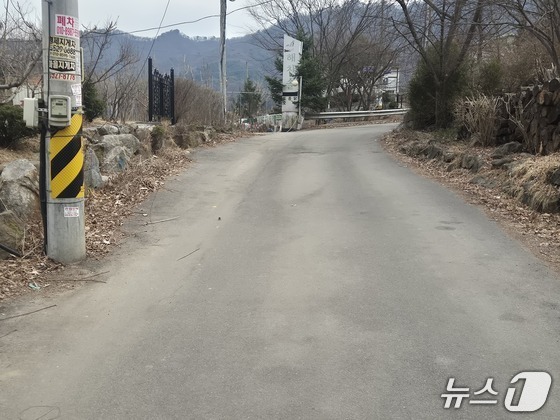
A is accused of killing a woman in her 20s, identified as B, on the morning of the 14th at about 8:58 a.m. on a street in Onam‑eup, Namyangju.
A reportedly smashed the window of B’s car to carry out the attack, cut off his electronic ankle monitor and fled in his vehicle. Police arrested him about an hour later in Yangpyeong County.
Investigators found traces that he had consumed an unknown substance along with soju inside his car and transported him to the hospital for treatment.

They had previously lived as common‑law partners. In May of last year, prosecutors sent A to trial on aggravated‑injury charges, and authorities issued temporary measures Nos. 2 and 3 under the Domestic Violence Act.
Despite those measures, A continued to stalk B. On Jan. 22, B visited a police station for counseling and was given an emergency‑contact smartwatch.
On Feb. 2, B filed stalking charges against A, and authorities issued provisional measures Nos. 1, 2 and 3 under the Stalking Punishment Act. A was prohibited from contacting B or approaching within 100 meters (about 330 feet) of her home, workplace or other designated locations.
When officers discovered a tracking device on B’s car they suspect A installed, the Gyeonggi Northern Police Agency designated Guri Police Station as the lead agency and ordered it to seek an arrest warrant for A and to apply for provisional measure No. 4.
Guri Police sent the device to the National Forensic Service for analysis and planned to apply for the warrant once results were returned, but this incident occurred before that process was complete.
B is believed to have used the smartwatch the police issued to call for help, but investigators confirmed she was killed before officers arrived.
The electronic ankle monitor A was wearing at the time stemmed from an unrelated past sex offense and failed to trigger an alert when he approached B.
Separately, investigators confirmed they did not file provisional measure 3‑2 under the Stalking Punishment Act with the court, a decision that is likely to draw criticism. Measure 3‑2 would have required attaching a tracking device to the alleged stalker; if it had been applied, B’s phone app could have automatically alerted relevant agencies when A came near.
Police said they focused on seeking provisional measure No. 4 to secure the suspect’s custody and therefore did not separately submit a 3‑2 application to the court.








Most Commented