
Nationwide Lawsuit Launched for Disabled Access to Intercity Buses: What You Need to Know
Daniel Kim Views
Translation result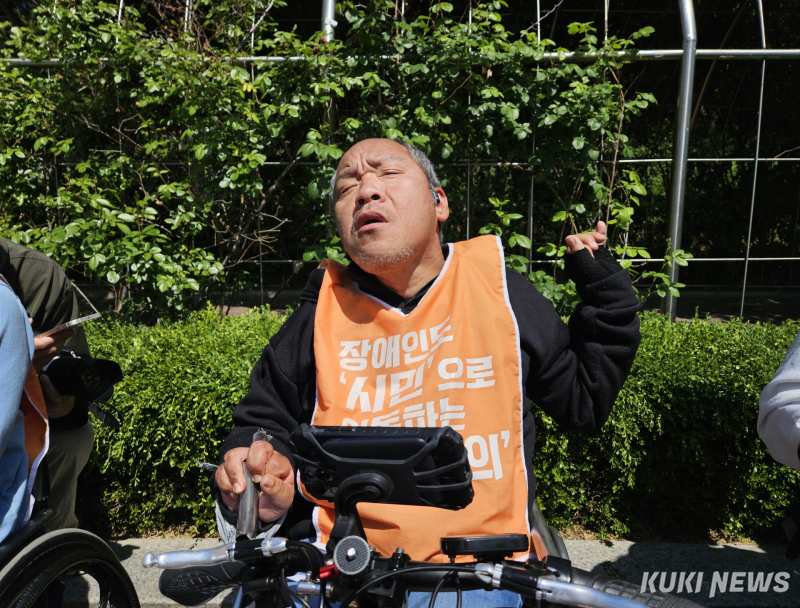
On the morning of the 30th, in front of the Seoul Central District Court in Seocho-gu, Seoul, the Seoul·Gyeonggi branch of the National Coalition for Disability Mobility Rights and several disability-rights groups held a press conference and filed a nationwide lawsuit challenging restrictions on boarding intercity and express buses. They called for policy reforms and legal guarantees to ensure that people with disabilities can use buses.
The press conference marked the final phase of coordinated, nationwide litigation following filings in North Jeolla and South Gyeongsang on the 15th; Gangwon on the 16th; Daegu on the 20th; South Jeolla on the 21st; and Busan on the 23rd.
At the event, Cho Rok, policy director of the National Coalition for Disability Mobility Rights, said, “Wheelchair users are effectively barred from intercity and express buses.” He criticized operators who restrict boarding on the basis of cost and profitability and added, “We brought this nationwide lawsuit to fix that system.”
According to the coalition, 34 plaintiffs from eight regions nationwide — including six from Seoul and Gyeonggi — joined the suit. They filed against 12 transport companies whose combined fleets exceed 2,000 buses.

Lee Gyu-sik, head of the Seoul Coalition to End Disability Discrimination, said, “We want to ride intercity buses without worry. We have repeatedly asked for access, but we still can’t use them properly.” He urged operators to prioritize safe, accessible service over profits.
Yu Jin-woo, an activist with the Nodeul Center for Independent Living and a plaintiff in the case, described his travel challenges. “There’s a direct intercity bus from Seoul to Gunsan in North Jeolla, but wheelchair users can’t board it,” he said. “I have to transfer between the KTX and regular trains and then use a paratransit taxi, which requires at least three transfers.”
He added, “Introducing low-floor intercity buses would significantly reduce travel burdens, but companies delay adoption citing profitability. Mobility is a right that should be guaranteed for everyone.”
Attorney Kim Jin-young of the Dongcheon Foundation, representing the plaintiffs, said, “Even though the Supreme Court has already ruled that failing to provide wheelchair boarding equipment constitutes discrimination, daily life for people with disabilities hasn’t changed. Rights are not contingent on budgetary conditions—they must be secured.”

Jung Ki-yeol, head of the Gyeonggi branch of the National Coalition for Disability Mobility Rights, called the decades-long practice of limiting boarding on unprofitable routes “systemic discrimination.” He said the government must share responsibility with bus companies.
In a written statement, the coalition urged the court to issue a prompt decision and noted that the UN Committee on the Rights of Persons with Disabilities has criticized South Korea for insufficient protections of mobility rights for people with disabilities.
The coalition demanded the full rollout of intercity and express buses accessible to people with disabilities, public apologies from transport companies for past discrimination, improvements to passenger services by the government and terminal operators, and expedited court proceedings.
“People with disabilities should be able to take buses to their hometowns, meet friends, and travel,” the coalition said. “We will continue our fight until everyone can move freely, anytime and anywhere.”









Most Commented