
Understanding the ‘Joseonjok’: Why China’s Ethnic Koreans Matter in South Korea’s Labor Market
Daniel Kim Views
Translation result.

There’s a name in South Korean society that is both familiar and foreign: “Joseonjok.” They speak the same language and share many cultural references, yet they have long existed on the margins of Korean life. When Korea needed labor, they were called upon; when social anxieties rose, they became targets of prejudice and hostility. In its May 12 broadcast, KBS1’s current-affairs program ‘Sisa Gihwig Chang’ examines the realities facing ethnic Koreans from China, who now constitute the largest immigrant group living in Korea.

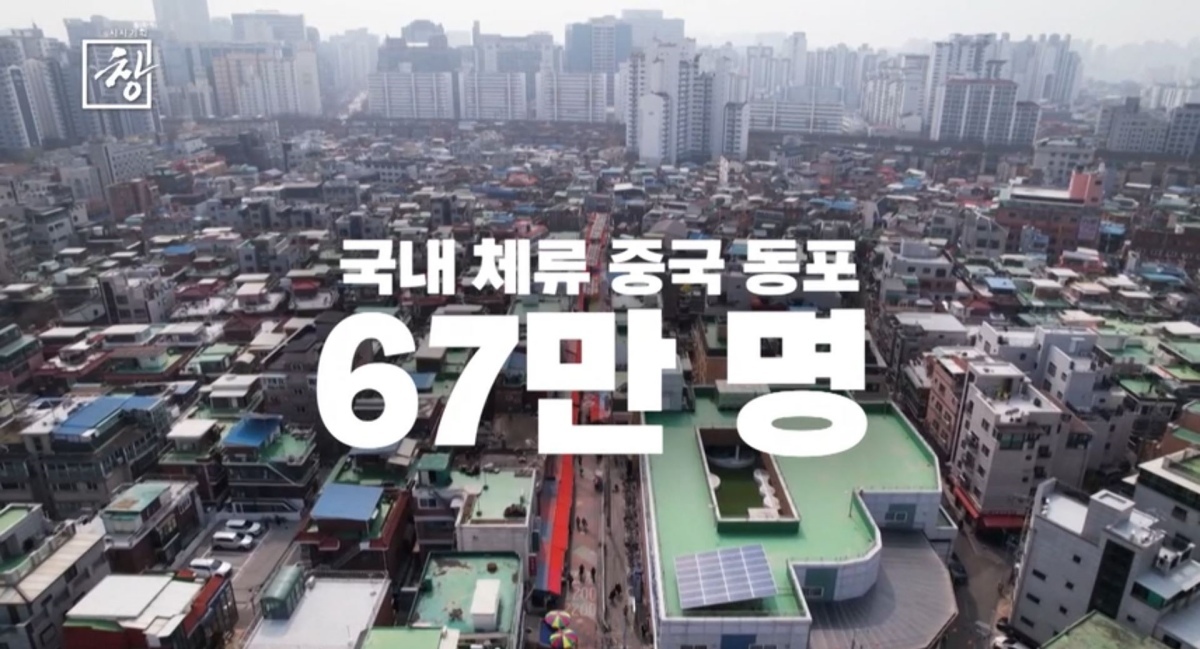
Episode 547 of KBS1’s ‘Sisa Gihwig Chang,’ titled “Joseonjok — Standing on the Border,” airs on May 12. Since diplomatic relations between South Korea and China were established in 1992, ethnic Koreans from China have arrived in increasing numbers and, over roughly three decades, have become an important part of Korean society. Their population, about 35,000 at the time, has grown to approximately 670,000. They now form the largest migrant group in the country, but public attitudes toward them remain complicated.
Korea needed them, but had trouble accepting them
The program first maps the roles that ethnic Koreans from China have played in Korea’s labor market. They have long filled jobs Korea needed but struggled to staff fully: construction, caregiving, restaurants and other care-sector work. Estimates indicate that more than 80% of foreign workers on construction sites and some 80–90% of caregivers in Seoul-area long-term care hospitals are ethnic Koreans from China. One expert warns that if this labor force were to leave, the market for skilled construction workers would face serious strain and the caregiving sector could be destabilized quickly.

Yet the time they’ve spent contributing to Korean society has not led to equal recognition. Ethnic Koreans from China have long occupied an ambiguous position between being regarded as compatriots and being treated as foreign laborers. Visa policies reflected that boundary: many had to choose between a guest employment visa for manual work and a visa for overseas compatriots, leaving them with limited options. By contrast, compatriots holding U.S. or Japanese nationality have generally been able to secure overseas compatriot status more easily. A distinction that persisted for nearly two decades was consolidated earlier this year, but that policy change has not immediately shifted social perceptions.
The program also measured public attitudes toward ethnic Koreans from China. In a nationwide survey of 1,036 adults, favorability toward other compatriot groups—such as those associated with the U.S., Japan or Koryo-in—hovered around 30%, while favorability toward ethnic Koreans from China registered just 8.4%. That stark difference, despite the shared “compatriot” label, exposes deep-seated prejudice and social distance.
More recently, online hate has spilled into public spaces. Anti-China rallies that began in Seoul’s Myeong-dong last year spread to neighborhoods with large ethnic Korean populations, such as Daerim-dong. Some demonstrators even marched past streets with elementary, middle and high schools, exposing students to hateful rhetoric. The program treats these events not as isolated flare-ups but as warning signs that social anxiety and discriminatory attitudes are coming to the surface.
Young people in Yanbian are making different choices — a challenge for Korea
The reporting team visited the Yanbian Korean Autonomous Prefecture in China, a region commonly regarded as home to many ethnic Koreans. For the younger generation there, Korea remains familiar and attractive. Exposed to K-pop, Korean drama and Korean-language media, they do not view Korea as entirely foreign. But unlike their parents—who often accepted work in construction, restaurants and nursing homes—many young people now prefer office or technical jobs and are also considering opportunities in major Chinese cities such as Shanghai and Beijing.

That shift raises an urgent question for Korean society. With low birth rates and an aging population shrinking the labor force, roughly 670,000 ethnic Koreans from China are no longer a population Korea can overlook. If Korea struggles to facilitate settlement and integration for compatriots who share language and cultural ties, building a cohesive society with an increasingly diverse immigrant population will become even more difficult.
The name “Joseonjok” embodies a double boundary: in China they are classified as a minority, and in Korea they have often been seen as neither fully Korean nor entirely foreign. This episode of KBS1’s ‘Sisa Gihwig Chang’ asks what role ethnic Koreans from China have played in Korean society and how they are perceived today. “Joseonjok — Standing on the Border” airs at 10 p.m. on May 12 on KBS1.
※ Note: This article was written without compensation.








Most Commented