
Translation result.

[Sankyeong Today = Reporter Lee Jun-young]
With the risk of a strike rising, Samsung Electronics and its labor union engaged in last-minute talks at the Central Labor Relations Commission’s post-adjustment table over the criteria for performance bonus payments.
The union has threatened to begin a strike on the 21st, making this mediation a pivotal step that could determine the dispute’s direction.
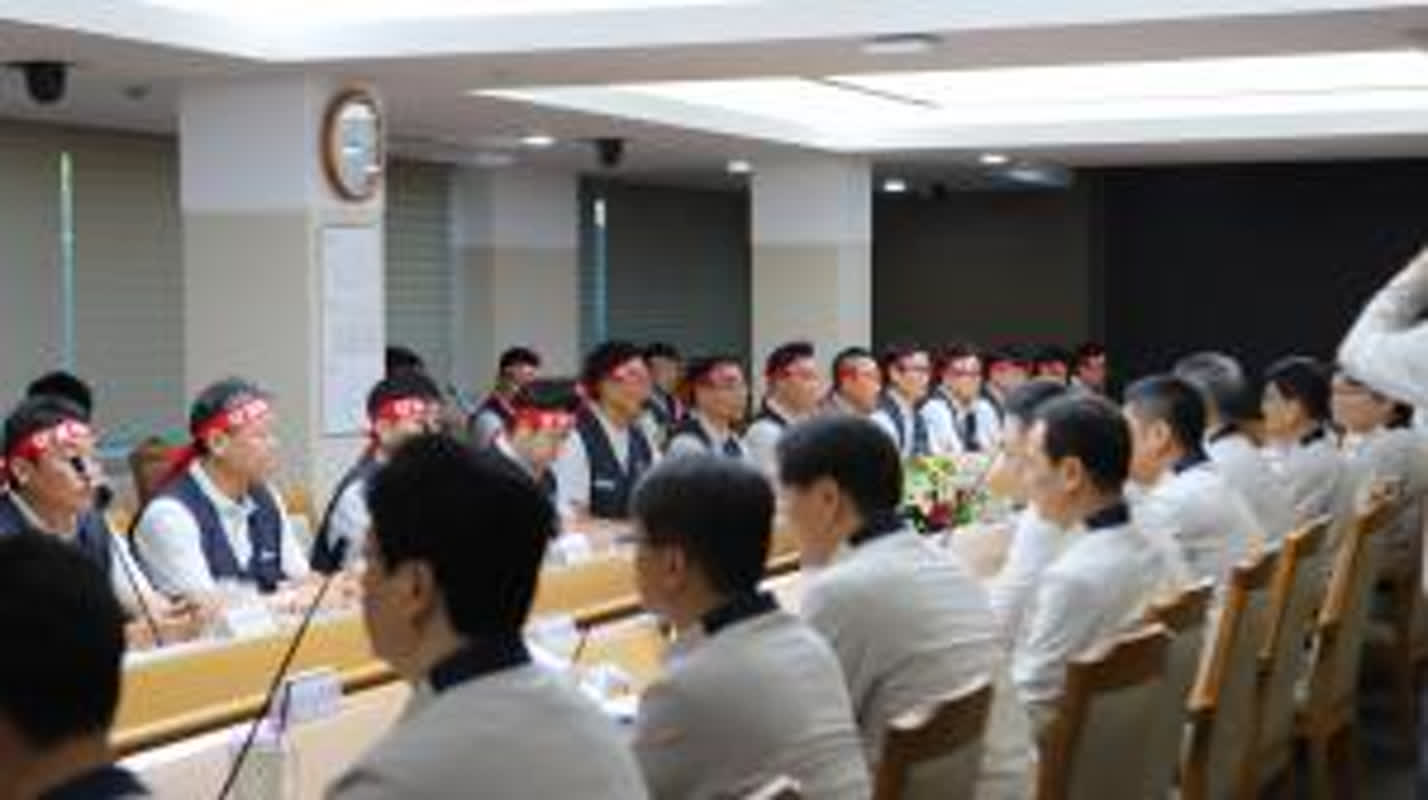
On the 18th, Samsung management and the union conducted the second round of post-adjustment mediation at the Central Labor Relations Commission in the Government Sejong Complex.
The session ran from 10:00 a.m. to 6:20 p.m. and concluded slightly earlier than originally scheduled.
The central issue in the mediation was how performance bonuses should be calculated.
The union argued for clearer standards regarding the bonus pool and payment caps, while the company maintained its position that calculations must reflect business conditions and the performance structure of each division.
In the morning, both sides outlined their positions; in the afternoon, they moved into substantive talks focusing on the key disputed points.
The panel of mediators sought to bridge the gap by exploring compromises grounded in both parties’ arguments.
After the meeting, the union took a cautious stance.
Choi Seung-ho, leader of Samsung Electronics’ Joint Struggle Headquarters, said, “We are negotiating in good faith,” and said he would return to mediation at 10:00 a.m. on the 19th.
He declined to comment on whether management would shift its stance or on the likelihood of a settlement.
Yeom Myung-gu, head of the People Team for the DS Division, who represented the company, also offered no separate comment.
Both sides limited public remarks, leaving significant uncertainty about the outcome of the talks.
The Central Labor Relations Commission plans to continue mediation on the 19th and will hear additional statements from both parties.
Chair Park Soo-geun suggested the commission may present a concrete mediation proposal at the next session, saying, “We probably should.”
Inside the commission, some officials described the negotiation atmosphere as cautiously positive.
Park Jung-beom, the commission’s mediation chief who attended the meeting, said, “Both sides engaged actively” and that “they are working toward common ground.”
However, with the strike date approaching, time is limited.
The union has set the strike to begin on the 21st.
If no agreement is reached on the 19th, talks could be extended through the 20th.
The government has also stepped in. Labor Minister Kim Young-hoon inspected the negotiations in person at the Government Sejong Complex.
The government said it will continue to prioritize autonomous labor-management bargaining but will bolster mediation support, given the potential economic impact of any disruption to semiconductor production.
The dispute extends beyond wages: it raises questions about transparency in the performance-reward system, how gains from a semiconductor market recovery should be shared, and the operational stability of a critical industry.
Because semiconductors account for a large share of national exports and are integral to supply chains, industry observers are closely watching whether a strike will materialize.
If this mediation leads to a decisive agreement, the immediate strike risk could subside.
Conversely, if differences over bonus criteria remain unresolved, the Samsung labor dispute could enter a prolonged phase.








Most Commented