
Translation result
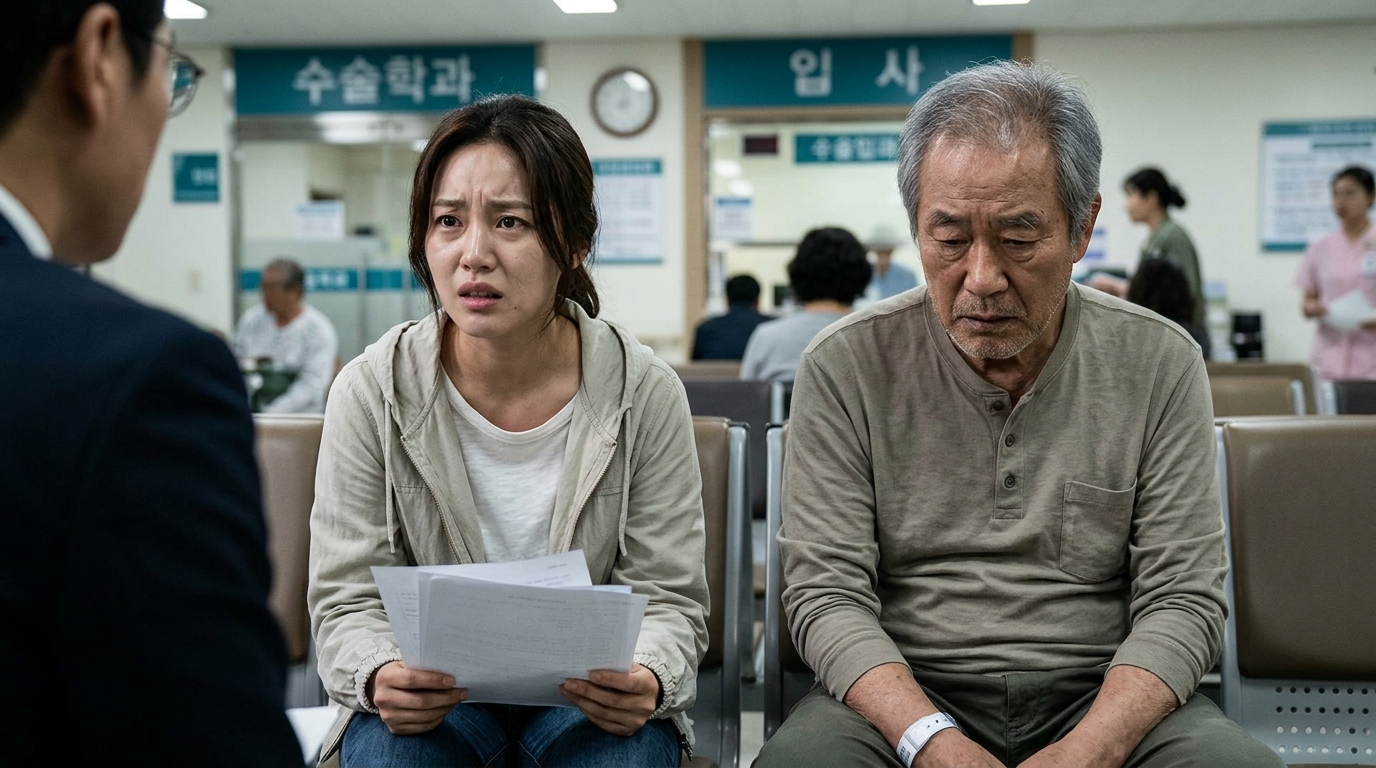
After a roommate collapsed from acute appendicitis, their partner stayed up all night to care for them — yet was not allowed to sign the surgical consent form. They had to wait until a blood relative, who hadn’t been contacted in more than ten years, could travel from another city. This case starkly exposes how much of Korean society remains trapped by an outdated idea of “family.”
600,000 households: families left outside the law
Statistics Korea reports that “nonkin households” — households of up to five people living together without blood or marital ties — jumped roughly 36% in four years, from 423,459 households in 2020 to 580,413 in 2024. The forms of cohabitation are growing more varied: unmarried couples, same-sex partners, and groups of friends sharing a home.
The share of births outside marriage more than doubled, from 2.5% in 2020 to 5.8% in 2024. While the social reality has shifted rapidly, public institutions still operate within a 1970s “nuclear-family” framework based on marriage certificates and family registries.

No legal rights to consent, inherit, or take caregiving leave
Under current law, spouses and blood relatives have the automatic authority to consent to emergency surgery, to be registered as dependents under national health insurance to reduce medical costs, and to inherit and manage funerals when a family member dies. Nonkin household members — even those who have lived together and cared for one another for over a decade — are effectively excluded from these rights.
Cohabitants cannot take designated caregiving leave or use sick leave to care for a housemate, and they are ineligible for tax credits or priority access to public housing programs for newlyweds. Their frustration — “we pay the same taxes and shoulder the same responsibilities” — is not mere grievance but a justified protest against structural discrimination.
Other countries have already found solutions
France’s civil solidarity pact (PACS), introduced in 1999, grants cohabitants tax and health‑insurance rights comparable to marriage regardless of gender or marital status; it now records more than 100,000 registrations a year. The Netherlands accords registered partnerships legal effects nearly identical to marriage, and Sweden extends parental‑leave rights to parents’ cohabitants while supporting diverse caregiving arrangements at the state level.
In South Korea, lawmakers have proposed a Domestic Partner Law to recognize cohabitants as family equivalents and an Independent Birth Support Act to subsidize assisted reproduction for unmarried women. But legislative debate has stalled for years amid objections from some religious groups—who fear such laws could pave the way to legalizing same‑sex marriage—and resistance from conservative political forces.
If care networks break down, social costs will rise
Experts warn that leaving the legal gaps around nonkin households unaddressed could undermine the basic caregiving infrastructure amid low birthrates and a rapidly aging population. As citizens form informal support networks to care for one another, outdated laws obstruct their efforts, producing a heavier social toll in the form of isolated deaths and forced self‑reliance.
A 2023 family survey by the Korean Women’s Development Institute found that 80.3% of respondents support prohibiting discrimination based on family type. With more than 600,000 households already living together and supporting each other in new ways, clinging to outdated legal frameworks is no longer a viable option.
Trending Now
- “Deposit ₩3,600,000 ($2,700), get ₩14,400,000 ($10,800) back”… Youth Tomorrow Savings Account outperforms comparable market products
- “59% don’t even receive ₩600,000 ($450) a month”… Retirement inequality exposed behind 110,000 high‑benefit recipients
- “They cancel donations for a sick child while…” Samsung union’s demand for a ₩45 trillion (≈$33.75 billion) performance bonus draws accusations of a double standard
Trending Now
- “Deposit ₩3,600,000 ($2,700), get ₩14,400,000 ($10,800) back”… Youth Tomorrow Savings Account outperforms comparable market products
- “59% don’t even receive ₩600,000 ($450) a month”… Retirement inequality exposed behind 110,000 high‑benefit recipients
- “They cancel donations for a sick child while…” Samsung union’s demand for a ₩45 trillion (≈$33.75 billion) performance bonus draws accusations of a double standard




Most Commented