
AI Future Strategy at Risk: Ha Jung-woo Resigns as Chief to Enter Busan By-Election
Daniel Kim Views
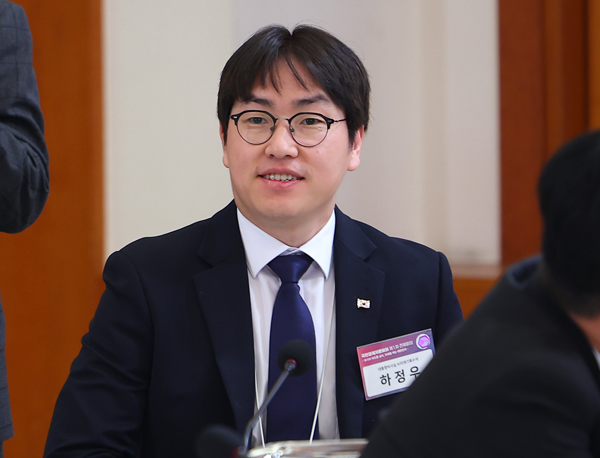
Five major newspapers sharply criticized Ha Jung-woo, the Blue House’s AI Future Planning chief, for announcing his candidacy in the Busan Buk-gap by-election. The press was divided over Labor Minister Kim Young-hoon’s announcement that he will introduce a “fair allowance” for short-term nonregular workers. Below is a summary of key editorials from the 28th.
Press unites in criticizing Ha’s candidacy: “Election over national strategy”
After Ha submitted his resignation to run in the Busan Buk-gap by-election just 10 months after his appointment, JoongAng Ilbo, Dong-A Ilbo, Chosun Ilbo, Hankook Ilbo and Segye Ilbo all issued strong criticism. The papers commonly questioned the rapid shift of the government’s control tower for its “top-three AI powers” strategy into partisan politics.
JoongAng Ilbo wrote
“The AI chief is the core and symbol of the Lee Jae-myung administration’s ambitious drive to make Korea one of the world’s top three AI powers. Ha was recruited from the private sector as a proponent of ‘sovereign AI,’ arguing the state should support firms while companies share the gains — a model for virtuous AI-driven growth. Resigning in less than a year, with a mountain of unfinished work, is problematic,” it said.
Dong-A Ilbo, in an editorial titled “AI chief ten months in, Blue House spokesman less than a month — both running in by-elections,” criticized Ha for drifting from policy duties to campaigning. “At his first briefing last year he said the next three to five years would be a golden time that determines the nation’s future and pledged to concentrate on strengthening AI competitiveness. But after the Democratic Party asked him to run earlier this month, his comments started to tilt toward the election rather than his role as AI policy lead,” the paper wrote. It added that even after the president warned against being sidetracked, Ha publicly vacillated for nearly a month, saying his thoughts changed ‘morning and night.’
Chosun Ilbo, in “Said ‘don’t launch operations,’ then ran — deceiving the public,” recalled the president’s comment on the 9th that “there’s a lot to do, and we shouldn’t be swayed if someone tries to pull us into operations,” while Ha had said he was likely to remain at the Blue House into May or June. “Those exchanges fuel suspicion that the process was used to raise Ha’s public profile. Despite saying his Blue House duties made a by-election run difficult, Ha gave almost daily media interviews that kept the possibility of running open,” it argued.
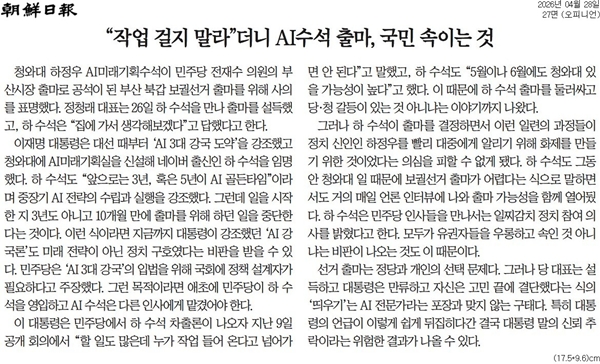
Hankook Ilbo, in “Ha’s resignation risks the AI top-three strategy being swayed by elections,” warned that leaving the AI Future Planning chief post vacant could disrupt national strategy. “The position was created after the Lee Jae-myung administration took office to focus on nurturing the AI industry and to address advanced-technology issues, demographic challenges and the climate crisis. The vacancy should be filled quickly with a qualified successor so the push for future growth strategies does not stall,” the paper said.
Segye Ilbo, in “Ha’s candidacy countdown… Is Blue House service just a campaign credential?” noted that spokesperson Jeon Eun-soo may also run in the Asan by-election and said “it’s no surprise people mock the Blue House as a ‘campaign camp’ or a stepping stone for political resumes.” The paper added that while Blue House experience can aid legislative work, the administration must stop letting personnel decisions be driven by election cycles.
Mixed reactions to Labor Minister Kim Young-hoon’s ‘fair allowance’
Labor Minister Kim Young-hoon formalized a plan to provide additional allowances — dubbed “fair allowances” — to short-term nonregular workers. Editorials reacted differently: Korea Economic Daily, Kyunghyang Shinmun and JoongAng Ilbo each offered distinct perspectives.
Kyunghyang Shinmun conditionally supported the idea in “Fair allowance for nonregular workers should be paired with limits on reasons for hiring temporary staff.” “It is meaningful for the public sector to provide allowances proportional to employment instability. One in four wage workers are fixed-term, so the scale is significant,” the paper said. But it warned the policy cannot be compelled across the private sector and may not reduce firms’ incentives to use fixed-term contracts because the allowance won’t make temporary posts pay more than permanent roles. Kyunghyang cited Australia, where casual workers who lack paid leave receive about 25% more than the regular minimum wage, yet many still prefer to convert to permanent jobs for stability.
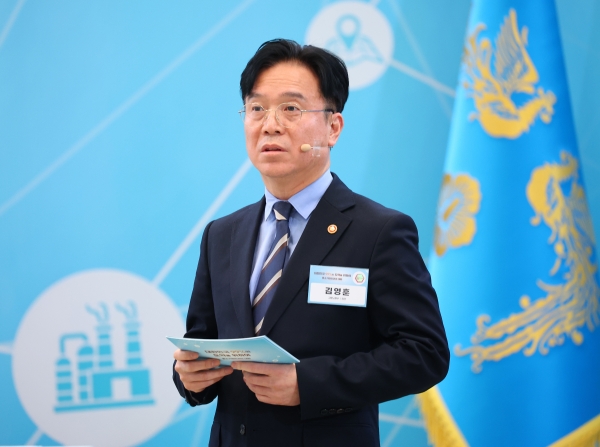
Korea Economic Daily warned in “Extra pay for short-term nonregulars could boost contract hiring” that additional allowances would raise labor costs for small businesses and the self-employed, especially in sectors that rely heavily on short-term staff — small retailers, service industries, seasonal businesses and project-based work. “Costs would inevitably rise and could reduce hiring,” the paper said. Citing international experience, it noted that France introduced instability compensation in 1982, but the share of contracts under one year later increased. “Allowances became a license for more nonregular contracts or for splitting contracts into shorter periods, failing to reduce precarious employment,” it argued.
JoongAng Ilbo criticized the proposal as “a solution tilted toward labor interests that ignores the root causes,” arguing that the proliferation of short-term nonregular jobs ties to labor-market rigidity. “Firms avoid hiring or converting to permanent staff because dismissals are nearly impossible once hired and permanent employment costs are high. Without greater labor-market flexibility, it’s unrealistic to expect firms to protect nonregular workers more tightly,” it wrote.
Other issues the press highlighted
Kookmin Ilbo and Seoul Shinmun criticized the chaotic nature of the June 3 education superintendent elections. Kookmin Ilbo, in “Opaque superintendent elections make voters’ wise choices vital,” said the Seoul race grew contentious after revelations that the citizen participation panel — tasked with selecting a single progressive candidate — allowed proxy registrations and covered participation fees, undermining basic electoral principles. It added that the confirmed progressive candidate in Gyeonggi’s education race also faces a court challenge over an allegedly ‘ghost’ selection panel.
Seoul Shinmun, in “Why bother? A chaotic superintendent race that should alarm parents,” called the election a spectacle lacking substantive education policy proposals and driven by a left-right confrontation. It criticized candidates’ fixation on single-candidate consolidation and the noisy rivalries that raise doubts about whether the contest still serves to choose the best education leader.
Dong-A Ilbo ran two economy editorials. In “Korea’s potential growth rate has fallen for 15 years… Without structural reform, remedies are ineffective,” it cited the OECD forecast that Korea’s potential growth will drop to 1.7% this year and 1.6% next year, down from 3.6% in 2012 — a 15-year decline. “Korea’s potential growth slipped from roughly double the OECD average (5%) during 1997–2007 to the member average (1.9%) last year. In potential growth terms, Korea has become an ordinary country,” it warned.
In another piece, “Nobel laureate’s advice: Recruit overseas talent who can’t get U.S. visas,” Dong-A quoted Peter Harwit, emeritus professor at Brown University, saying that as the U.S. pushes talent away under the Trump administration, universities and firms elsewhere have a golden opportunity to attract skilled individuals.
Hankyoreh, in “North Korea-Russia five-year military cooperation declaration — respond with multifaceted diplomacy,” highlighted the passage where Russian Defense Minister Andrey Belousov told Kim Jong-un he is ready to conclude a mutual military cooperation plan for 2027–2031. The paper urged Seoul to pursue diverse diplomatic channels rather than rely solely on the U.S., noting that while the task is difficult, Korea must seek solutions through its own multidimensional diplomacy.
MediaToday brings you an ‘AI News Briefing.’ Knowledge-content startup Underscore used generative AI to compare and reorganize domestic major media articles by issue, and MediaToday’s newsroom reviewed and edited the result. This article received support from the Korea Press Foundation. (Editor’s note)









Most Commented