
Translation result
South Korea’s future is visible in its cities. Some are at risk of disappearing, while others are buckling under overcrowding. Industry is unstable, care services are insufficient, and development often clashes with daily life. Ahead of the June 3 local elections, SisaWeek launched a series titled “Dopamine (Understanding South Korea’s Future Through Its Cities)” to examine the country along two currents: cities that are fading and cities that are emerging. We analyze the realities cities face today together with the platforms of local election candidates to find the country’s “dopamine” in the urban present. [Editor’s note]
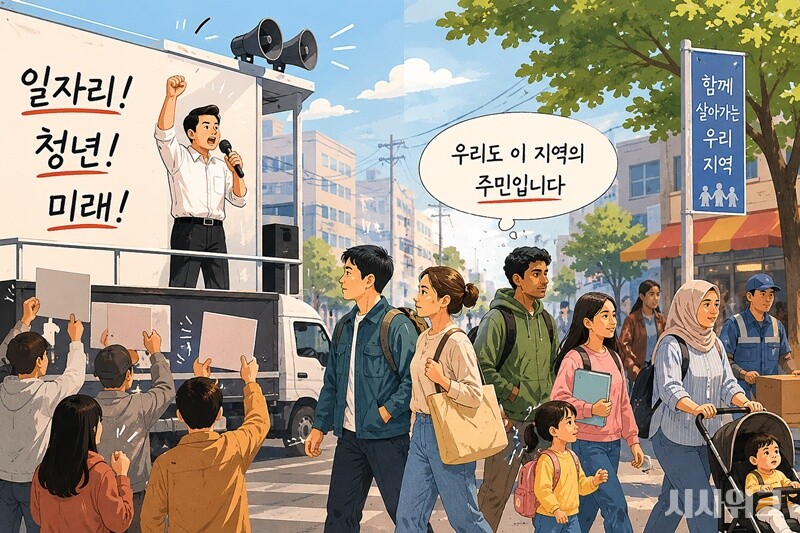
SisaWeek — Reporter Kim Yun-hyeok Migrant workers, international students and immigrants who arrived through international marriage have brought new energy to communities facing demographic decline. Yet when election season arrives, campaign promises rarely speak to their needs. Local political leaders still tend to view residents with migrant backgrounds as temporary labor rather than full members of the community.
◇ An era of roughly 150,000 foreign voters
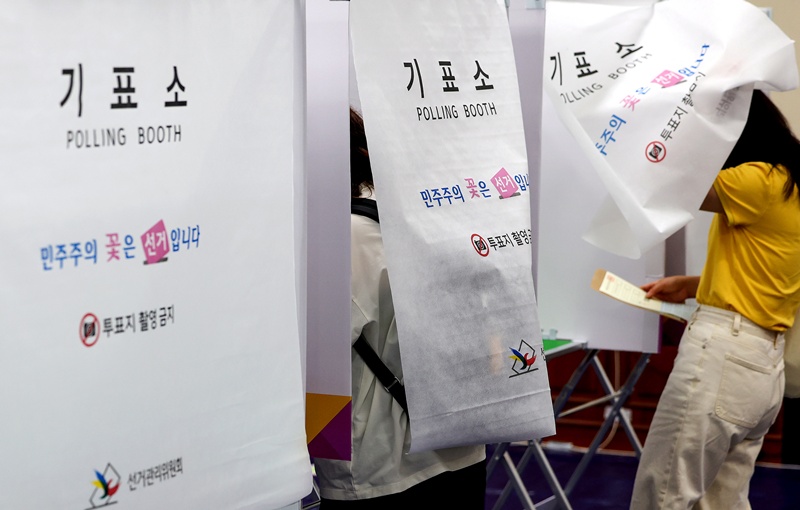
In reality, residents with migrant backgrounds already function as consumers and community members — and increasingly as voters. Unlike presidential and parliamentary elections, local elections grant voting rights to foreign nationals aged 18 or older who have held permanent residency (F-5 visa) for at least three years.
At the 4th local elections in 2006, foreign voters numbered only about 6,700. By this year’s 9th local elections, that figure has swelled to roughly 150,000. Despite this growth, issues affecting migrant-background residents received little attention during campaigns, while long-running topics such as jobs, the elderly and youth dominated the agenda.
Still, the June 3 election shows signs of change. One notable example is Ansan in Gyeonggi Province, where the foreign population is among the country’s highest. Cheon Young-mi, the Democratic Party candidate for Ansan mayor, ran on the slogan “Ansan, where diversity becomes an asset” and unveiled pledges aimed at children and adolescents from migrant backgrounds.
Cheon proposes integrated support for students marginalized by language and cultural barriers — covering academics, career guidance and settlement — and aims to develop them as future assets that strengthen the city’s competitiveness. Observers say this approach goes beyond charity-style welfare and recognizes migrant-background residents as strategic resources warranting policy investment.
In North Chungcheong Province, Kim Seong-geun, a candidate for superintendent of education, unveiled “five pledges for students from migrant backgrounds.” The province has seen a rapid rise in foreign residents, particularly in Eumseong and Jincheon counties. Kim’s platform frames migrant-background students as future local assets and includes measures such as automatic multilingual translation on school websites and parent notices and a substantial expansion of Korean-language class placements.
Meanwhile, Bae Su-jin, a candidate from the Joguk Innovation Party running in the Gwangsan district by-election for the National Assembly in Gwangju, pledged to legislate guaranteed education rights for undocumented migrant children. National assembly elections do not grant voting rights to foreign residents, yet Bae put migrant issues at the center of her campaign — signaling a shift that broadens elections from mere vote-counting to a forum for discussing the community’s future.
As residents with migrant backgrounds become a new pillar supporting regions at risk of demographic collapse, politics must catch up with that changed reality. Elections should go beyond asking who will win and instead ask who will join in shaping the region’s future. In short, local political paradigms must change.
When communities recognize residents with migrant backgrounds not just as sources of labor but as consumers and neighbors — and when policymakers craft inclusive policies that cover everyone — regions can move forward. Communities that embrace diverse residents living together will regain vitality.









Most Commented