
Translation result.
Nestled in Geumseong-myeon, Uiseong County, North Gyeongsang Province, the Jomun-guk historic site pairs traces of a once-glorious kingdom with seasonal beauty. Once a strategic chokepoint Silla had to pass through to reach the Han River basin, the site still asserts its presence with 374 burial mounds that march along a broad ridge. Their gentle, wave-like curves ripple across the horizon, and visitors encounter echoes of ancient Jomun-guk at every turn.
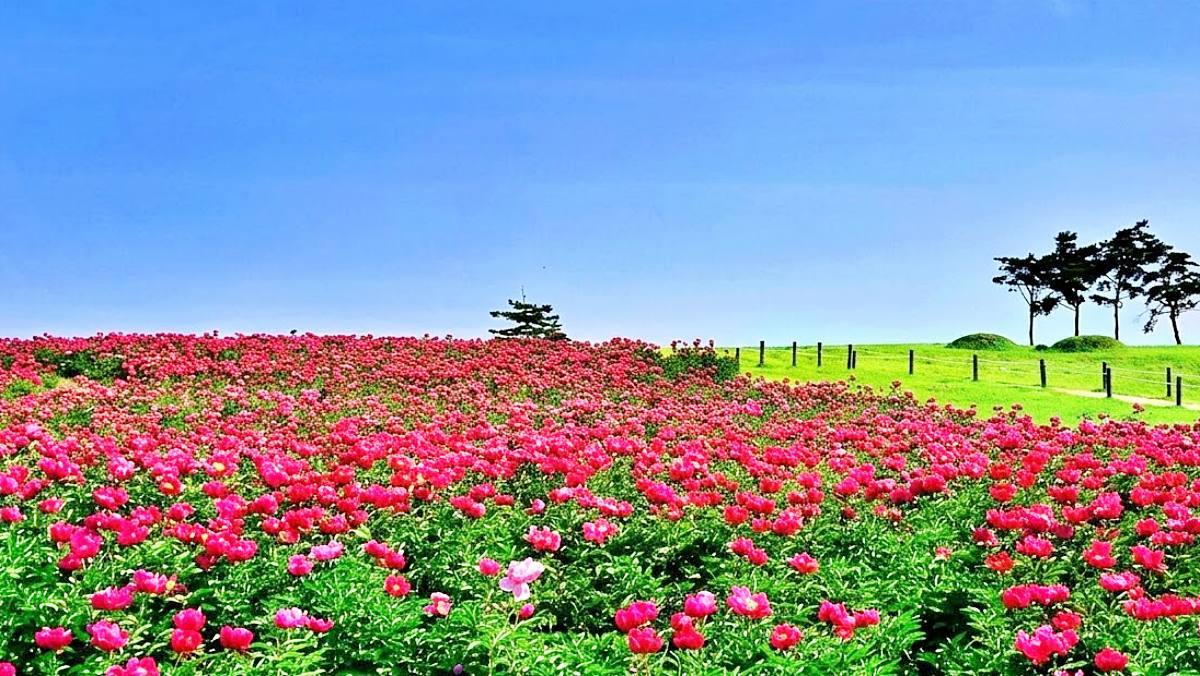
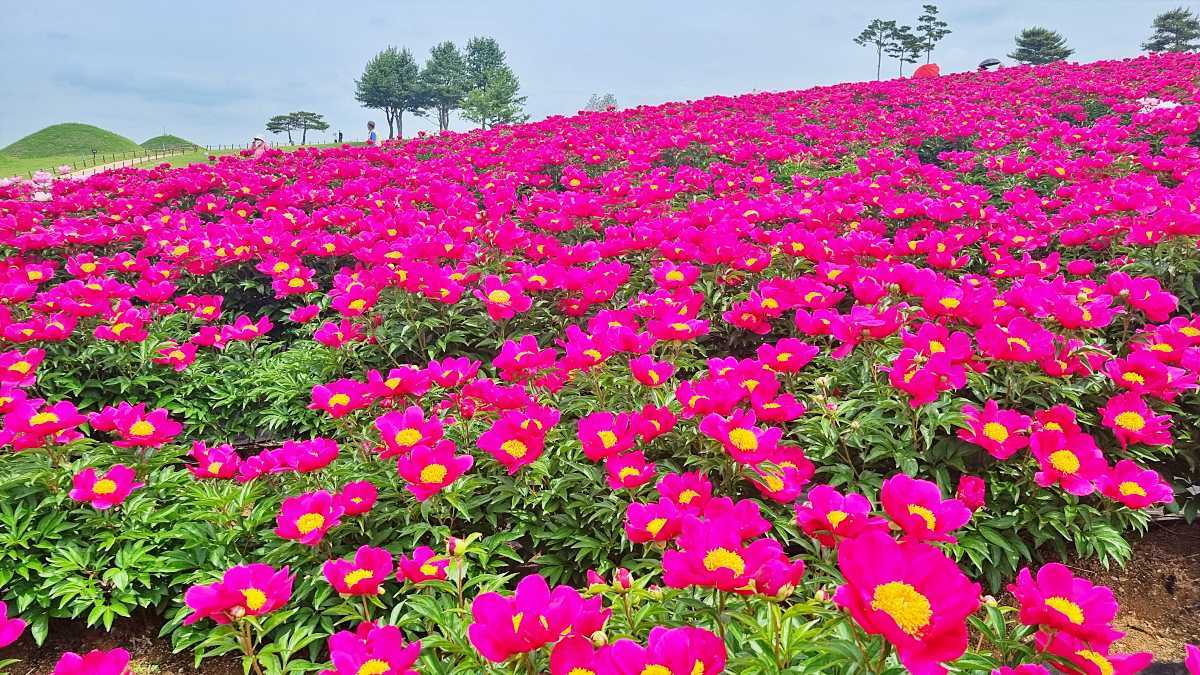
Peonies are the real showstoppers here. Within the Daeriri burial mound cluster, staff plant about 15,000 peony plants each year across a 4,200㎡ plot (roughly 45,200 sq ft / 1.04 acres), creating a magnet for visitors. Often called the “hambak flower” for their large, lush blooms, peonies reach their peak from mid- to late May. When red and pink petals ripple in the breeze, the effect is like scattering jewels across the green mounds. True to the flower’s symbolic meaning of “shyness,” the peonies bloom modestly yet unmistakably among the tombs, offering a warm, emotional moment for visitors. Nighttime landscape lighting is installed, so you can enjoy a different, softer charm of the flowers after dark.
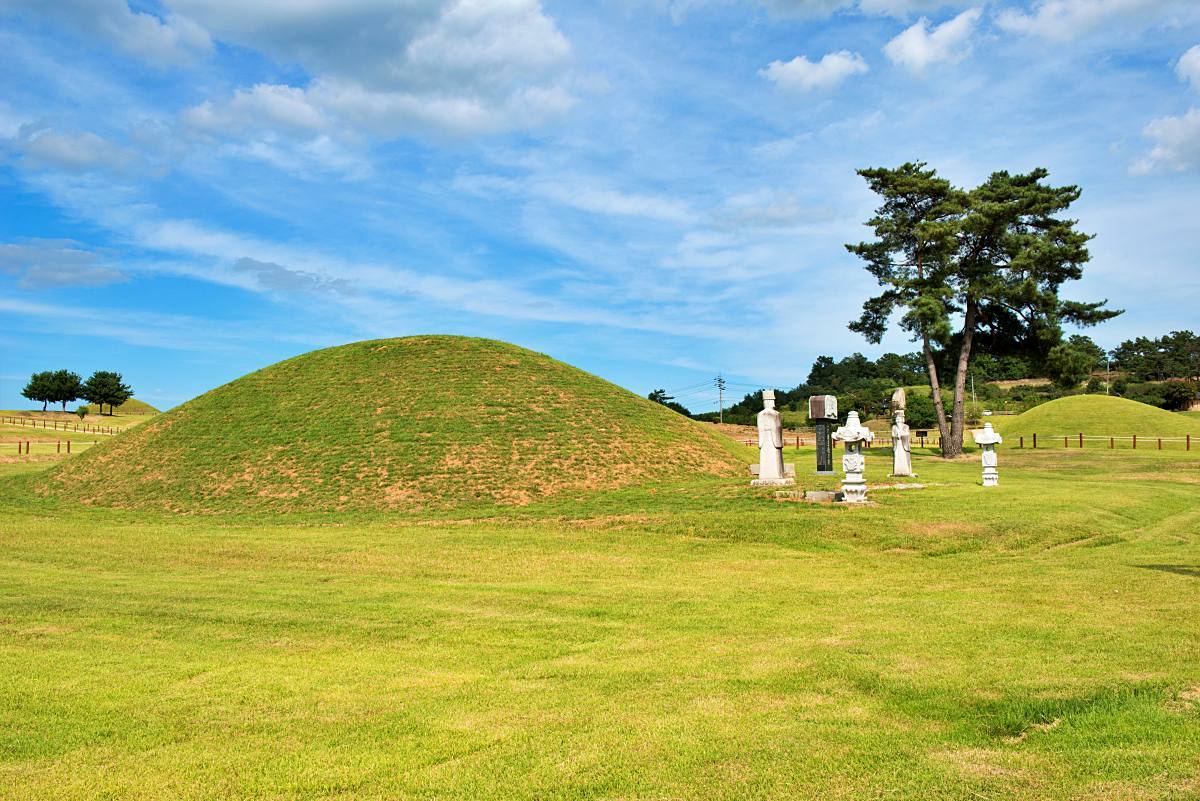
After soaking in the peonies, slow your pace and wander between the mounds to feel the weight of history. The Geumseongsan burial mound cluster dates from the late 4th century to the mid-6th century and contains numerous tumuli, including one thought to be the tomb of King Gyeongdeok of Jomun-guk. Excavations have uncovered distinctive Uiseong-style pottery, gilt-bronze crowns, silver ornaments, and other high-status grave goods. These artifacts are kept at the nearby Uiseong Jomun-guk Museum and offer a clear glimpse into the sophisticated culture of Jomun-guk.
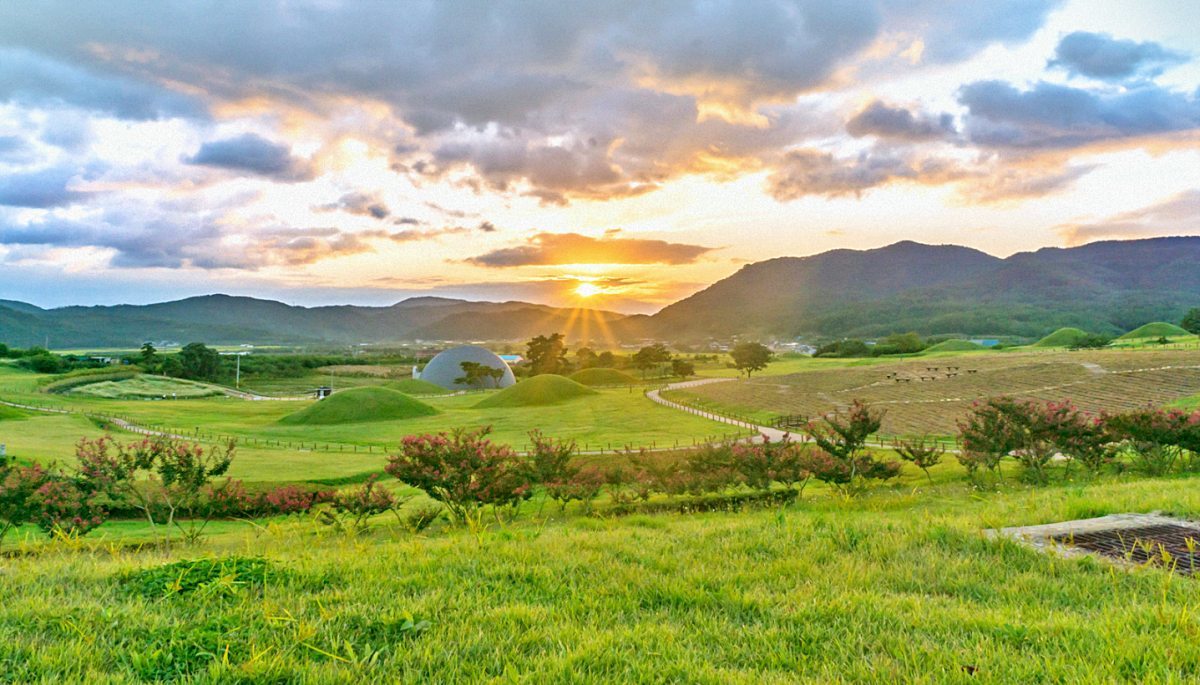
Be sure to visit the tomb exhibition hall, a faithful recreation of the interior of Daeriri Tomb No. 2. The display pairs original artifacts with reconstructed burial scenes, including the practice of burying retainers, so visitors can grasp the funerary customs of the time in vivid detail. Trails up Geumseongsan and the nearby Susungsa temple are well maintained, making the area perfect for combining a history tour with a leisurely walk.
The Uiseong Jomun-guk historic site is an open space visitors can explore year-round without an admission or parking fee. The Uiseong Jomun-guk Museum is open from 9 a.m. to 6 p.m., with last admission at 5 p.m. It is closed on January 1 and every Monday (if Monday is a public holiday, it closes the following weekday), and it is also closed on Lunar New Year and Chuseok. The museum’s permanent exhibition hall, folk artifacts gallery, open storage, and tomb exhibition are free to enter, though special exhibitions or venue rentals may require a fee.
Check your daily personal fortune report! How will your day go?





Most Commented