
2025 Seoul Tourism Surge: How Foreign Visitors Are Spending More and Staying Longer
Daniel Kim Views
Translation result
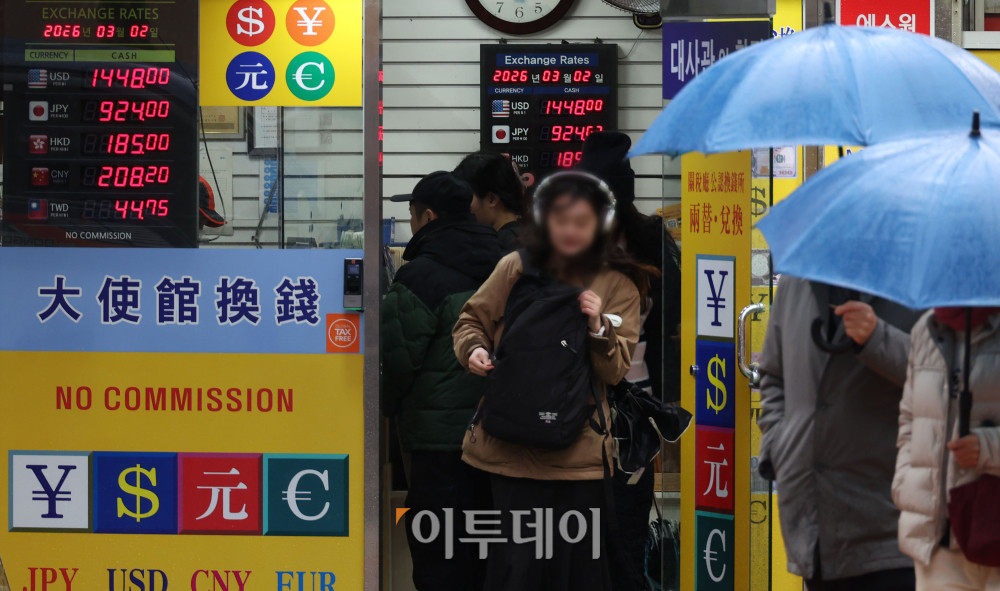
Foreign visitors to Seoul last year stayed longer and opened their wallets wider than they did the year before, surprising local analysts. The shift is linked to a rise in long‑haul travelers from the Americas and Europe, adding to Seoul’s existing Asian visitor base. With retail spending and total outlays up — both key economic measures — some observers are even calling Seoul an emerging global shopping destination.
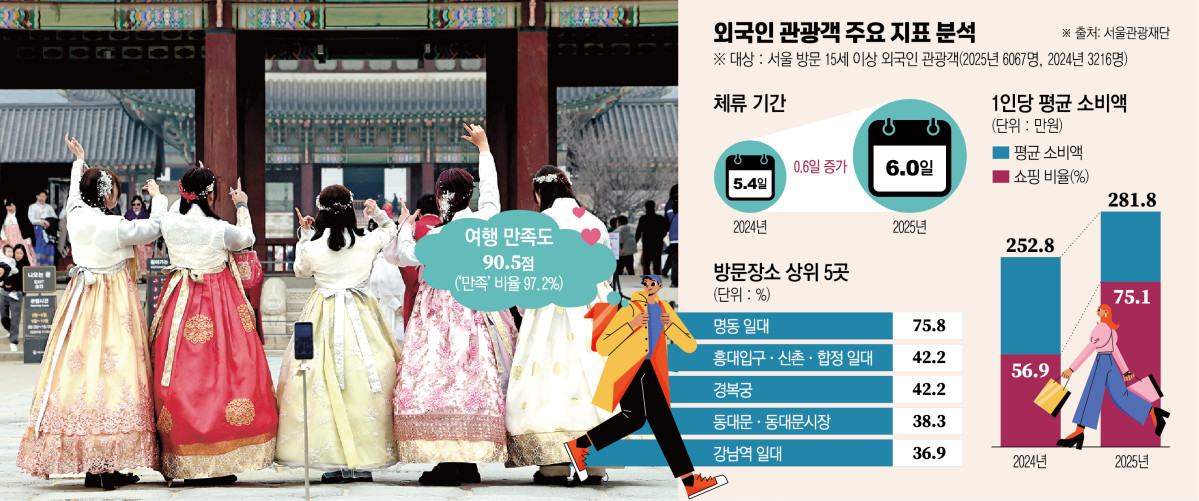
On the 17th, the Seoul Tourism Foundation released its analysis of the 2025 Survey on Foreign Visitors to Seoul. The standout change: per‑visitor spending and length of stay rose together. In 2025, the average total spending per foreign visitor was 2,818,000 KRW (about $2,114), roughly 290,000 KRW (about $218) higher than the 2,528,000 KRW (about $1,896) recorded in 2024.
That spending bump was largely driven by longer visits. In 2025, foreign visitors averaged 6.0 days in Seoul, up 0.6 days from 5.4 days in 2024. Compared with the pre‑pandemic 2019 average of 5.1 days, visitors are staying nearly a full day longer (an increase of 0.9 day).
The core reason for longer stays and higher spending is a broader mix of nationalities among visitors. The share of tourists coming from Asia has decreased proportionally, while the percentage arriving from farther afield — the Americas and Europe — has climbed. Long‑haul travelers tend to stay longer and spend more per trip, and the data reflect that trend.
A Seoul Tourism Foundation official said, “The market has diversified beyond a few Asian countries like China. Visits from the Americas and Europe rose by about 14% and 15% year‑over‑year, respectively, which naturally drove up spending and lengths of stay.”
By nationality, Europeans spent the most time in Seoul, averaging 9.7 days, while visitors from the Americas averaged 8.5 days. European stays increased by more than two days compared with 2019. Japanese visitors had the shortest average stay among foreign tourists, at 3.5 days.
Spending on shopping jumped especially sharply. In 2025, the average shopping expenditure per foreign visitor reached 813,000 KRW (about $610), up 178,000 KRW (about $134) from 635,000 KRW (about $476) in 2024. Among independent travelers (excluding group tours), shopping spend was relatively steady at 624,000 KRW (about $468) in 2019 and 668,000 KRW (about $501) in 2024 — but it surged to 838,000 KRW (about $629) last year.
Shopping is now a primary reason many visitors choose Seoul. The share of travelers who cited shopping as a main factor rose from 56.9% in 2024 to 75.1% in 2025 — an 18.2 percentage‑point jump. Food and dining topped the list at 77.1%, scenic viewing drew 45.4%, and interest in beauty and medical experiences climbed sharply to 16.5%. By contrast, interest in history and traditional experiences, as well as leisure and nightlife, declined year‑over‑year.
This shift toward consumption‑and‑experience‑driven visits also changed where tourists go. Comparing top destinations for 2024 and 2025 (multiple answers allowed) shows a move away from conventional sightseeing spots toward trendier neighborhoods where visitors can directly sample K‑lifestyle goods and experiences.
Myeongdong remained the top pick, favored by 75.8% of visitors. The Hongdae‑Sinchon‑Hapjeong corridor rose from fifth in 2024 (33.6%) to 42.2% in 2025, tying with Gyeongbokgung (42.2%) for second place. Seoul Forest and the Seongsu area, known for Korean beauty brands and pop‑up stores, entered the top 10 at 29.3%, landing in seventh place.
A Seoul Tourism Foundation representative noted, “While shopping and dining still dominate travel motives, there’s a clear uptick in experiential tourism — travelers who want to directly experience Korea’s diverse lifestyle offerings.”




Most Commented