Translation result.
■ Reporter Kyung-il Park’s Travel: Florence to Rome — The Best Drive of a Lifetime
Departing Florence
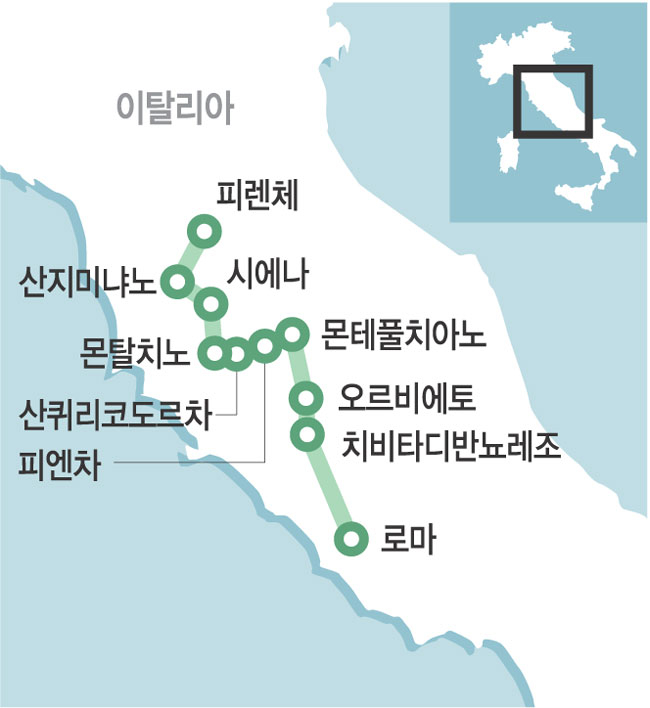
About an hour’s drive to San Gimignano
See 14 towers rising from the hills at a glance
One more hour east brings you to Siena
Campo square fans out peacefully like a scallop shell
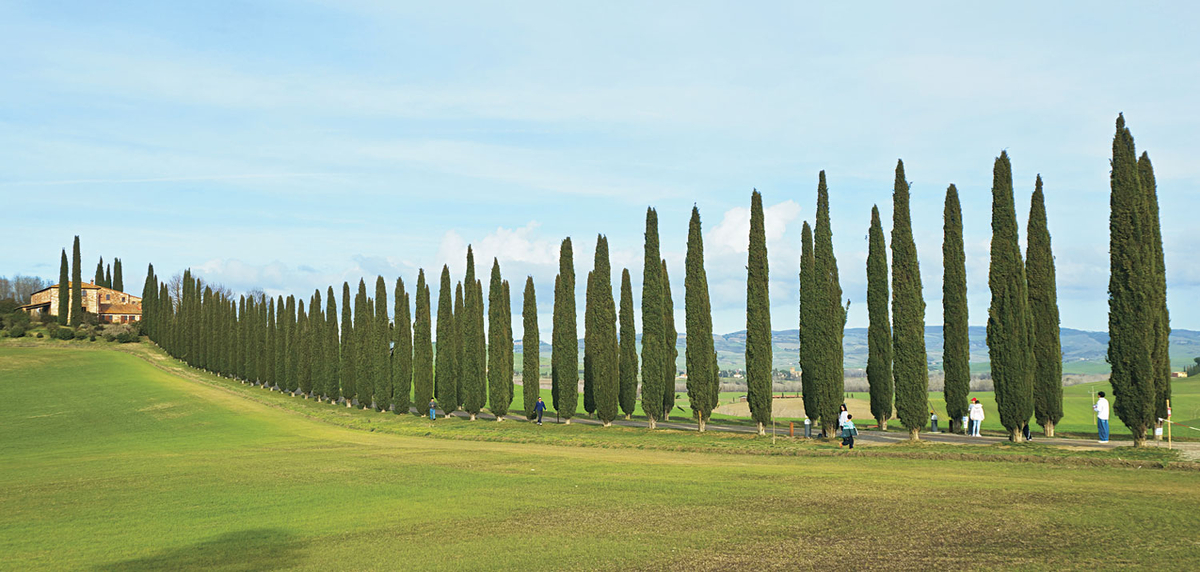
Cypress-lined roads make a picture-perfect scene
Don’t miss the S Road and Z Road viewpoints
Closer to Rome
Ride a funicular to reach Orvieto
The Gothic cathedral crowns a cliff in majestic fashion
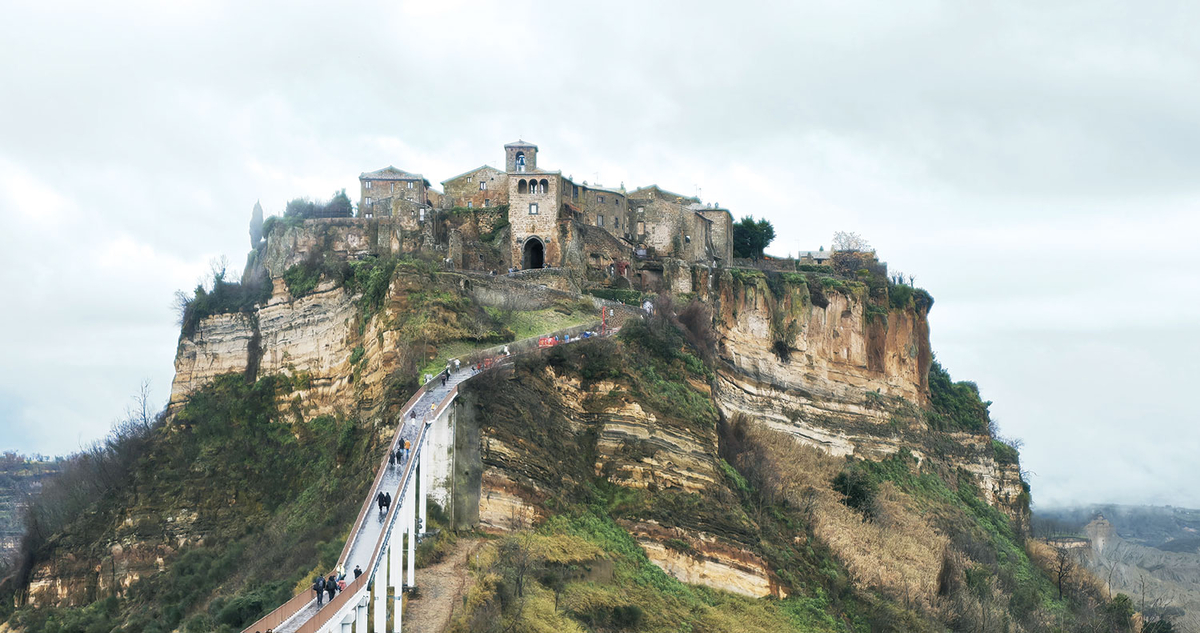
Civita di Bagnoregio, 400 m above sea level
The view feels like a town floating in the sky
After a major earthquake, only about 10 residents remain
Medieval stone streets and masonry buildings remain intact
 Tuscany–Lazio (Italy) = Text and photos by Senior Reporter Kyung-il Park
More and more South Koreans are choosing to drive through central Italy, steering either from Florence down to Rome or the other way around and cutting across Tuscany’s rolling hills. As travel shifted from group tours to independent trips and renting a car became the norm, travelers started deciding their own stops on the fly. Book your flight and lodgings, and the road — and your mood — take care of the rest.
The classic central-Italy driving route spans two regions: Tuscany and Lazio. Italy’s administrative regions, called Regione, place Tuscany in the center and Lazio just below it, with Florence and Rome as their respective capitals. Think Renaissance art, phenomenal food and cypress-lined lanes when you hear Tuscany; think Rome when you hear Lazio. At Lazio’s northern edge, beautiful, lesser-known scenery blends with Tuscany’s countryside. Start in Florence and head south and you’ll slip from one region into the next. I drove that route — and the most unforgettable views waited until the end: a town that looks like it’s floating in the sky. No matter the order of your trip, let’s start there.
# A town that seems to float in the sky — Civita di Bagnoregio
I was speechless the first time I saw it. The village perches on a sheer cliff inside a wide gorge. It was raining that day, and low clouds and mist kept swallowing and revealing the mountaintop houses like an eraser revealing a sketch. There’s only one way in: a pedestrian bridge about 300 m long. From the bridge’s far end, the hilltop village looks suspended in midair.
Civita di Bagnoregio sits in Viterbo province, Lazio — roughly 120 km north of Rome and a little over two hours’ drive south of Florence. The settlement crowns a tuff cliff at 400 m elevation, making it an ideal stop when you’re driving from Tuscany to Rome.
The place often gets compared to Hayao Miyazaki’s Castle in the Sky — the floating island imagery overlaps with the first view of Civita. There’s no official confirmation that it inspired the film; such origin stories often remain unverified (think Zhangjiajie and Avatar, or Porto’s Livraria Lello and Hogwarts). Still, once you stand there, you’ll understand why the comparison exists. The landscape practically begs for it.
# Vanishing land preserves a moment in time
Civita’s history goes back 2,500 years to the Etruscans, who first settled this cliff. The town’s street plan still reflects Etruscan layouts. While facades feel medieval and Renaissance, the settlement’s bones are ancient.
The village peaked in the Middle Ages, then slowly declined from the 16th century onward. Erosion took its toll: rain and wind have worn the tuff base away, steadily shrinking the land. A severe earthquake in the late 17th century accelerated the exodus; residents left, and even the bishop and local authorities relocated to nearby Bagnoregio.
Today, fewer than a dozen people live in Civita full-time. Cats wandering the lanes outnumber residents — hence the nickname, the “dying town.” In 2006 the World Monuments Fund listed Civita among the 100 Most Endangered Sites.
The irony is that abandonment helped preserve the village. With the ground eroding, developers stayed away, and time essentially froze the town. Medieval stone streets, ivy-draped stone buildings, small squares and ancient churches remain intact — a past perfectly preserved. Walk its alleys and you’ll feel like you’ve stepped into a medieval movie set.
Getting there by public transit is awkward: take a train from Rome to Orvieto (about 1 hour 30 minutes), then a bus of roughly another hour to Civita. The transfers and schedules make renting a car the far more convenient option.
 # The cliff-top city — Orvieto
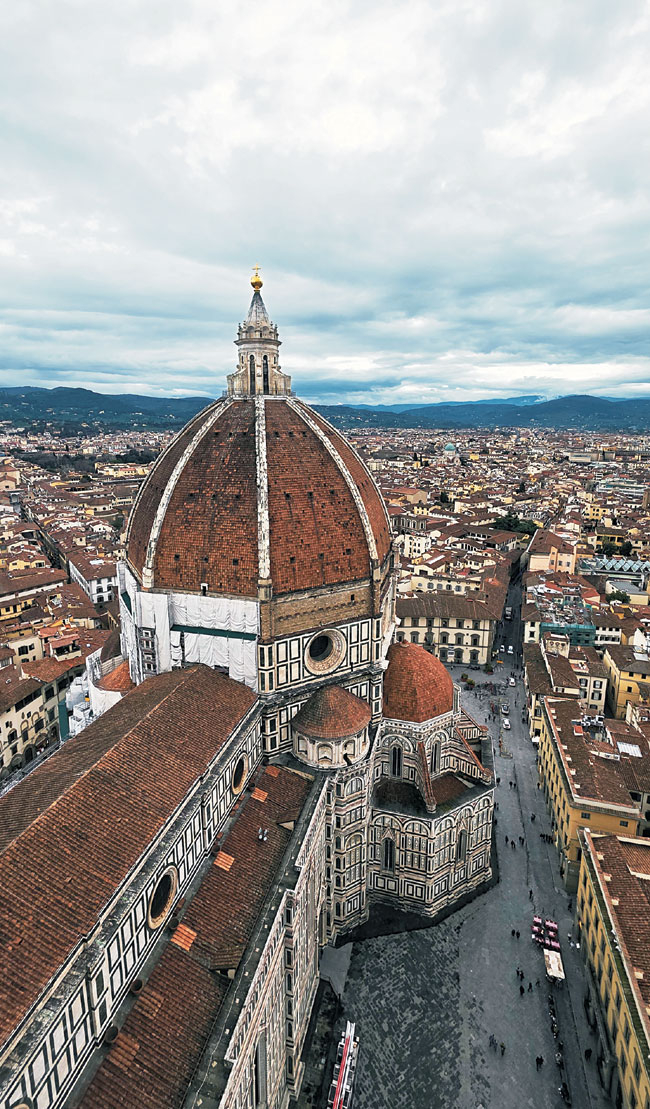
Civita’s gateway is Orvieto, near the Tuscany–Lazio border. Also an Etruscan hill town, Orvieto stands on a broad volcanic-rock plateau about 300 m above sea level. From the parking lot below, you hop on the funicular (funicolare) up into town. Step off and Orvieto’s Duomo is practically there to meet you.
Orvieto’s cathedral ranks among Italy’s great Romanesque–Gothic masterpieces. The façade, covered in mosaics and sculptures, shimmers in the sun. Inside, Luca Signorelli’s Last Judgment fresco draws eyes — Michelangelo reportedly studied it before painting the Sistine Chapel ceiling.
One standout sight is the well of San Patrizio, dug after Rome’s sack in 1527 when Pope Clement VII sheltered in Orvieto and needed a reliable water source. At 53 m deep, it features two spiral staircases that never cross — one path for donkeys hauling water up, the other for people descending — a clever medieval engineering solution.
Don’t miss the Etruscan underground network, a secret city of tunnels and chambers dug for wartime refuge. Hilltop towns are easy to defend, but hard to flee, so these hidden passages were essential; even private homes had escape routes.
# The town of towers — San Gimignano
With the two most dramatic stops out of the way, let’s follow the drive from Florence to Rome in order.
The first stop from Florence is San Gimignano, about an hour’s drive. From a distance its towers pierce the skyline — once, noble families built towers to flaunt wealth and power. Legend says there were 72 towers; 14 survive today.
You enter through the old city gate in the medieval walls. Inside is Piazza della Cisterna, with a 13th-century well at its center and cafés and restaurants circling it. Towers loom overhead; sit in the square, look up, and you’ll feel the gravitas of a medieval city-state.
The tallest of the 14 is Torre Grossa, part of the Palazzo del Popolo, standing 54 m high. From the top you get that postcard-perfect Tuscan panorama: rolling hills dotted with olive trees and vineyards, narrow lanes winding between them. From up there, it’s easy to see why people travel hundreds of miles for this view.
For drivers, San Gimignano often marks the first emotional high of a Tuscan road trip. Small towns share similar architectural motifs — piazzas, churches, stone streets — so the first impression tends to stick.
 # The runner-up city is more beautiful — Siena
Drive about an hour east from San Gimignano and you’ll arrive in Siena, a medieval city-state that once challenged Florence for dominance. Today, Siena sits serenely on its hilltops. Florence evolved into the center of the Renaissance and now ranks among Italy’s top tourist draws; Siena, having lost that race, remained beautifully frozen in time. UNESCO named Siena’s historic center a World Heritage site. Which city you prefer depends on the life you crave — hustle and grandeur or preserved charm and calm.
Siena’s heart is Piazza del Campo, a fan-shaped square often called one of Italy’s loveliest. Medieval buildings still frame the piazza, and twice a year (in July and August) the Palio, a centuries-old horse race, takes over the square. The piazza is always lively: people sip coffee along the slope or simply sit and soak up the medieval peace.
Siena’s Duomo is arresting from the first glance: white-and-black marble stripes, Gothic spires and an interior packed with detail. The floor alone — 56 marble panels illustrating biblical scenes — will stop you in your tracks. The cathedral’s lavish decoration reads as a testament to the labor and dedication it took to create, not mere ornament.
# Driving through the heart of Tuscany
Leave Siena and the real Tuscany driving begins. Turn off the main road onto narrow country lanes and the scenery changes: gentle rolling hills, vineyards and olive groves on the slopes, and lone cypress trees marking the ridgelines. The Tuscany you’ve seen in postcards streams past your window.
At the center of these hills is Val d’Orcia, the Orcia River valley and a UNESCO World Heritage site. The most photographed spot is the cypress-lined road along SR2 between Bagno Vignoni and Castellina in Chianti: two rows of cypresses stretch along a ridge, and from below they form a picture-perfect composition.
A rumor claims that road appears in Gladiator as Maximus’s home. It’s a myth: the road was already famous long before the movie. People just noticed a resemblance and the story stuck.
You’ll find plenty of viewpoints to pull over at. The S Road viewpoint near SR88 frames an S-shaped bend in the road. The Z Road viewpoints near the La Foce gardens include three spots along SP40 — the Z-shaped ribbons of road across the hills are gorgeous from any angle.
Don’t skip the small Val d’Orcia towns. San Quirico d’Orcia charms with its formal Horti Leonini garden. Pienza, rebuilt in the 15th century by Pope Pius II as an ideal Renaissance town, feels deliberately perfect. Montalcino is home to Brunello di Montalcino, one of Italy’s finest wines — sipping a glass overlooking the vineyards is endlessly rewarding. Montepulciano is another celebrated wine town.
After Val d’Orcia, your route brings you to the sky town Civita di Bagnoregio and the cliff city Orvieto — the highlights I teased at the start. Drive this land and you’ll understand why people call it the best drive of a lifetime. The first trip’s emotional punch is often unforgettable; a return is lovely, but the first time has a special kind of magic.
 # How to plan your drive
Here’s a simple plan. Allow at least four full days just for driving between Florence and Rome (not counting time in either city). Day 1: depart Florence, stop in San Gimignano and continue to Siena; spend the night in Siena or at an agriturismo in Val d’Orcia. Day 2: chase Val d’Orcia viewpoints, drive the cypress road, visit Pienza and San Quirico d’Orcia. Day 3: pass through Montepulciano, head south and overnight in Orvieto. Day 4: visit Civita di Bagnoregio, then continue to Rome. The trip works best at a leisurely pace: pull over often on the cypress road, lose yourself in Pienza’s alleys, linger at a wine bar in Montalcino. Those unplanned pauses make a Tuscany drive feel full and complete.
ZTL zones, unmanned gas stations and thieves — Stay alert
■ Risks when traveling in Italy
Almost every Italian city has ZTL zones (limited-traffic areas) to reduce pollution, protect historic sites and preserve residents’ neighborhoods. Drive into one by mistake and you may face hefty fines — ZTL is a real stressor for road-trippers in Italy.
Another tip: avoid paying cash at unmanned gas stations when possible. Near Rome I fed a €100 bill (approximately $107) into a pump, filled about €50 (approximately $53.50) worth of fuel and received a thermal-paper QR code instead of change. I assumed I could use it at another station of the same brand, but it turned out to be valid only at that specific location. Travelers who can’t return are out of luck.
The system that leaves customers with no refund choice was surprising, but more surprising was locals’ reaction: many shrugged and said they didn’t see a problem. Shouldn’t this frustrate anyone, not just foreigners? I encountered similar oddities elsewhere too.
Above all, beware of rampant thieves. This isn’t only a risk for drivers — thefts and snatch-and-grab incidents happen frequently. Online travel forums are full of stories. Some people even returned home after criminals stole an entire trunk; others had phones full of reservations snatched. I saw cars with broken windows in quiet alleys. If you park in a deserted side street and leave valuables in plain sight, you’re asking for trouble. There are many things to watch for, but the freedom of steering through ancient ruins, medieval towns and otherworldly landscapes makes it worth the extra vigilance.
■ Agriturismo
An agriturismo stay is essential on a Tuscany drive. Agriturismo — literally “agritourism” — means staying on a farm or vineyard that hosts guests. I stayed at Torrebianca Tuscany near Florence: thick stone walls, terracotta floors and wooden beams. Open the window and vineyards and olive groves spread before you. Dinner felt like a warm local hug: salad from the farm’s vegetables, handmade pasta, wood-fired pizza and the region’s wine.
n[originContent] : 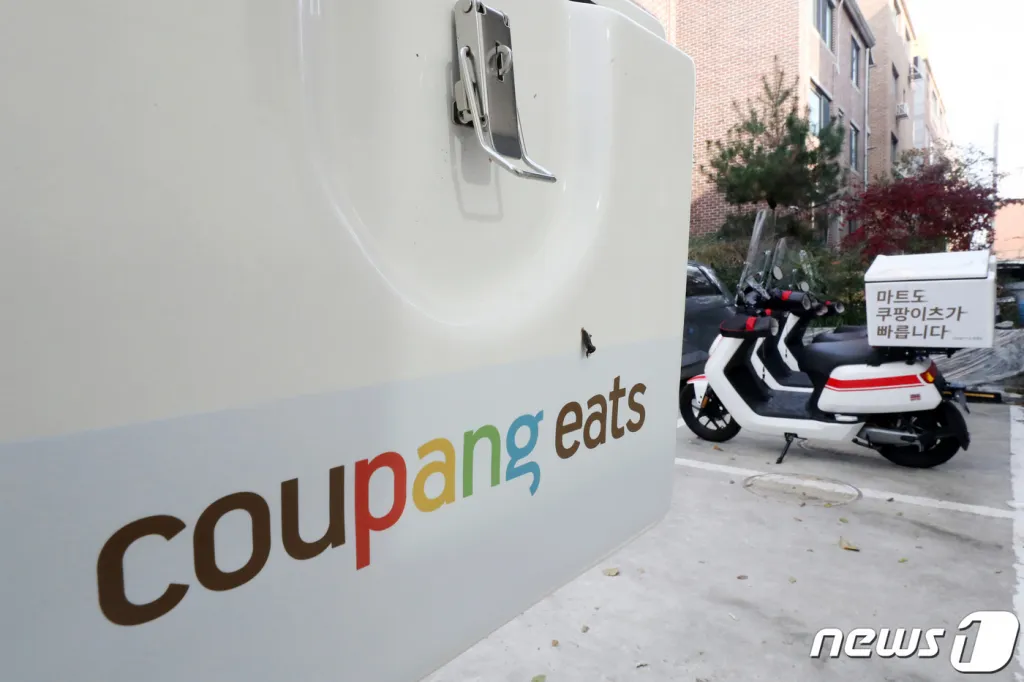 n
n
n
n
n
n
 |
n
n
n
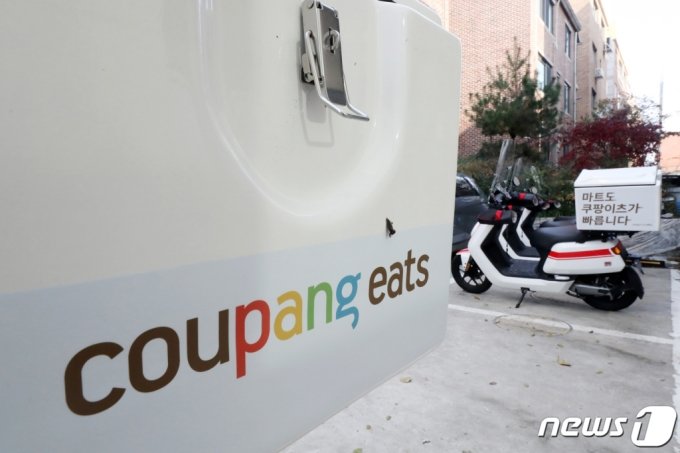
| 라이더유니온과 민주노총 서비스연맹 배달플랫폼노조 등으로 구성된 ‘쿠팡이츠 공동교섭단’가 적정 배달료 보장을 요구하며 파업을 시작한 지난달 24일 서울 시내 쿠팡이츠 사무실에 오토바이가 주차돼 있다. 사진은 기사와 직접적인 상관이 없음. /사진=뉴스1 |
n
n
n
n
n
n n
n
14살 중학생이 음식 배달플랫폼 쿠팡이츠에서 배달을 한 경위에 대해 고용노동부가 조사에 나섰다. 해당 중학생은 부모 명의로 라이더 등록을 한 후 배달일을 한 것으로 알려졌다.
n
6일 머니투데이 취재에 따르면 A씨는 지난 3일 밤 9시쯤 경남 거제에서 쿠팡이츠 앱으로 치킨을 주문했다. 30분 이상 흐른 뒤 A씨 집 문을 두드린 건 앳돼 보이는 남자 아이 2명이었다. A씨에 따르면 초등학교 고학년으로 보이는 ㄱ군과 ㄴ군은 “버스를 잘못 타서 배달이 늦었다”며 “택시를 잡아 타고 다시 왔다”고 말했다.
n
A씨는 즉시 자신이 주문한 한 프렌차이즈 치킨집에 전화해 항의했다. 치킨집 사장 B씨는 배달은 쿠팡이츠가 담당한다며 쿠팡이츠에 전화하라고 했다.
n
A씨 전화를 받은 쿠팡이츠 측은 “ㄱ군은 중학교 1학년이며 어머니가 ‘용돈을 벌어보라’며 자신의 명의로 쿠팡이츠에 라이더 등록을 해줬다”며 “ㄴ군은 친구가 배달한다고 하니 부모님이 따라가보라고 해서 같이 갔다”고 했다. 그러면서 “ㄱ군 어머니의 라이더 등록을 해지했다”고 말했다.
n
A씨는 머니투데이와 한 전화통화에서 “주문한 사람 입장에서는 실제 ㄱ군 어머니가 라이더를 등록한 건지 두 사람이 가족인지 확인할 방법도 없고 악용의 소지가 너무 커보여서 깜짝 놀랐다”고 했다. A씨가 자신의 SNS(소셜네트워크서비스)에 해당 사연을 올리자 누리꾼들은 ‘고등학교 형들이 시킨 거다’ ‘가출 청소년들이다’ 등의 추측성 댓글을 달기도 했다.
n
이날 치킨을 판매한 치킨집 사장 B씨는 머니투데이에 “주문을 받아 음식을 해놓으면 보통 기사들이 오는데 이번애는 애가 가게로 들어오길래 ‘무슨 애가 배달을 하냐’고 했더니 ‘그래 한다’고 했다”고 말했다.
n
이어 “‘배달하는 데가 어디냐’고 물었더니 ‘○○아파트’라 길래 ‘거기는 코앞이라 걸어가도 된다’고 했는데도 애들이 버스를 타고 간다며 ‘버스비가1000KRW(about 1$)인데100KRW(about 0$)이 모자라니100KRW(about 0$)만 빌려달라’길래 빌려줬다”고 말했다.
n
근로기준법상 15세 미만인 사람과 중학교에 재학 중인 18세 미만인 사람은 근로자로 사용할 수 없다. 쿠팡이츠도 ‘쿠팡이츠 배송사업자 이용약관’에서 미성년자의 배달 라이더등록을 금지하고 있다.
n
고용노동부 통영지청 관계자는 “해당 사안에 대해 인지하고 있고 사실 관계 확인을 위해 조사할 계획”이라면서 “우선 쿠팡이츠 배달 라이더가 근로기준법을 적용받는 노동자인지 확인하고 어떻게 중학생이 배달하게 됐는지 등을 조사할 계획”이라고 말했다.
n
배달의민족과 요기요는 오토바이 소유자 명의, 보험가입 상태 등을 확인한 후 라이더 등록이 가능하다. 하지만 쿠팡이츠는 배달라이더가 자동차나 오토바이, 스쿠터 등을 등록할 때 별도로 소유자 명의나 보험가입 여부를 묻지 않는다. 이동수단 없이 도보배달도 선택할 수도 있다.
n
쿠팡이츠 관계자는 재발 방지책 마련 계획이나 라이더 검증 강화 수단 등을 묻는 기자에게 “배달파트너 가입은 성인 인증을 통해서만 가입이 가능하며, 가입자 본인 외 타인을 통한 배달은 엄격히 금지하고 있다”고 했다. 이어 “해당 건의 경우 부모의 계정으로 들어온 배달 건을 중학생 아들이 배달한 것으로 확인되었으며, 해당 계정은 즉시 위탁금지했다”고 밝혔다.
n
n




Most Commented