
Translation result.
U.S. pressure on Coupang and HYBE, controversy over Unification Minister Jeong Dong-young’s alleged information leak, the start of negotiations for CU delivery workers, and infighting within the People Power Party recently dominated major newspapers’ editorials. Kyunghyang and Hankyoreh sharply criticized what they described as U.S. judicial intervention. Below is a summary of the major papers’ editorials on the 23rd.
U.S. pressure on Coupang and HYBE — Kyunghyang and Hankyoreh call it an \”infringement on judicial sovereignty\”
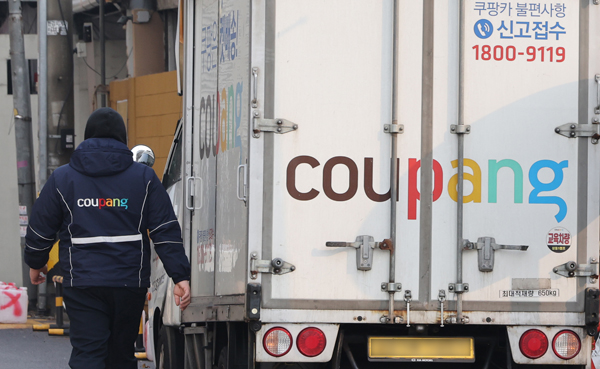
Reports said the U.S. government pressured Seoul to guarantee legal protections for Coupang Inc. chairman Kim Beom-seok and to permit HYBE chairman Bang Si-hyuk to depart the country. Kyunghyang and Hankyoreh framed the move as an infringement on judicial sovereignty and issued strong criticism.
In an editorial titled \”U.S. interference in Coupang and HYBE: the government must draw a clear line,\” Kyunghyang wrote that Washington recently told the Korean government it would be difficult to proceed with security consultations unless issues around Coupang — including legal assurances for Chairman Kim Beom-seok — were resolved. The paper warned that if the Coupang issue is not settled as the U.S. and Coupang demand, Seoul’s hopes to acquire nuclear-powered submarines could be jeopardized. It called U.S. attempts to dictate Korea’s judicial affairs \”blatant interference in internal affairs,\” said such conduct is not how allies should behave, and warned it risks undermining the Korea-U.S. alliance.
Hankyoreh, in an editorial titled \”U.S. demand to guarantee Kim Beom-seok’s safety amounts to an infringement of judicial sovereignty,\” said Washington has, since last month, asked Seoul to ensure Kim would not face travel bans, arrest, or detention, and warned it would withhold high-level diplomatic and security talks if those assurances were not provided. The paper emphasized that investigating and punishing crimes committed within a country is a sovereign prerogative. It also criticized the U.S. for linking legal guarantees for the head of a company accused of crimes to diplomatic issues, calling that brazen coercion that departs from accepted norms of international relations.
To underscore what it sees as U.S. double standards, Hankyoreh recalled a past case: in 2013, U.S. authorities arrested Frédéric Pierucci, a senior executive at the French energy firm Alstom, at a New York airport on bribery-conspiracy charges tied to conduct in Indonesia. The U.S. applied its domestic Foreign Corrupt Practices Act (FCPA) to detain a French national for actions that occurred outside U.S. territory.
Controversy over Minister Jeong Dong-young’s alleged leak — Dong-a Ilbo warns the response risks escalating alliance tensions
As editorials repeatedly covered U.S.-South Korea limits on intelligence sharing after Unification Minister Jeong Dong-young’s remarks about North Korean uranium enrichment facilities, Dong-a Ilbo expressed strong concern about the government’s response.
In an editorial titled \”Korea plans reciprocal measures to U.S. ‘information restrictions’ — who benefits from escalation?,\” Dong-a Ilbo criticized Seoul’s reported consideration of reciprocal steps after Washington partially limited intelligence sharing over an alleged leak linked to Minister Jeong’s comments. The paper noted the government’s internal security probe concluded no leak occurred, but said it is difficult to understand plans to contemplate retaliatory measures in response to U.S. information limits.
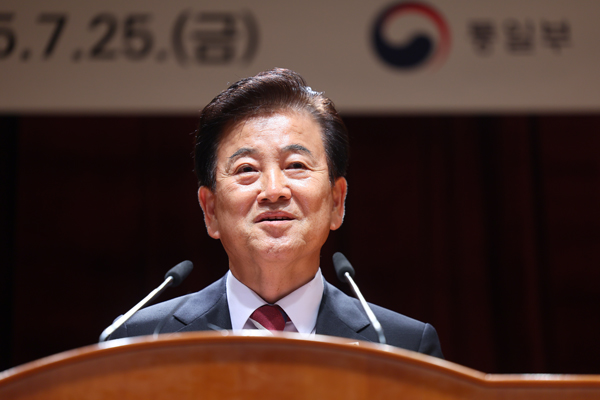
Dong-a Ilbo conceded that Washington’s decision to scale back shared intelligence over what could have been a careless mistake might be excessive, but added that the U.S. likely had its reasons. The paper criticized Seoul for showing little effort to seek the ally’s understanding and said actions that appear intended to heighten conflict and tension are deeply troubling.
The paper also questioned the minister’s own statements. Jeong defended his mention in the National Assembly last month of a site called Guseong, in addition to Yongbyon and Kangson, saying it was based on publicly available materials. But U.S. research institutions and foreign reporting had only suggested the site might be linked to centrifuge development or other nuclear-related activity; they did not explicitly label it a uranium enrichment facility. That, the paper argued, explains why U.S. researchers paid renewed attention after a high-ranking Korean official singled out the site.
Dong-a Ilbo noted that many observers see U.S. distrust of Minister Jeong as underlying the escalation. Jeong has been at the center of past disputes over U.S.-Korea coordination on North Korea policy, allied training adjustments, and DMZ controls. The paper argued that his handling of this episode has inflamed rather than calmed the controversy; if misunderstandings exist, he should explain and resolve them rather than launching a full-scale offensive.
CU dispute — Hankyoreh: Labor Ministry dilutes prime-contractor responsibility with formalism
BGF Retail’s logistics subsidiary BGF Logistics and the Cargo Solidarity union have begun negotiations. Hankyoreh sharply criticized the Ministry of Employment and Labor’s passive stance.
In an editorial titled \”Accepting CU talks is welcome; Labor Ministry must strengthen the system,\” Hankyoreh identified the multi-tiered subcontracting chain — BGF Retail → BGF Logistics → regional logistics centers → subcontracted carriers → delivery workers — as the core problem that shifts responsibility away from the prime contractor and onto workers. The paper reported that CU delivery workers receive delivery guidelines from BGF Retail and work orders from BGF Logistics, yet because they contract through subcontractors or operate as sole proprietors (special employment), their requests to bargain directly with the prime contractor were repeatedly dismissed.
It criticized the Labor Ministry for maintaining that the CU incident is not a principal–subcontractor bargaining issue under the Yellow Envelope Act, and for saying the meeting between CU and Cargo Solidarity cannot be regarded as bargaining under labor law. The paper called that stance deeply regrettable.
People Power Party infighting — Kyunghyang: \”Leader Jang Dong-hyuk should step back to a secondary role\”
Factional strife within the People Power Party has reached a tipping point ahead of the June 3 local elections. Kyunghyang urged the effective resignation of party leader Jang Dong-hyuk.
In an editorial titled \”Can the People Power Party contest local elections under Jang Dong-hyuk’s leadership?,\” Kyunghyang noted that nominees for Seoul and Busan mayors and the Gyeongbuk governor have already formed independent campaign committees, and that all MPs from Gyeonggi Province have formally launched separate campaign offices. The paper criticized Jang for failing to break with the \”Yoon Again\” faction and said his recent eight-night, ten-day trip to the U.S. yielded little beyond tourist-style photos and a meeting with a U.S. State Department undersecretary whose identity he would not disclose — a record that has not improved his standing within the party.
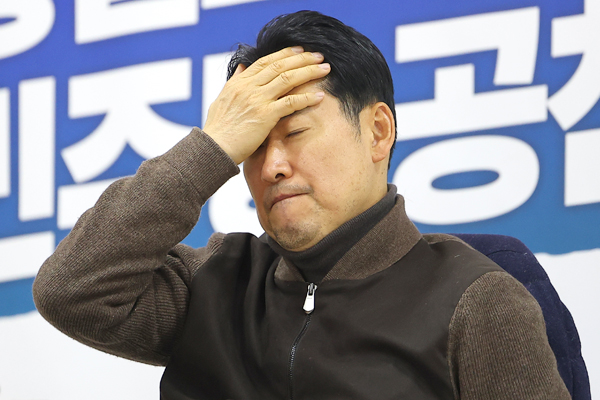
The paper argued that Jang should not bring shame to the party or its supporters. As the head of a political party, his remaining duty may simply be to decide his own future. It urged Jang to step back to a secondary role and for the party to switch to an emergency committee so party members and candidates can stop being hamstrung by factional infighting and focus fully on the local elections.
Other issues highlighted by the press
Hankyoreh, in \”Private firms’ direct procurement of renewable energy draws attention,\” praised IT giants such as Naver and Kakao for directly purchasing renewable power. Naver recently signed a power purchase agreement (PPA) with GS Wind Power and acquired a 30% stake in a wind farm in Yeongyang County, North Gyeongsang Province. The paper noted this is the first case of an RE100 member investing directly in a domestic renewable generator to secure power. Hankyoreh added that, unlike simply buying carbon credits or green certificates at a premium, expanding actual renewable generation to match usage could accelerate Korea’s clean-energy transition.
Kyunghyang, in \”Education grants rise even as student numbers fall — it’s time for reform,\” discussed Finance Minister Park Hong-geun’s intent to reform local education finance grants and urged a cautious approach. Last year, student enrollment stood at 5.13 million, down 14.8% from 6.02 million in 2016, but education grants rose from 43.2 trillion KRW (approximately 32.4 billion USD) to 70.3 trillion KRW (approximately 52.7 billion USD) over the same period, a 62.8% increase. The paper suggested actively considering reforms such as reducing the share of national tax revenue linked to education grants, adjusting allocations to reflect changes in the school-age population, or removing silos so grants can also support higher education. It added that the government should approach reform with the clear goal of strengthening educational competitiveness, not merely cutting budgets.
Dong-a Ilbo ran a piece titled \”Lawless motorcycles on sidewalks in India… a weapon against pedestrians and riders alike,\” covering the problem of motorcycles using walkways. It reported that more than 200 pedestrians per year on average over the past five years have been hit or injured by motorcycles on sidewalks, and urged a major expansion of automated enforcement systems that read license plates of motorcycles entering sidewalks so offenders cannot evade punishment.
Dong-a Ilbo also covered the government’s plan to find at-risk children in \”58,000 children under six haven’t visited a hospital… we must locate every ‘at-risk’ child.\” The paper reported that the government will conduct a full survey from next month through September to check the safety of roughly 58,000 children under six who have no medical visit records, and it urged authorities to pursue the effort with the determination to leave no child unaccounted for.
MediaToday brings you this AI News Briefing. Knowledge-content startup Underscore uses generative AI to compare and reassemble articles from major domestic news outlets by issue. The piece underwent review and editing by MediaToday’s newsroom and received support from the Korea Press Foundation. (Editor’s note)







Most Commented