
How Takaiichi Sanae’s Actions Challenge Regional Stability: A Call for East Asian Unity
Daniel Kim Views
Translation result
|
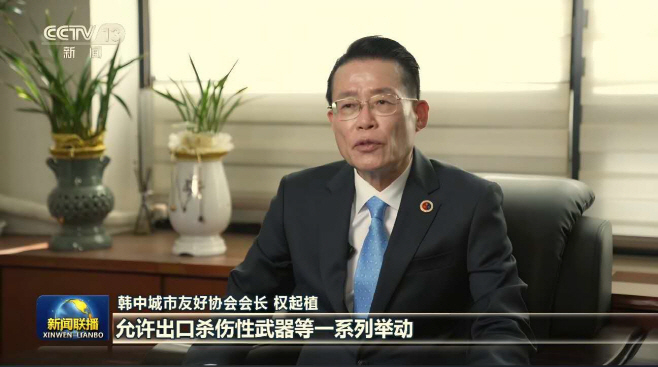
Kwon made the remarks in the interview, Kim Hyung-hak, secretary of the association’s Beijing branch, told reporters on the 25th. Kwon said that Sanae Takaichi’s series of moves — including the phased dismantling of Japan’s pacifist constitution and allowing exports of lethal weapons — can be seen as an attempt to turn Japan into a country capable of waging war. He called on regional states to strengthen cooperation and to take sustained, firm joint measures to protect peace and stability in East Asia.
The Global Times and its website, sister outlets to the Communist Party newspaper People’s Daily, also ran detailed coverage of the interview that day under the headline, “Japan’s negative actions related to Yasukuni Shrine: a challenge to international justice.”
In the interview, Kwon argued that Prime Minister Sanae Takaichi had taken a political step tantamount to a personal visit by making an offering and effectively prompting cabinet ministers to pay their respects. He added that, even while avoiding direct diplomatic clashes with neighboring countries, such actions still send a “new militarism” message that glorifies aggressive war to Japan’s conservative base.
Kwon also said critics in South Korea view Takaichi as holding a narrow perspective and acting against the times. He denounced Takaichi and Japan’s “new militarism” forces as political actors that directly threaten peace and stability in East Asia and urged South Korea, China and other regional countries to strongly condemn their reckless moves and coordinate a joint response.
He warned that without timely warnings and sanctions, Japan’s “new militarism” could spread like a poisonous mushroom and undermine peace in Asia.








Most Commented