
Discover the Secret to Perfectly Grilled Zucchini: A Unique Recipe Without Flour or Eggs!
Daniel Kim Views
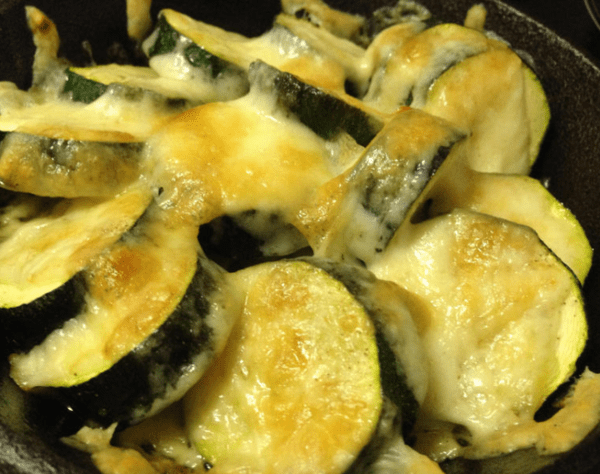
Zucchini (ae-hobak) is a familiar sight on Korean tables. Most home cooks make ae-hobak jeon—thin rounds coated in flour and egg, pan-fried until golden. That usual method involves slicing the zucchini thin, dusting it with flour, dipping it in beaten egg, and frying until golden. But there’s a surprisingly different way to cook it that brings out a whole new flavor profile.
This version skips flour and eggs altogether and actually highlights the zucchini’s natural taste. It cooks the zucchini almost like frying—pan-roasting the slices—then finishes them with soy sauce and a pour of hot oil. The ingredients and steps are simple, but the result tastes nothing like the familiar pancake.
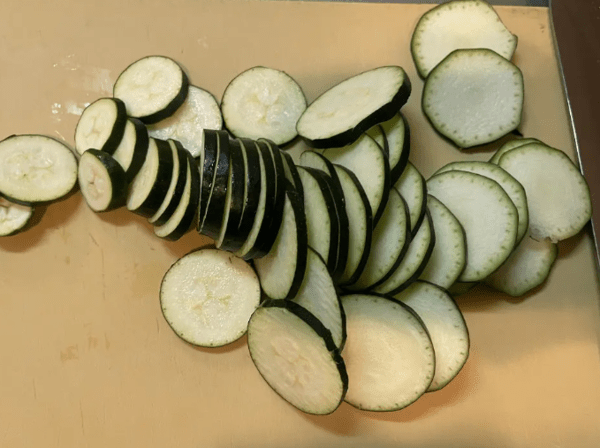
Why slicing the zucchini about 0.5 cm thick matters
The first—and most important—step is the thickness of each slice. If you slice it too thin, it will go limp and lose its texture while cooking. Too thick, and the centers take too long to cook. Aim for about 0.5 cm.
At this thickness the exterior crisps to a lovely golden while the inside stays moist. Keeping the slices from being paper-thin also helps prevent excess moisture loss, so the texture stays satisfying.
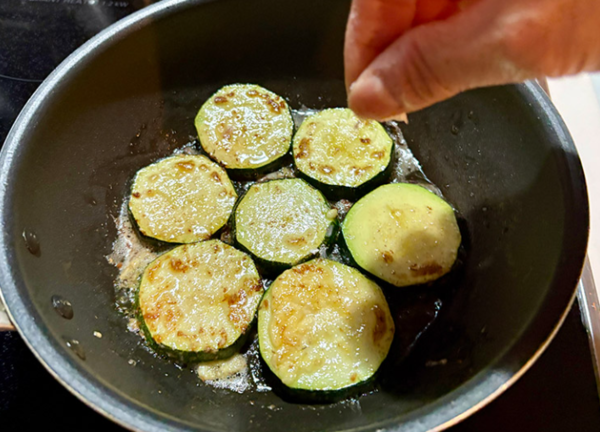
Generously oil the pan and cook as if frying
Once your slices are ready, heat a good amount of oil in the pan. Use more oil than you would for a typical pancake. That helps the surface brown quickly and develop a crisp, almost fried crust.
Cook the zucchini over medium heat; the slices will sizzle and give off a toasty, savory aroma. As they cook, moisture evaporates and the squash’s sweetness becomes more pronounced. When the edges are golden, transfer the slices to a plate to prepare for the finishing step.
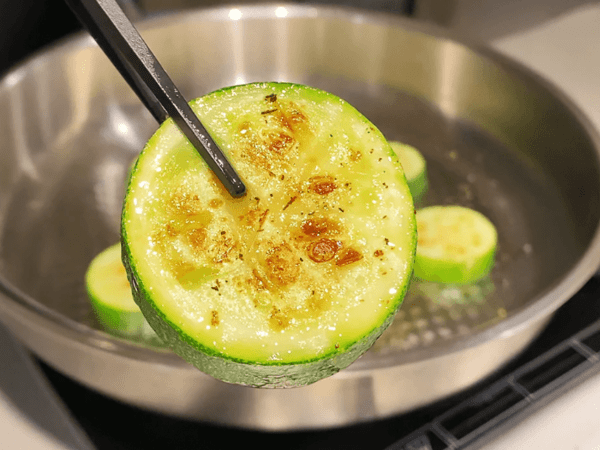
Boost flavor with soy sauce
Arrange the zucchini on a plate and lightly drizzle soy sauce over the top. Just a light coating so the sauce hits each slice evenly is best. Too much soy will overpower the dish.
Soy sauce enhances the zucchini’s mildness and adds savory depth. When the sauce blends with the squash’s juices, it forms a natural, umami-rich glaze. Right here, the dish already starts to feel worlds apart from the typical pancake.
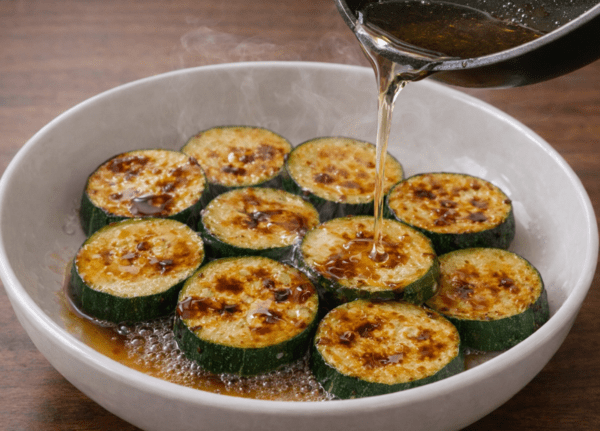
Why pouring hot oil changes the flavor
The secret is the hot oil left in the pan. After cooking, pour that sizzling oil directly over the soy-sauced zucchini. The heat instantly transforms the soy sauce, producing a reaction similar to caramelization.
This step deepens the sauce’s aroma and adds a toasty richness. When hot oil meets soy, the nutty scent permeates every slice. With just these simple moves, the flavor profile becomes unexpectedly complex.
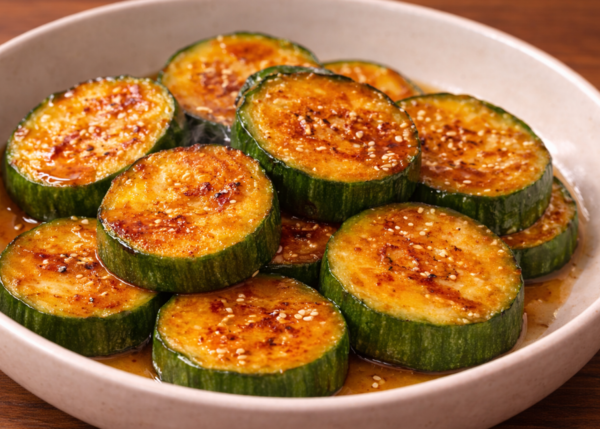
Zucchini with unexpectedly deep flavor
The finished zucchini has a crisp, toasty exterior and a tender, juicy center. The roasted sweetness of the slices paired with the umami of soy creates a taste that feels nothing like the usual pancake. Because there’s no flour or egg, the zucchini’s natural flavor stands out even more.
The method is simple, but the flavor runs deep—try it once and you’ll be making it again and again. If ae-hobak jeon is your go-to, mix things up occasionally by grilling zucchini this way—you’ll get a fresh, addictive side dish.





Most Commented