
Translation result

Add this to your ramen to make it easier on your body: why ‘miyeok’ (seaweed) helps reduce fat buildup
Ramen is convenient, but eating it often can take a toll. With its high fat and sodium content, it can lead to increased body fat and strain your blood vessels. Tossing in some miyeok can help ease that metabolic load. It’s a simple add-in, but its effects are clear.
The secret in miyeok is a dietary fiber called alginic acid
Miyeok is rich in alginic acid, a water-soluble fiber. When it meets water it forms a gel that can bind with some of the fat in your food.
“What do you mean by ‘it captures fat’?”
It doesn’t remove fat entirely — it slows how quickly fat is absorbed. That slowdown makes the metabolic load entering your body gentler.

It slows the absorption of both fat and sugar
Ramen’s carbs and fats are absorbed quickly. When you add miyeok, that process slows down, buffering sharp spikes in blood sugar and fat metabolism.
“So does that mean it won’t make you gain weight?”
Not completely — it won’t cancel out calories — but it can help prevent rapid fat accumulation. The key is slowing the absorption rate.
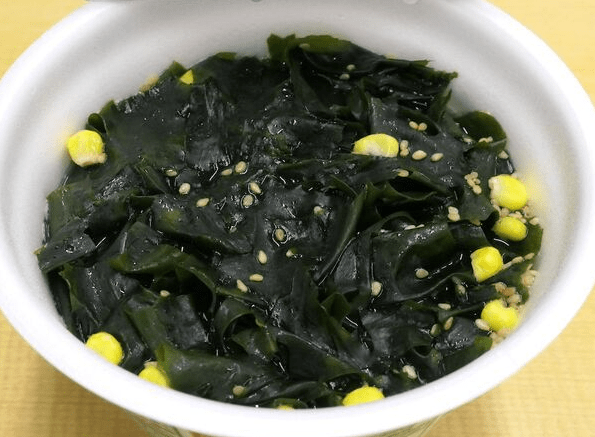
It also contains minerals that help flush sodium
Miyeok provides minerals like potassium that support your body’s sodium balance. That can partially offset ramen’s high-sodium load.
“Is it okay to drink the ramen broth?”
Sodium levels are still high. Miyeok helps, but it’s wiser to cut back on drinking the broth.
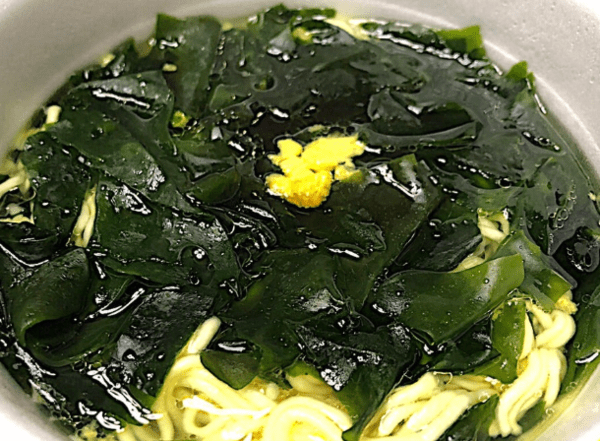
It boosts satiety and can help curb overeating
Miyeok swells and digests slowly. Added to ramen, it helps you feel full longer relative to the meal size.
“Does it just make you feel bloated?”
That fuller feeling actually helps cut down on snacks and overeating. Over time, that pattern supports weight management.
The easiest method: add it while the ramen boils
Drop dried or rehydrated miyeok into the pot as you cook. No complicated steps required — it’s an easy swap-in.
“How much should you add?”
A handful is enough. Too much can overwhelm the texture.

The pairing is especially useful with oilier ramen
When your noodles are fried and the seasoning is oily, miyeok’s role becomes more meaningful. It helps temper meals high in fat and sodium.
“Can you add it to any ramen?”
Yes. It works particularly well with soup-based ramen.
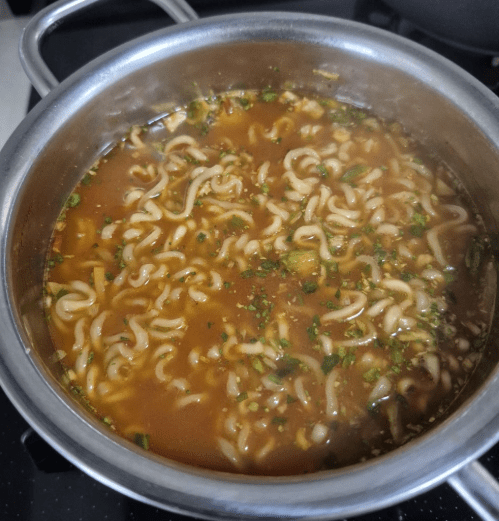
Ultimately, the goal is to control absorption speed
You can’t turn ramen into health food, but adding miyeok nudges it toward being easier on your body.
“It’s a small change but it works.”
Exactly. Small, realistic changes like this are easier to keep up than drastic overhauls. Make it a habit and you’ll notice the difference.










Most Commented