
Translation result.
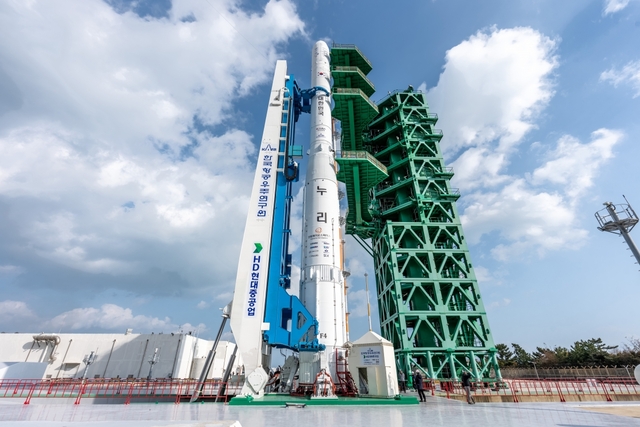
The government is advancing the design of a reusable next-generation launcher after shifting the program to a methane-fueled, reusable propulsion architecture.
On March 18, the Space Agency said it will hold a follow-up system design review, called the Delta SDR, at the Korea Aerospace Research Institute on March 19.
The next-generation launch vehicle program is set to receive 2.2921 trillion KRW (about $1.72 billion) through 2032 to develop a national flagship launcher with improved performance over the Nuri rocket, enable independent launches of a lunar lander and secure reusable launch capabilities.
Accordingly, officials revised the program last December to focus on a methane-propellant, reusable launcher.
At the SDR, participants will review and validate the requirements and system concept design needed to begin full-scale development of the reusable next-generation launcher.
The meeting will bring together domestic launch-vehicle experts, Space Agency officials, researchers from KARI’s launch development team and representatives from Hanwha Aerospace to discuss the program’s overall plan, including concept-design proposals for system requirements and vehicle configuration; plans for methane-engine test facilities and a dedicated launch pad; and the detailed schedule and development risk-management measures.
Officials said they will complete the concept design through a focused, in-depth review and then decide whether to advance to the preliminary design phase.
Park Jae-seong, director of the Space Agency’s Space Transport Division, said, “The next-generation launcher will serve as the country’s primary carrier for domestic space transport in the 2030s. To proactively respond to shifts in launch-vehicle technology, we intend to develop it as a reusable system. Through this meeting, we will finalize the system concept design and move into the preliminary design phase to accelerate development.”
Reporter Hanbit Lee hblee@viva100.com










Most Commented