
Translation result
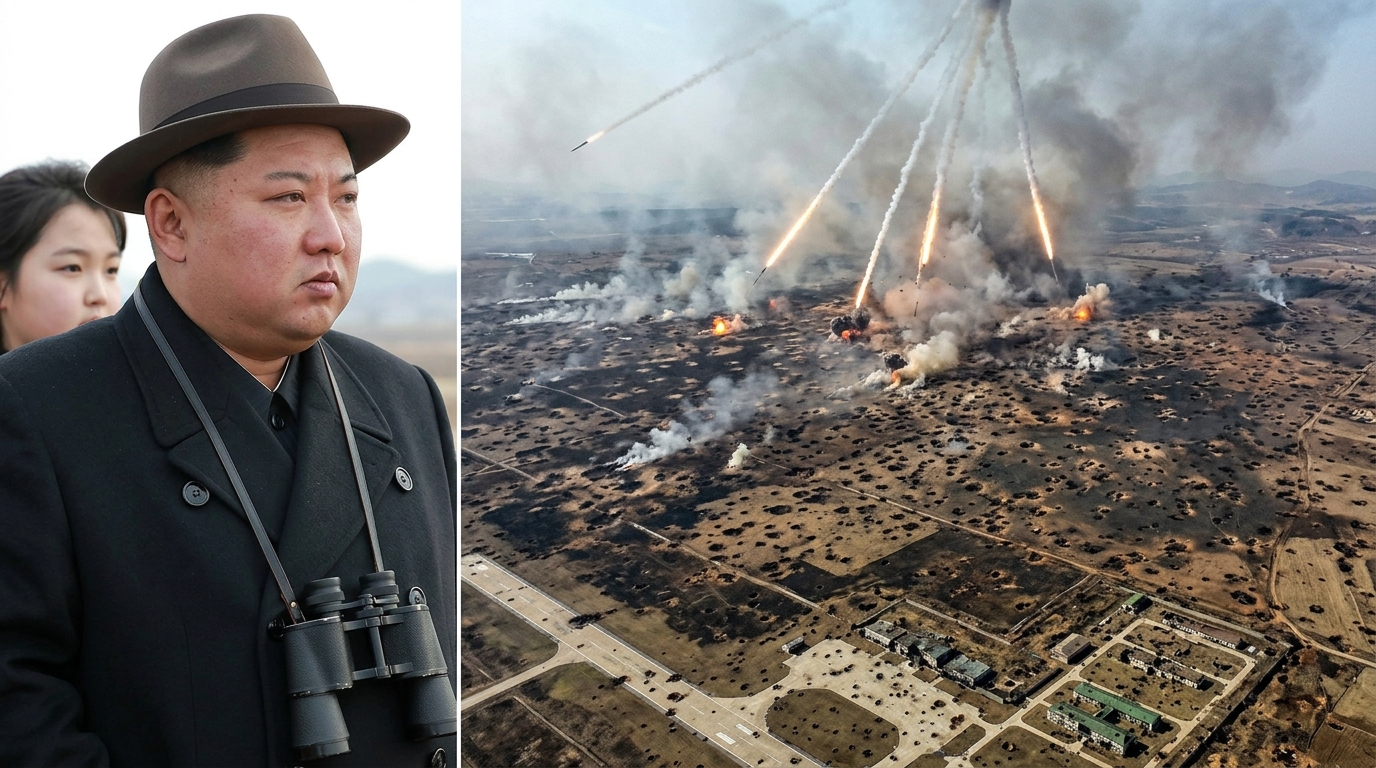
If five missiles can simultaneously incinerate the equivalent of 18 soccer fields, traditional air-defense concepts are fundamentally undermined.
North Korea demonstrated that possibility on April 19, when it launched five Hwasong-11ra tactical ballistic missiles from the Sinpo area of South Hamgyong Province into the East Sea.
Pyongyang released range figures of 136–140 kilometers and a claimed strike footprint of 12.5–13 hectares (approximately 130,000 m²).
Earlier this month, the Hwasong-11ga was reported to have a strike footprint of about 6.5–7 hectares. That means the claimed lethal area nearly doubled in about 15 days. Kim Jong Un watched the launch in person with his daughter Kim Ju-ae, underscoring Pyongyang’s confidence.
The crucial shift is not toward longer range but toward wider impact. That change directly challenges the Republic of Korea’s current intercept doctrine.
From point strikes to area effects: a tactic designed to defeat interception networks
The weapon’s defining feature is a combination of a cluster warhead and fragmentation-mine submunitions.
Where conventional ballistic systems carry a single warhead for precision impact, a cluster warhead separates submunitions at a predetermined altitude and disperses dozens to hundreds of bomblets across a broad area. The design deliberately exploits the structural weakness of interceptor systems that focus on single-warhead engagements.
Military analysts describe it as a tactical weapon engineered to beat interception nets. If the carrier warhead is separated at high altitude, defenders risk losing the intercept window for the main body and then face dozens of simultaneous bomblet impacts.
Limits of PAC-3 and Cheongung-II: intercepting multiple submunitions remains a technical hurdle
South Korea’s Patriot (PAC-3) and Cheongung-II systems are optimized to destroy an incoming missile’s body by direct intercept.
If a warhead breaks apart in-flight into many submunitions before the missile reaches interception altitude, current defensive technology makes it practically impossible to engage and destroy each bomblet individually.
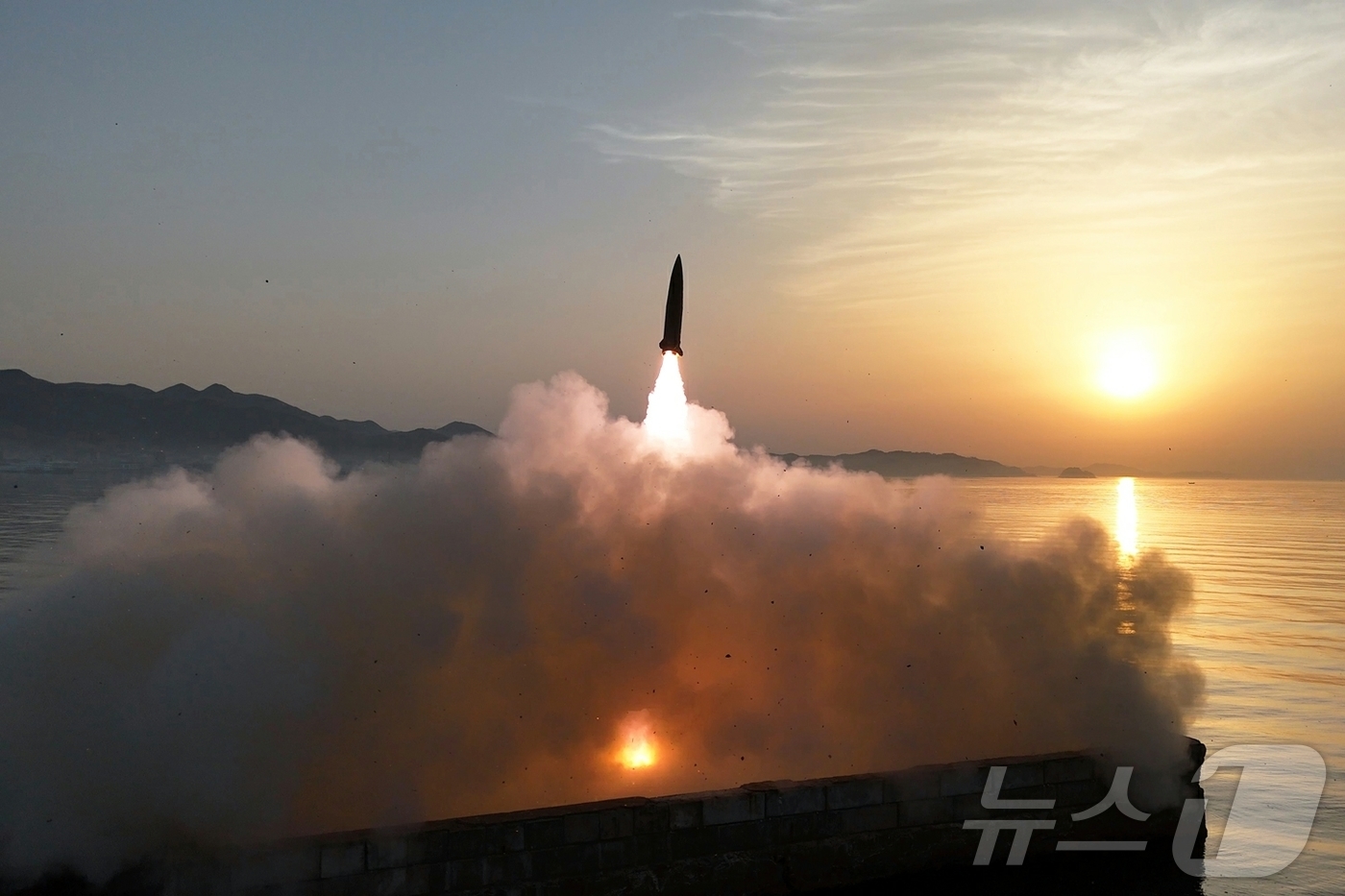
Particularly if cluster bomblets fall on airfield runways or forward unit assembly areas, unexploded ordnance can be left scattered like mines, potentially paralyzing operations — including aircraft takeoffs and landings — for extended periods. That operational-degradation effect supports assessments that the system is designed to undermine force readiness.
Pyongyang’s cluster-munition capability is not yet fielded. Still, the claimed near-doubling of strike area from the Hwasong-11ga to the 11ra in a short span is a warning that the technology may be maturing faster than anticipated.
Analysts say at least 1–2 years may be needed before operational deployment, but they stress that how defenders use that time will shape future defense posture decisions.
The test sends a clear message: a defense apparatus focused on single-warhead interception cannot guarantee protection of the Seoul metropolitan area. Establishing a multilayered intercept architecture that can neutralize dispersed bomblets at high altitude — and a comprehensive redesign of the ROK-U.S. combined defense strategy — are now urgent priorities.
실시간 인기기사
- “Did they deliberately transit on the day of the Treaty of Shimonoseki?”…Ikazuchi’s 13 hours 48 minutes sparks China’s ‘historic anger’
- “Beyond arms deals to surveillance cameras”…Russia’s interior minister visits North Korea, expanding cooperation on regime control
- “Another nation’s war could freeze South Korea’s economy”…East Asian security realities are no longer a distant problem






Most Commented