
Translation result.

Kumyoung karaoke code 4737, TJ karaoke code 3272: Kim Won-jun’s “Show” has remained a karaoke staple since 1996. The song has served as a field-day chant, a baseball crowd anthem and background music at countless events. Ask who wrote and composed it, and most people draw a blank.

The surprising answer is singer-songwriter Kim Dong-ryul.
Known to the industry as a perfectionist, Kim Dong-ryul is less widely recognized for quietly supplying colleagues with memorable songs for more than three decades. Review the credits on major moments in Korean pop history and his name appears repeatedly as composer and arranger.
A high-school song that became a national rallying tune
“Show” was released as the title track of Kim Won-jun’s fifth album in 1996. Kim Dong-ryul wrote the lyrics and music and co-arranged the piece with Kim Young-seok. The session players included N.EX.T, and Jo Kyu-chan contributed the chorus—an exceptional lineup for the time.
The song’s origin comes from Kim Won-jun’s recollection: at a gathering, Kim Dong-ryul asked, “May I play a song I wrote in high school?” and then performed “Show” on the piano. The piece was completed in high school, not later in college. Composer Kim Hyung-seok later insisted, “This has to be track one.”
Instead of Kim Dong-ryul’s usual sweeping orchestration, “Show” features a bright brass arrangement. After its release it was adopted as a rally song and was later adapted as the stadium cheer for Samsung Lions outfielder Choi Hyung-woo. When fans learned the composer’s identity years later, many responded with genuine surprise: “That was his?”
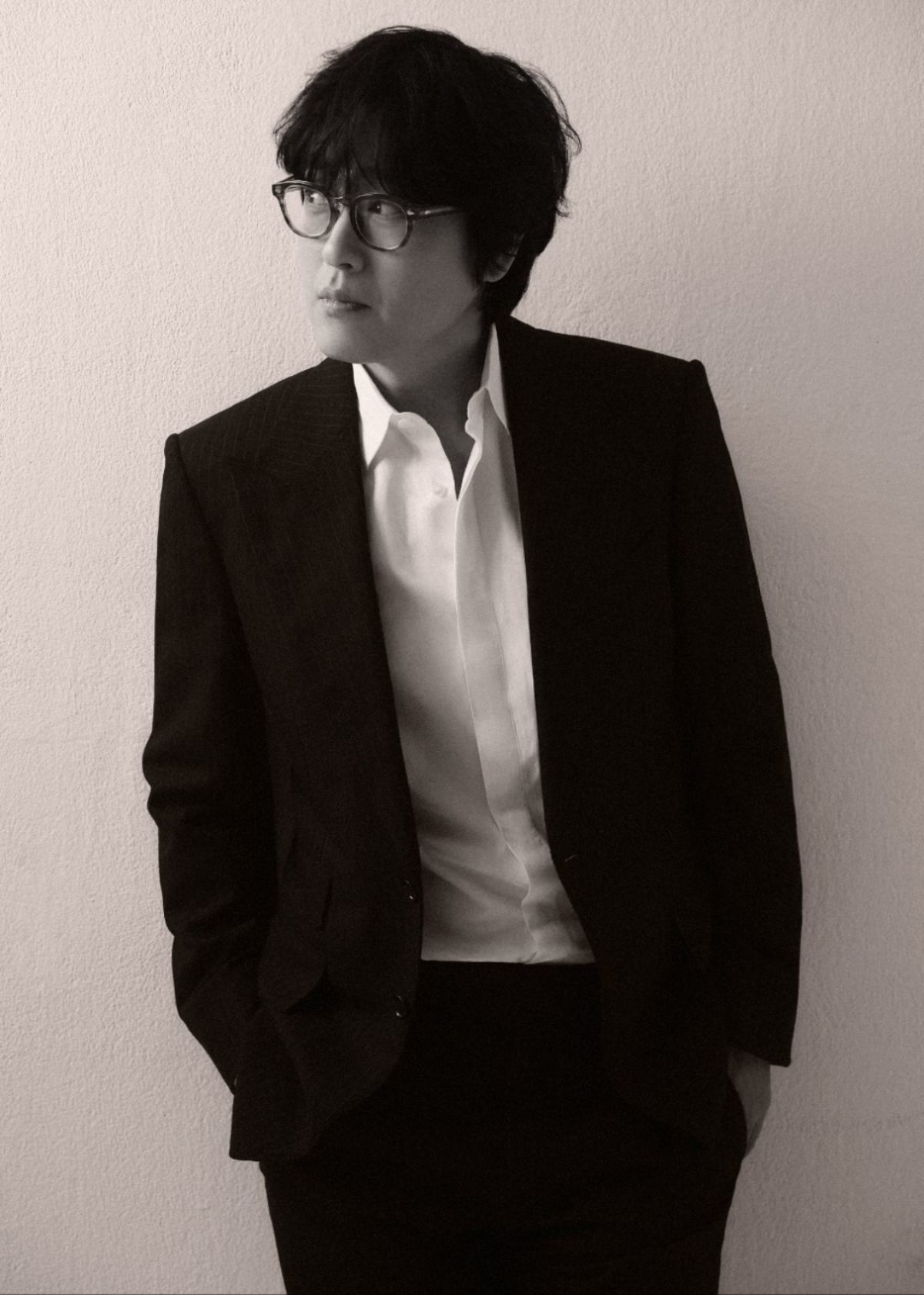
1993 college festival win: the song was written in high school
“Show” was not an isolated case. Kim Dong-ryul’s high-school compositions had already made an impact earlier. He launched his career at the 1993 MBC College Song Festival as one half of the duo Jeonramhoe with Seo Dong-wook. They won both the grand prize and a special award; the winning song, “In My Dreams,” was also written during his high-school years, a revelation that startled the music community.
During the Jeonramhoe era his sound stood apart from prevailing trends. Instead of the flashy synthesizers that dominated the early 1990s, he favored piano and string-centered arrangements. Their signature track, “Sketches of Memory,” is credited with advancing the craft of Korean pop balladry; when the song resurfaced in the 2012 film Architecture 101, listeners treated it like a new discovery nearly 20 years after its debut.
“Carnival” with Lee Juck: a period of genre experimentation
In 1997 Kim formed the project group Carnival with Lee Juck. The collaboration—combining Kim’s lyrical sensibility with Lee’s bold imagination—produced songs such as “Goose’s Dream” and “Back Then.” They experimented with funky, brass-forward arrangements and catchy melodies, deliberately departing from the classic ballad language of Kim’s earlier work. “Goose’s Dream” went on to appear repeatedly on audition shows and at school events, embedding itself in a generation’s collective memory.

Whimoon High School alumni who helped shape ’90s balladry
Lee Seung-hwan and Kim Dong-ryul are alumni of Whimoon High School—Lee the senior, Kim the junior. Their collaborations produced 1995 songs such as “For a Thousand Days” and “Only.”
Kim composed and arranged “For a Thousand Days,” while Lee wrote the lyrics; the sweeping string arrangement matched Lee’s voice and became one of his signature hits. Kim wrote both music and lyrics for “Only.” Crafting lyrics to fit another artist’s voice requires close understanding of that performer’s emotional range and delivery.
Kim also wrote Jang Hye-jin’s 1994 song “One Late Night.” He completed that song in his early twenties, around the time of his debut—already crafting structures tailored to another singer’s plaintive tone.
Berklee and a film-score focus reshaped his arranging
After releasing his solo debut The Shadow of Forgetfulness (1998), Kim studied film scoring and composition at Berklee College of Music in the United States. Given his standing in Korea, the decision was notable.
Film scoring trains composers to shape emotional arcs without dialogue. Applying that discipline to pop-ballad arranging, Kim developed orchestral arrangements with a narrative arc rather than simple accompaniment. He systematized jazz-influenced harmonic progressions, tension chords and modulations uncommon in mainstream pop while still producing accessible melodies.
He is known for preferring live orchestral sessions over virtual instruments. Collaborations with world-class ensembles such as the London Symphony Orchestra reflect that principle; he argues that the subtle nuances and sense of space produced by live players cannot be replicated by MIDI. Audiophiles often cite his records as essential listening for sound quality.
Custom-crafted songs for Park Hyo-shin, Lee So-ra and BoA
Kim applied the same bespoke approach when working with younger artists. For Park Hyo-shin he wrote and composed “Longing” (2001), a restrained portrait of unrequited love that helped define Park’s early musical direction and remains one of his signature early works.
In 2016 he wrote “Don’t Say It’s Not Love” for Lee So-ra, layering a lyrical melody over her deep, melancholic tone. Given both artists’ reputations for emotional depth, the pairing felt like a natural fit.
His work with BoA was more unexpected. On her sixth album (2010) he wrote, composed and arranged “The Person Next to Me.” For an artist known for high-energy dance performance, entrusting her with a lyrical ballad was an unusual choice; fans credit Kim’s arrangement with drawing out a previously hidden vulnerability in her voice.
Shaping John Park’s early albums and Alex’s solo work
Kim played a major role in John Park’s early Korean releases, working on key tracks such as “This Isn’t It,” “That Song” and “Why Would It Be.” Rather than contributing individual songs, he helped shape the albums’ overall tone. Alex, formerly of Clazziquai, also recorded a Kim-written solo track, “Same Dream,” which listeners continue to rediscover for its Kim-inflected balladry.
A baritone voice likened to a cello
Kim Dong-ryul’s voice is an uncommon baritone in Korean pop. He blends chest resonance with mixed-voice high notes to produce both depth and clarity—qualities listeners often compare to a cello. He conveys emotion through mid-to-low-range density and resonance rather than flashy high notes, favoring breath and phrasing over vocal acrobatics; critics often say he sings as if he’s telling a story.
That he writes, composes, arranges, records chorus parts and produces his work explains the long intervals between albums. He rarely delegates, and finishing a record can take years; he is known to revisit an entire project during mixing or mastering to adjust a single subtle sound.
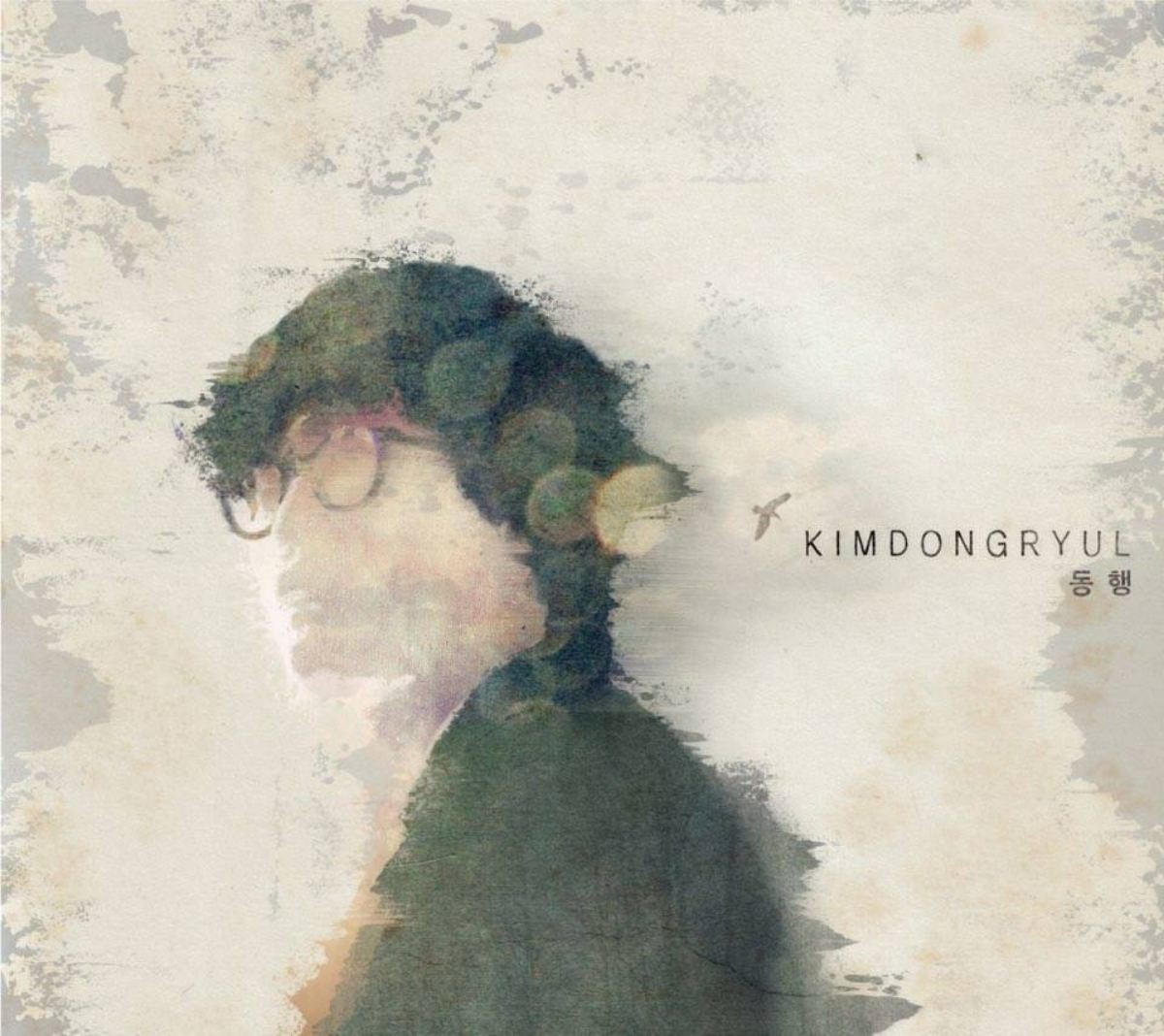
Solo discography and bold genre moves
His solo releases consistently performed on both digital charts and in physical sales. After his debut established him with tracks like “Confession While Drunk” and “Shall I Say I Love You Again?,” songs such as “Like a Child,” “That’s Me,” “Reply” and “At Summer’s Edge” regularly climbed the charts on release.
The 2018 album Golden Mask occupies an unusual place in his catalog. It marked a deliberate genre departure from his signature lyrical ballads and sparked debate among fans—after nearly three decades in the industry, he chose to break his own conventions.
Kim’s concert ticket sales remain among the industry’s strongest despite minimal TV appearances, suggesting his music—rather than media exposure—sustains his audience. Few artists have preserved commercial relevance for more than 30 years in that way. The fact that artists such as Park Hyo-shin, Sung Si-kyung and John Park remake his songs or cite him as an influence shows that the pop-classical ballad approach he helped define remains a living standard for younger musicians.






Most Commented