
Is Changing the Title of Prosecutor General to Public Prosecutor Chief Unconstitutional? A Deep Dive
Daniel Kim Views
Translation result.
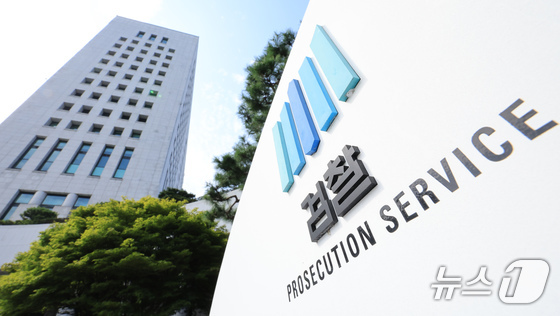
With the Prosecutors’ Office set to be abolished this October, whether to retain the title “Prosecutor General” has become a flashpoint. The Blue House and the government argue the title should remain, while hardliners within the ruling party press for its removal. Legal circles are deeply divided over whether eliminating the title would be unconstitutional.
According to legal sources on the 16th, the prosecution-agency bill submitted by the Ministry of Justice includes a clause stating, “The head of the prosecution agency shall be the Prosecutor General.” The government maintains that, under Article 89 of the Constitution — which sets the Prosecutor General’s appointment as a State Council deliberation matter — the title of the agency’s chief cannot be changed without a constitutional amendment.
The Prosecutor General has been defined as a constitutional “position” since the founding constitution. In 1981 the notion of the Prosecutor General as a “rank” first appeared. The current Prosecutors’ Office Act includes provisions addressing both the position and the rank of the Prosecutor General. Article 6 of the Act distinguishes prosecutors’ ranks as Prosecutor General and prosecutor. Article 12(1)–(2) places the Prosecutor General in the Supreme Prosecutors’ Office, charging that office with handling its affairs, overseeing prosecutorial duties, and directing and supervising prosecutorial staff.
If the law states that the head of the prosecution agency shall be regarded as the Prosecutor General, the office would be the prosecution-agency chief while the formal rank would remain Prosecutor General. Critics contend that would effectively convert a constitutionally mandated position into a statutory rank without a constitutional amendment, raising potential constitutional concerns.
President Lee Jae-myung has expressed the same view as the government. Writing on X (formerly Twitter), he said he could not see a compelling reason to insist on renaming the Prosecutor General as the chief of the prosecution agency when doing so would leave room for constitutional controversy and give opponents a pretext to push back. At a dinner with first-term Democratic Party lawmakers the previous day, he reportedly asked, “What’s the big deal about the title ‘Prosecutor General’?”
Hardliners in the Democratic Party argue the title must be removed because it holds major symbolic significance for prosecutor reform. Choo Mi-ae, chair of the Legislation and Judiciary Committee, and Kim Yong-min, the ruling party’s Judiciary Committee whip, among others, have called for revisions to the government’s prosecution-agency bill on issues including the agency head’s title and protections for prosecutors’ status.
In June last year, Representative Kim introduced a prosecution-agency bill that provides, “The prosecution agency shall have a chief, who shall be regarded as the Prosecutor General under Article 89(16) of the Constitution.” Proponents say the Prosecutor General is merely a title and can be treated as the agency’s chief. Opponents warn such a change could downgrade a Prosecutor General who currently receives ministerial-level status to a deputy-minister-level head of the new agency.
Prosecutors warn that dropping the title could create practical problems. A Supreme Prosecutors’ Office official said, “We could reject police warrants and request supplementary investigations precisely because the prosecution functioned as a superior agency. If we become equal in rank with the National Police Commissioner, judicial oversight will be more difficult.”
The official added there is a risk that the prosecution agency could be reduced to a subordinate body under the Ministry of Justice, which would impair its constitutional role of checking the courts and the ministry. An anonymous prosecutor said that although the Prosecutors’ Office is formally under the Ministry of Justice, the reason the Prosecutor General and the justice minister are treated as equal is to ensure investigations proceed without political interference.
Legal views remain split on whether abolishing the title would be unconstitutional. Lee Chang-hyun, a professor at the Law School of Hankuk University of Foreign Studies, warned that changing a constitutionally specified Prosecutor General into the prosecution-agency chief could raise constitutional issues. By contrast, a lawyer affiliated with the Democratic Party said their review found no practical constitutional problem. That lawyer added, however, that a constitutional challenge could blur the core of prosecutor reform — the separation of investigation and prosecution — and delay its implementation.










Most Commented