■ Kim Tae-young, Tech Growth ReporterScene one. On the 26th, Shinnosuke Abe, manager of Japan’s most popular professional baseball team, the Yomiuri Giants, abruptly resigned. The incident began when Abe stepped in to break up a fight between his two daughters and shoved his 18-year-old eldest daughter after she talked back, knocking her down. Encouraged by the generative AI tool ChatGPT, his daughter contacted a child counseling center; a counselor then reported the incident to police, and Abe was arrested on child-abuse charges.The eldest daughter later issued a statement saying she “was shocked and cried when she saw my father being taken away,” and that “my father never hit me and we reconciled,” but by then the matter had already escalated. Abe offered a tearful apology and left the club he had served for decades.Scene two. That same day, Shinsegae Group issued a public apology over the controversy surrounding Starbucks Korea’s “5·18 Tank Day” promotion. AI again figured into the explanation. In its internal probe, staff said that while trying to match the phrasing and rhyme of a previous event slogan, a generative AI suggested the phrase “a thud on the desk.” They say they did not realize how associating that phrase with the date would provoke outrage. (The reference drew criticism because May 18 marks the Gwangju uprising, a sensitive moment in South Korea’s modern history.)We should not dismiss the domestic-violence episode simply because the alleged victim later minimized its seriousness. And we cannot fully understand the Starbucks case from a single corporate statement. Still, if Abe’s daughter and the Starbucks Korea staff are telling the truth, these episodes illustrate another blind spot of overreliance on AI.In business and education, people are increasingly handing early-stage work to AI. A professor I recently spoke with at Seoul National University warned, “Education teaches students to think critically, but widespread AI use has reduced how often students go through that process. AI can quickly produce a competent, average answer, but if you stop there it’s hard to develop judgment or produce outstanding work.”A research team at the University of Pennsylvania has labeled the tendency to follow AI outputs without independent judgment “cognitive surrender.” In an era when AI can do almost anything, we need to remember that AI does not assume our judgment or our responsibility. Ultimately, it is people who determine the difference between average and exceptional.


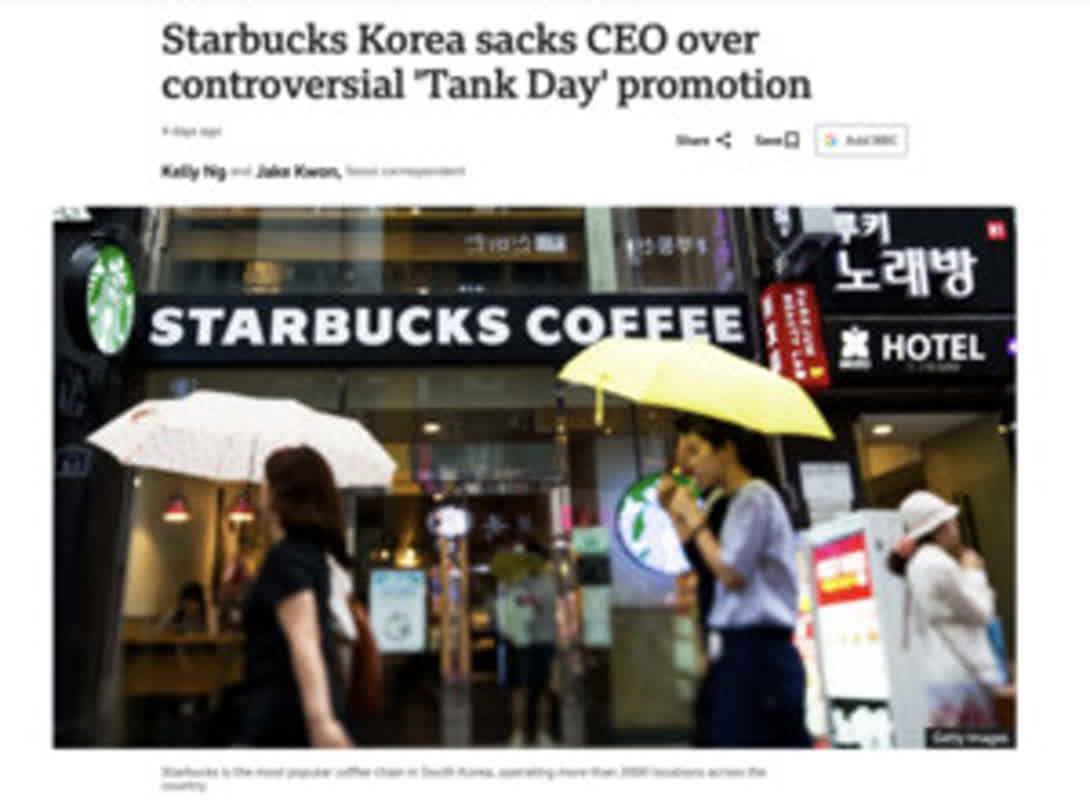 Starbucks Korea CEO Fired Over Controversial 'Tank Day' Promotion
 25,000 Robots vs. Human Workers: The High-Stakes Battle at Hyundai
 Hotel Hygiene Scandal: Cleaner Caught Using Guest Towels to Wipe Toilets
 South Korea's Tech Giant Kakao Faces First Major Strike in 20 Years
 South Korea’s Aging Crisis: How One Leader Is Redefining 'Well-Dying'
 Stop Calling Them 'Hey You': South Korea's New Push for Worker Respect



Most Commented