
Translation result.
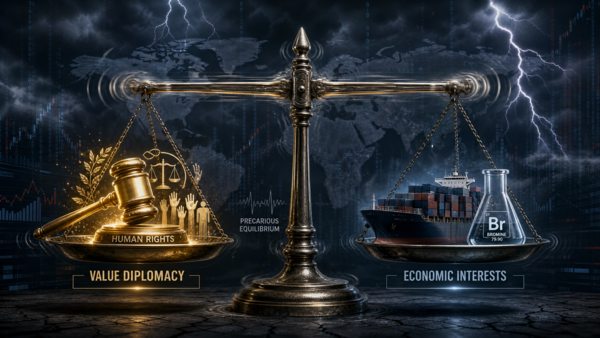
The possibility of executing an arrest warrant for a sitting foreign head of state. That extraordinary directive, delivered through President Lee Jae-myung’s own words, is not mere diplomatic posturing. It is a signal that the government has abruptly shifted the center of gravity of its foreign policy—from prioritizing alliances and practical interests to foregrounding universal human rights and international norms.
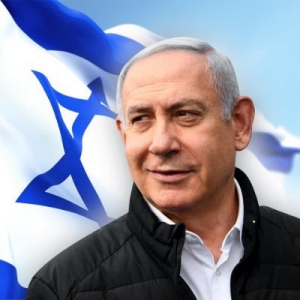
The immediate catalyst was a mid-May Israeli navy operation on the high seas of the Mediterranean that intercepted a Gaza-bound relief flotilla. Israeli forces seized some 50 multinational vessels and detained 428 activists from roughly 40 countries; several South Koreans were among those held.
On the 20th, President Lee characterized the operation as plain “illegal aggression.” He then instructed the National Security Office to assess whether it would be diplomatically and legally feasible to execute an International Criminal Court (ICC) arrest warrant should Prime Minister Netanyahu—who is subject to that warrant—set foot on South Korean soil.
The stated rationale—defending norms and human rights—is not without merit. But placing the government’s responses to different crises side by side exposes a structural imbalance in its foreign policy. Go back just two weeks: on the 4th of this month, the Namu, a merchant ship operated by HMM, South Korea’s largest shipping company, was struck by an unidentified aerial object near the Strait of Hormuz, and a crew member was wounded. Despite the clear security threat, the government offered no direct condemnation of an attacker. Instead, it downplayed the incident, prioritizing the safety of 25 remaining South Korean vessels in the strait and the need to secure oil shipping lanes.
This elastic, asymmetric posture now threatens the real economy and critical supply chains. South Korea sources 97.5% of its bromine imports—a scarce element essential to semiconductor manufacturing—from the Dead Sea coast of Israel. If political frictions lead to export controls, the country’s entire semiconductor production could be brought to a halt.
The diplomatic fallout with allies has been significant. Even before the directive to consider executing the arrest warrant, President Lee’s mid-April social media post comparing Israel to the Holocaust sparked international controversy. That episode presaged strategic friction with the U.S. Trump administration, which has foregrounded a pro-Israel, hardline stance toward Iran.
Earlier this month, U.S. Secretary of State Marco Rubio abruptly canceled a planned visit to Seoul just days before it was due—a development many diplomats see as part of the same pattern. Washington officially cited an emergency trip by Prime Minister Netanyahu as the reason, but in diplomatic circles the cancellation was widely read as a quiet expression of displeasure with Seoul’s perceived anti-Israel posture. In practice, President Lee has not even managed to schedule a meeting with President Trump since taking office. The U.S.-South Korea alliance—the backbone of extended deterrence against North Korea—has begun to show unexpected strains.
The government fell silent on an attack that put a national merchant vessel—and the economy it supports—at risk, hiding behind pragmatic ambiguity. Yet it reached for the most drastic option, considering the criminal arrest of a foreign leader, over the detention of multinational activists in a conflict zone. When who you protect and what provokes outrage vary so dramatically by case, national credibility in foreign policy cannot function reliably.
Value-based diplomacy without consistent principles is an empty slogan. Inconsistent idealism will soon inflict severe damage—paralyzing advanced supply chains and splintering the U.S.-Korea alliance. It is time to set aside ideological tests, confront the harsh realities of international politics, and adopt rigorous, consistent risk management to minimize harm to the nation.







Most Commented