
Translation result.
Vietnam Trips Spark Controversy Over ‘Goody Bag’ Tips
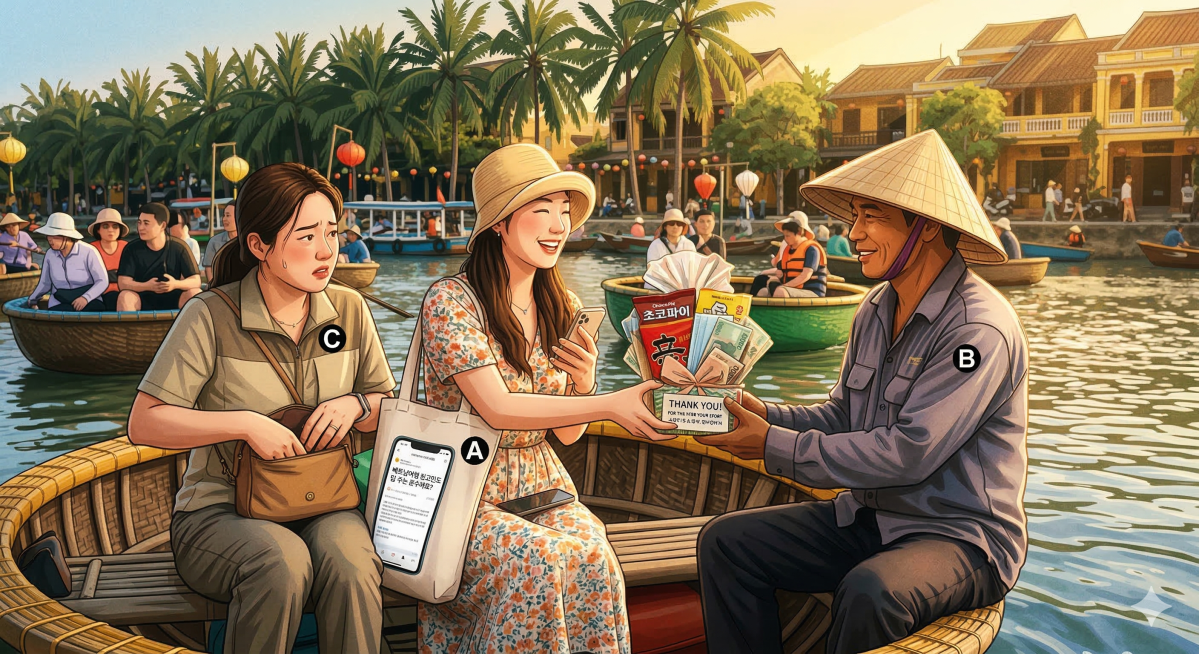
How much should I tip?
That’s the question many travelers ask friends with experience before heading to Southeast Asia. A lot of people assume tipping is expected with every service—but did you know most of Southeast Asia doesn’t have a consistent tipping culture?
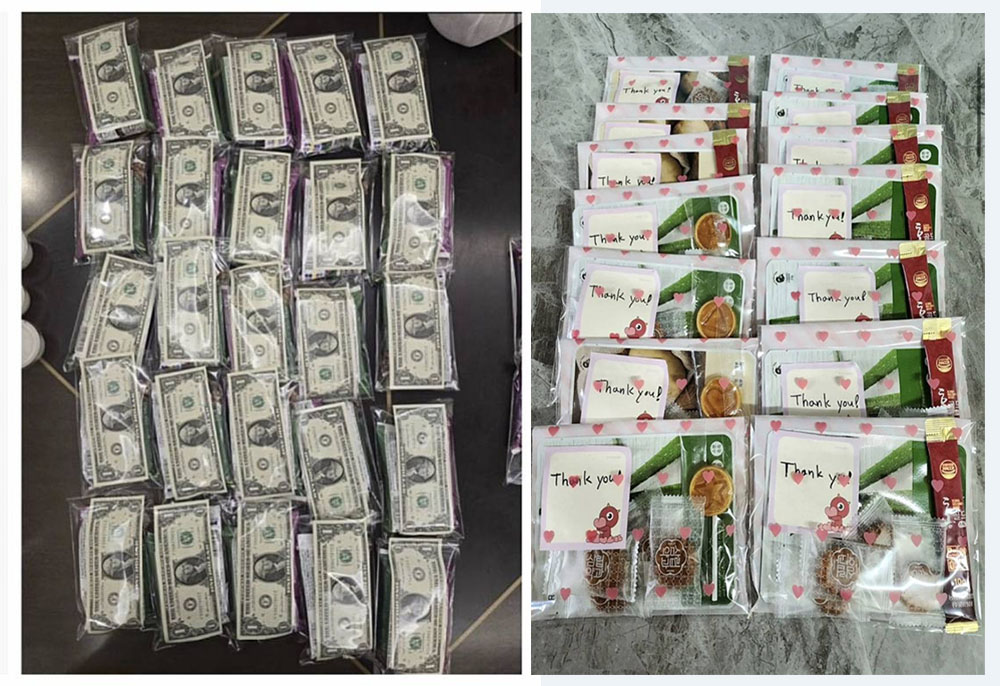
Recently, a new trend among Korean tourists has stirred debate: handing out goody bags—small gift bundles given in addition to any tip. In Korea, goody bags are common at daycare birthdays or Children’s Day, packed with snacks and small treats. On holiday, some travelers began wrapping Korean snacks, candy, sheet masks and a bit of cash into neat goody bags to give to hotel housekeeping, masseuses and guides—and proudly posting about it online.

A surprising debate born at Southeast Asian destinations
While travelers describe goody bags as a way to thank kind service, others find handing out gifts—beyond a small tip—unnecessary or awkward. The bigger concern: in places where tipping isn’t common, Korean visitors may now feel pressured to tip. Critics say Korean tourists risk normalizing an excessive tipping practice.
Unlike parts of the U.S. and Europe, where tipping is practically standard, the tipping landscape in Southeast Asia is different. Tourist-focused businesses such as spas and hotels sometimes receive small tips, but tipping isn’t broadly embedded in everyday social custom. Still, when foreign visitors tip regularly, workers in the tourism sector can start to expect it. That expectation may spread faster in destinations that receive large numbers of tourists from a single country.

The long-running “easy mark” criticism of Korean travelers
Just a few years ago, Korean tourists frequently fell prey to clever upsells and scams from local vendors and brokers. In unfamiliar surroundings and facing language barriers, travelers often paid unfair demands out of fear or frustration.
The victims’ accounts were vivid and blunt. Back then the issue was often called “Southeast Asia overcharging.” In popular resorts, taxi or tuk‑tuk drivers sometimes switched off the meter and insisted on haggling, or asked for 10 to 20 times the normal fare at the destination. Passengers who refused could be left in isolated spots. Some restaurants kept separate Korean-language menus listing prices 1.5 to 2 times higher than the local menu, and added charges like “seat fees” or “ice fees” only to Korean receipts.
Those tactics evolved into a high-profile incident in August 2022 at Hanoi’s Noi Bai International Airport. Rapid antigen test documents submitted by Korean travelers were not accepted, delaying departures. Local brokers then offered re‑tests at rates far above the normal fee—normal test cost (150,000 VND (about 8,500 KRW, about 6.38 USD)), while brokers demanded as much as 850,000 VND (about 48,000 KRW, about 36.00 USD). Faced with the risk of missing flights, many travelers paid the inflated fees, and the episode sparked criticism as an example of unfair charges aimed at Koreans at the airport.
Beyond “easy marks”—a case of voluntary behavior?
But the goody bag debate feels different from past overcharging scandals. A self‑deprecating post titled “Koreans are easy marks in Vietnam because they tip” circulated on an online forum. The author argued that what began as a thoughtful gesture has hardened into an assumption that Korean tourists always tip generously.
Forum users complained that locals now “reach out first whenever they see Koreans,” calling goody bags “a showy habit—something people do for credit when a simple warm thanks would do.” Critics say this isn’t about coercion or scams this time: it’s about Koreans’ own performative generosity and a desire to show off, which has made them volunteer to be easy marks.
Put bluntly: they seem to be stepping forward to be “voluntary easy marks.”
Not everyone sees tipping as a problem. Some defend it: “It’s my money and my way to show thanks—what’s wrong with that?” they argue. For them, tipping is a voluntary expression of gratitude, and no one should police another person’s generosity.

A broader question about travel culture
Vietnam’s tourism authority reports that Koreans make up a large share of recent foreign visitors. From January to October 2025, foreign arrivals reached about 17.2 million, and roughly 3.6 million—about 21%—were from Korea, ranking Korea second only to China.
With so many visitors, repeated behaviors could influence local service practices. Observers emphasize the importance of understanding local customs and norms. The tipping debate is part of that larger conversation: in some places, a polite greeting or a sincere thank-you may be a more natural way to show appreciation than handing over money.










Most Commented