
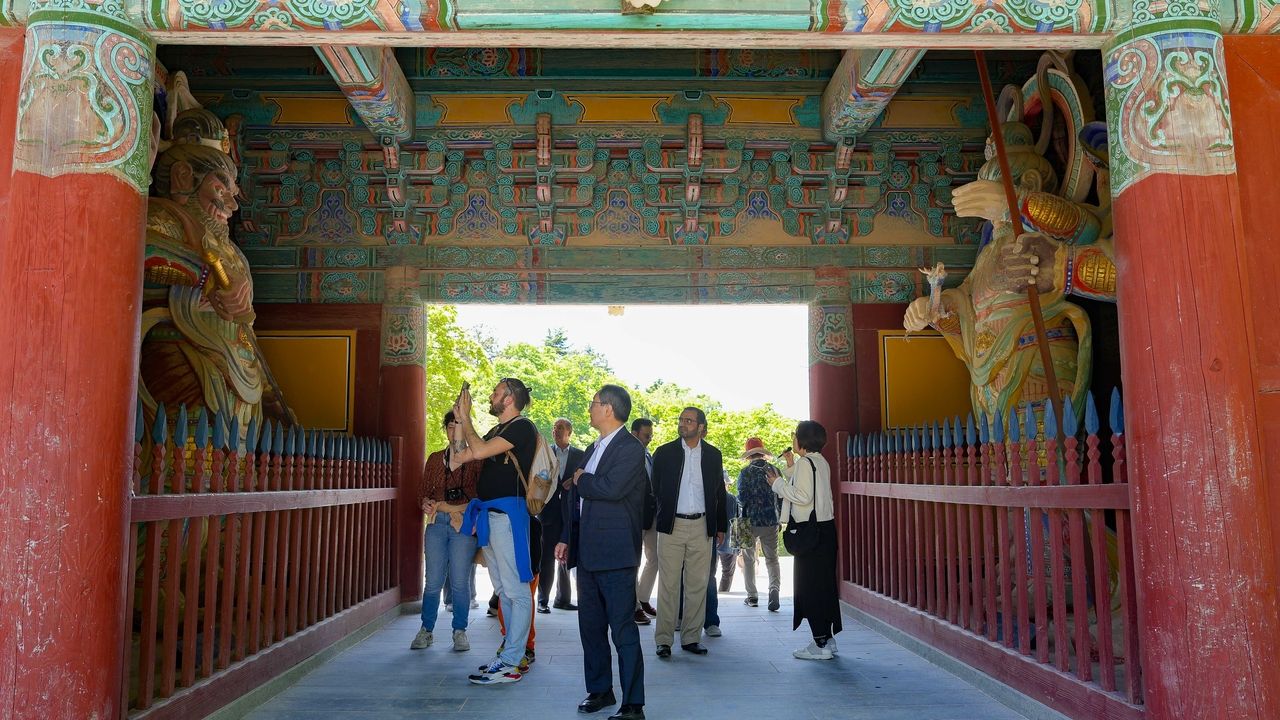
[Herald Economy (Gyeongju) = Reporter Kim Byung-jin] In Q4 2025, North Gyeongsang Province’s tourism market showed solid, measured growth as both domestic and international visitors rose and food- and culture-focused spending trends spread across the region.
According to the Gyeongbuk Culture & Tourism Corporation’s “Q4 2025 Tourism Statistics Analysis,” released on the 15th, visits to North Gyeongsang climbed as non-local domestic visitors increased 16.5% year‑over‑year to 7,039,480, while foreign visitors jumped 20% to 242,146—clear evidence that the regional attention from hosting APEC translated into real, on-the-ground visitation.
Using navigation data, social media signals, and card transactions to profile non-local domestic visitors, analysts identified a distinct, locally driven travel pattern: travelers were intentionally pairing history with food experiences.
Bulguksa stayed firmly at No. 1, but the National Gyeongju Museum surged from 13th in Q4 last year to the second most popular spot. The museum’s “Silla Crown Special Exhibition” earned rave reviews on social media as “an experience of confronting history itself,” cementing it as a must-see stop.
For autumn day trips, Goryeong’s Dasan ginkgo forest and the cosmos flower garden emerged as go-to “picture-perfect” spots, pushing search rankings up to 28th.
Mentions of North Gyeongsang travel on social media rose 33% year‑over‑year. The APEC effect heightened interest in Gyeongju and the Bomun tourist complex, and Andong’s Hahoe Village continued to receive positive reviews—often described as “a history book where tradition and modernity coexist.”
Tourism spending also grew, rising 9.4% from a year earlier to about 1.5021 trillion KRW (approximately $1,126,575,000 USD).
Notable shifts showed up in lodging and dining. Condo spending surged within total lodging expenditures, reflecting stronger demand from families and groups. At the same time, the popularity of regional specialty desserts and café-hopping helped drive a steady uptick in pastry and beverage sales.
Visitors responded particularly well to content that spotlighted each area’s unique charm. By city and county, Yeongyang County led with a 21.4% increase to 84,952 visitors, followed by Mungyeong City (up 21.2% to 617,728) and Yeongdeok County (up 19.4% to 453,114).
Yeongyang captured wellness travelers with its birch forests and the soothing appeal of Dudeul Village. Mungyeong succeeded with combined food-and-experience events like the Yakdol Hanwoo Festival and the Apple Festival.
In Yeongdeok, the opening of a new highway and peak-season demand for snow crab helped drive a significant influx of non-local visitors.
“The fourth quarter of 2025 saw North Gyeongsang’s elevated international profile—from the successful APEC summit—translate into tangible gains in both domestic and foreign visitors,” said Kim Nam‑il, president of the corporation. “Going forward, we will leverage APEC as a valuable tourism Legacy to strengthen Gyeongbuk’s distinctive culinary and experiential programs and build a global destination that travelers keep returning to.”
{vi25}






Most Commented