
Translation result
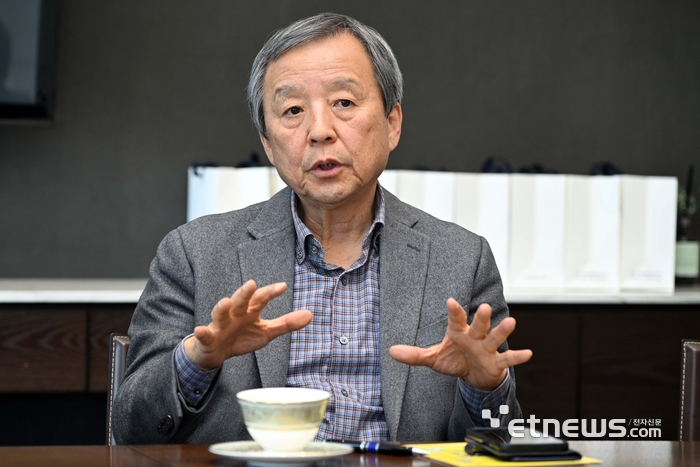
The 13th International e-Mobility Expo opens on the 24th at the Jeju Shinhwa World complex. With 10 days to go, we spoke with Organizing Committee Chair Kim Dae-hwan about the expo’s significance, symbolism and role. Below is a Q&A.
-How has the International e-Mobility Expo grown into a global mobility event over its 13 editions?
△The expo traces its roots to Jeju’s “Carbon Free Island 2030” vision. Local energy-transition pilots—such as the Gapado carbon-free island initiative and the Jeju Smart Grid national demonstration—created the foundation for the event. Launched in 2014 as the 1st International Electric Vehicle Expo, it has since expanded beyond cars to include electric ships, UAM, drones, robots and electrified agricultural equipment. Electrification is now an irreversible trend. In the roughly 200-year history of electric vehicles, it’s significant that Jeju is helping write a new chapter in their mass adoption.
-What is this year’s core theme and message, and what stands out compared with previous editions?
△This year’s theme is “Energy Transition with AI and the Future of e-Mobility in the Era of Digital Transformation.” We are entering a period where AI is becoming core infrastructure for energy and digital transitions. This expo is not just an EV showcase; it maps a future mobility ecosystem emerging from the convergence of AI and digital technologies. That perspective sets it apart from past editions.
-With global automakers and startups participating, which technologies or trends should attendees watch?
△Attendees will see a broad spectrum of electrification technologies—electric cars, electric ships, UAM, drones, robots and electrified farm machinery. Consumers increasingly reject life amid tailpipe emissions; that lifestyle shift toward cleaner environments will drive mass adoption of electrified mobility. We’re at a clear inflection point where electrification is becoming mainstream.
-e-Mobility is expanding into an ecosystem tied to energy, charging and power grids. How will this reshape industry structures?
△By 2026, this transition will go beyond vehicle innovation to change daily life patterns. e-Mobility is evolving into an industrial ecosystem that fuses energy, power grids, digital technologies and AI. That fusion will create a new industrial structure driven by combined energy and digital transitions.
-Holding the expo in Jeju carries strong symbolism. What advantages does Jeju offer as a global e-Mobility testbed?
△Jeju is a rare, ideal global testbed and certification site. The island has distinct seasons and exposes systems to diverse conditions—heavy rain, snow, salt damage and typhoons—making it ideal for validating mobility technologies. Equally important is the user base: roughly 15 million visitors and residents annually. Because Jeju hosts real users across varied conditions, it serves as a world-class proving ground for future mobility technologies.
-The event now draws international organizations, governments and major global companies. What role does the expo play in international cooperation?
△From the outset, our goal was to build a “Davos forum for electric vehicles.” Every spring in carbon-free Jeju, about 10,000 opinion leaders and buyers from roughly 50 countries convene. The International e-Mobility Expo is more than an exhibition; it’s a B2B networking platform where stakeholders coordinate strategy and cooperation for future strategic industries.
-In the era of carbon neutrality and energy transition, what policy and social significance does the e-Mobility industry hold?
△No matter how hungry people are, they won’t live by inhaling exhaust. A societal shift toward cleaner living will drive structural change across industries. We are living through a rare period of major transformation, one that historically produces new industries, new companies and new innovation leaders.
-What should the Korean government and industry prioritize to boost Korea’s e-Mobility competitiveness globally?
△Above all, Korea needs a strategy of selection and concentration. Rather than scattering scarce resources, we should build sustainable industry–academia collaboration systems. Electric vehicle technology dates back roughly 200 years—Thomas Edison experimented with electric cars—but technology alone won’t deliver mass adoption. You need consumers and market demand to sustain supply chains. Jeju’s island characteristics and short travel distances have made it an effective proving ground for EV popularization.
We’re now extending beyond electric cars to electric ships, UAM, drones, robots and farm machinery, shaping a new era of e-Mobility. From the 11th edition onward, we expanded the event into the International e-Mobility Expo and, together with the Global EV Alliance Network (GEAN), are helping lead global adoption.
-What message do you want the 13th International e-Mobility Expo to leave with industry and citizens?
△The expo has grown despite hard times—the THAAD crisis eight years ago and five years of COVID-19. Going forward, each spring in carbon-neutral Jeju we will gather about 10,000 people from roughly 50 countries to debate the future of e-Mobility amid energy and digital transitions. We are also pursuing an international electric vehicle expo in Pyongyang in partnership with GEAN. From Hallasan to Baekdu, we’ll build the future of e-Mobility together.
Hyunmin Kim, Reporter minkim@etnews.com






Most Commented