
2026 Kia Ray Buying Guide: Top Reasons to Choose This Affordable Hybrid or Electric Vehicle
Daniel Kim Views
Here is the translated content with numerical and financial data converted based on the original Korean content:
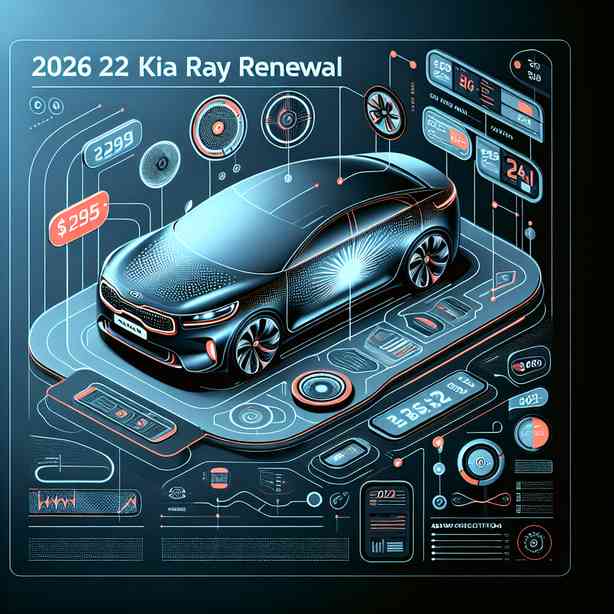
2026 Kia Ray Refresh: Pricing and Specs
Key Updates and Features of the 2026 Kia Ray
Kia has given its popular city car, the Ray, a comprehensive refresh for 2026. This update brings significant improvements in design, technology, safety, and efficiency to meet the growing demand for practical and economical vehicles. The new Ray is tailored for urban drivers, featuring a compact footprint ideal for city streets, enhanced fuel economy, advanced safety systems, and user-friendly features that boost its competitiveness in the segment. With its fresh design language, driver-assist technologies, roomier interior, and eco-friendly options, the Ray aims to deliver a well-rounded package of practicality, style, and safety in the compact car segment.
2026 Kia Ray Refresh: Pricing Details
Kia has strategically priced the 2026 Ray to maintain its appeal in the entry-level market. The base model starts at approximately 15.9 million KRW (about 10,812 USD), with higher trims and options pushing prices up to around 22.9 million KRW (about 15,572 USD). While final prices may vary based on trim levels, optional packages, and local taxes, the Ray offers strong value with a rich set of standard features compared to its competitors. The main trim levels – Standard, Prestige, and Signature – each offer distinct features and option packages to cater to various buyer preferences and budgets.
Buyers can further reduce their costs through government incentives for compact cars, eco-vehicle subsidies, and dealer promotions. For instance, opting for the HYBElead model can qualify buyers for additional rebates. Kia also offers attractive financing options, including zero-interest installment plans and trade-in deals, significantly enhancing the Ray’s affordability.
Exterior Design and Styling
The 2026 Ray sports a sharper and more modern look compared to its predecessor. Its front end features Kia’s latest family grille design and LED daytime running lights, giving it a bolder and more refined appearance. While retaining its signature boxy silhouette, Kia has added more pronounced character lines and new wheel designs to create a more dynamic profile. The rear showcases vertical LED taillights, a wider tailgate, and a clean bumper design, balancing practicality with a strong presence on the road.
Kia offers a wide range of color options, including two-tone roof combinations, exclusive badging, and accessory packages. These customization options are particularly appealing to younger buyers looking to personalize their vehicles. Overall, the Ray’s exterior design successfully combines simplicity with distinctive styling, achieving a premium feel that exceeds expectations for its class.
Interior Space and Convenience Features
Despite its compact exterior dimensions, Kia has maximized interior space in the 2026 Ray. Front legroom and headroom have been noticeably increased, while the second-row seats now offer sliding and folding capabilities for versatile cargo configurations. The trunk capacity starts at a respectable 319 liters and expands to over 1,100 liters with the rear seats folded, providing practical space for short family trips or larger loads.
The Ray’s tech features include either an 8-inch or 10.25-inch touchscreen, wireless smartphone charging, a four-way power-adjustable driver’s seat, automatic climate control, remote start, smart key, rearview camera, and Apple CarPlay and Android Auto compatibility. The infotainment system supports over-the-air (OTA) updates, ensuring easy software upgrades and new feature additions.
Kia has also introduced several class-first features, including heated and ventilated front seats, rear USB ports, an in-cabin air purification system, and an upgraded speaker system. These amenities are designed to enhance comfort and convenience for both drivers and passengers during daily commutes.
Powertrains and Performance
The 2026 Ray offers a range of powertrain options to suit different buyer needs. The standard gasoline engine is a 1.0-liter three-cylinder unit producing 78 horsepower and 9.6 kgf·m of torque. It achieves an impressive combined fuel economy of 16.5 km/L (about 38.8 mpg US) with 15-inch wheels, making it one of the most efficient in its class.
For those seeking even better efficiency, the HYBElead hybrid variant combines the 1.0-liter engine with an electric motor, delivering a total system output of 109 horsepower and achieving a remarkable 22.3 km/L (about 52.4 mpg US) combined. The all-electric model features a 38.3 kWh lithium-ion battery, offering a range of up to 305 km (about 190 miles) on a full charge. It can be fast-charged to 80% capacity in about 40 minutes.
A smooth-shifting six-speed automatic transmission comes standard across the range. The HYBElead and EV versions incorporate specialized reduction gearing and regenerative braking systems to maximize energy recovery and overall efficiency. This diverse powertrain lineup ensures the Ray can meet the needs of city drivers, commuters, and eco-conscious buyers alike.
Safety Features and Advanced Technology
The 2026 Ray comes equipped with an impressive array of safety features, many of which are class-leading. Standard across all trims are forward collision-avoidance assist (FCA), lane-keeping assist (LKA), lane-following assist (LFA), high-beam assist (HBA), and driver attention warning (DAW). Higher trims add more advanced features like blind-spot collision-avoidance assist (BCA), smart cruise control (SCC), lead vehicle departure alert (DAA), and rear cross-traffic collision-avoidance assist (RCCA).
Kia has also strengthened the Ray’s body structure, incorporating a higher percentage of ultra-high-strength steel and structural adhesives to enhance crash protection. Standard safety equipment includes six airbags, three-point seatbelts, rear parking sensors, emergency stop signal, and ISOFIX child-seat anchors. The Ray also comes with electronic brake-force distribution (EBD), electronic stability control (ESC), and a tire-pressure monitoring system (TPMS) as standard.
For those seeking even more advanced features, Kia offers smart parking assist, remote smart parking assist (RSPA), a 360-degree surround-view monitor, and rear cross-traffic collision assist. These technologies help the Ray deliver safety and convenience features that rival those found in premium compact models.
Fuel Economy and Eco-Friendly Credentials
The 2026 Ray stands out in its class for fuel efficiency and environmental performance. The gasoline model achieves a combined rating of 16.5 km/L (about 38.8 mpg US), while the HYBElead hybrid pushes this to an impressive 22.3 km/L (about 52.4 mpg US). The all-electric variant offers a 305 km (about 190 mile) range and an energy efficiency of 5.1 km/kWh (about 3.17 miles per kWh).
Both the HYBElead and EV models have received low-emission certifications, scoring well in CO2 and particulate reduction. The Ray incorporates eco-friendly technologies such as a battery management system, regenerative braking, and an Eco drive mode. Buyers of qualifying low-emission models may also be eligible for benefits like reduced congestion charges and discounted public parking rates.
With its strong fuel economy figures and eco-friendly options, the 2026 Ray refresh appeals to buyers prioritizing both economic and environmental considerations in their vehicle choice.
Market Competitiveness and Outlook
The 2026 Ray refresh solidifies its position as a strong contender in the compact car market. It leads the pack in interior space utilization, fuel economy, advanced safety features, and powertrain diversity. The model has found particular resonance with single-person and two-person households, young professionals, couples, and older buyers who prefer city-friendly vehicles.
Despite recent market trends favoring SUVs and larger sedans, Kia’s tailored lineup, competitive pricing, and rich feature set are helping the Ray regain market share. Additional factors supporting its appeal include tax incentives, lower running costs, and ease of parking in urban environments.
As global automotive policies continue to push for greener transportation solutions, the Ray’s expanded HYBElead and EV options position it well for future mobility trends, ensuring its competitiveness in the evolving automotive landscape.
Key Considerations When Buying the 2026 Ray
Prospective buyers of the 2026 Ray should carefully compare trim levels and option packages to find the best match for their driving needs and budget. Consider whether the gasoline, HYBElead, or EV powertrain best suits your lifestyle, and verify that desired safety and convenience features are included or available as options.
To maximize value, take advantage of available incentives such as compact car subsidies, eco-vehicle rebates, and manufacturer promotions. Be aware that popular trims may have wait times, so plan accordingly with dealer reservations and consultations. Don’t forget to factor in insurance, registration, and ongoing maintenance costs when setting your overall budget.
The Ray offers numerous customization options and accessories, allowing buyers to tailor the vehicle’s appearance and functionality to their personal preferences.
Final Verdict and Recommended Buyers
The 2026 Kia Ray refresh stands out as one of the best offerings in the compact car segment, blending modern design, advanced technology, multiple powertrain options, and competitive pricing. It’s an excellent choice for urban dwellers, budget-conscious young professionals, small households seeking spacious interiors in a compact footprint, and drivers interested in eco-friendly transportation.
With its lower running costs, tax benefits, and easy maneuverability, the Ray excels as a city car. For those seeking a compact vehicle that balances safety, comfort, style, and economy, the 2026 Kia Ray refresh presents a compelling option.
Beyond its success in the domestic market, the refreshed Ray shows potential to compete effectively in the global small car segment. Kia’s commitment to ongoing product improvements and customer-focused services is likely to further expand the Ray’s appeal to a broader range of buyers in the coming years.








Most Commented