
Translation result.
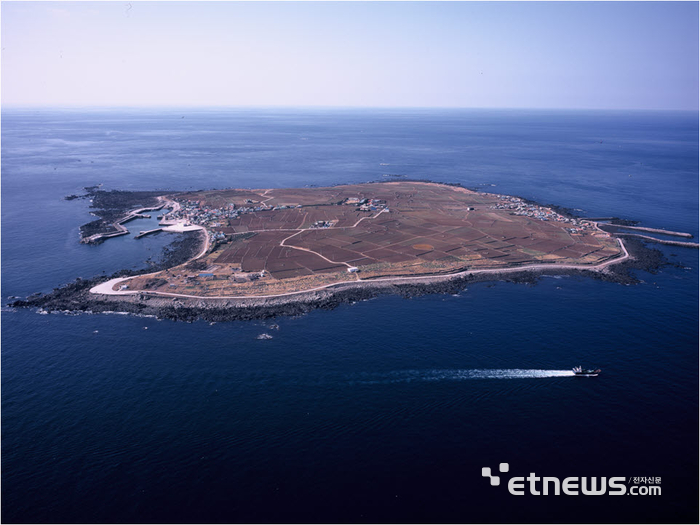
It began on Gapado, an “island within an island” at the southern tip of Jeju. Sitting beside Marado—the country’s southernmost point—Gapado was, until about a decade ago, a quiet outpost that drew fewer than 5,000 visitors a year. At the time, few imagined this tiny community would spark the “Carbon-Free Island” idea or help kickstart an electric-vehicle revolution.
The shift started with grassroots volunteer work. Young residents left for jobs and schooling on Jeju’s main island and the mainland, leaving a mostly elderly population behind. Small Jeju companies, forming one-company–one-village partnerships, led ongoing volunteer efforts—painting, electrical work and home repairs—that helped keep the community viable.
In 2009, professors, journalists, financiers, entrepreneurs, engineers and NGO members formed the Group for People Who Love Gapado (GASAMO). They launched a Carbon-Free Island initiative aimed at protecting the island’s identity while making Gapado energy self-sufficient through renewables. GASAMO played a central role in bringing underground utility lines and a national microgrid pilot to the island.
Few realize that Jeju’s ambitious Carbon-Free Island 2030 plan actually traces its roots to Gapado.
Building on GASAMO’s work, the International Green Island Forum formed in April 2012 as a global network advocating greener island solutions. The forum explored technical pathways to make Gapado carbon-free. By hosting conferences, identifying benchmark cases and connecting with green-island advocates worldwide, it naturally became the driving force behind the International Electric Vehicle Expo.
Another pillar was the Jeju Smart Grid Company Association, established in June 2011. It brought together companies, IT firms and startups involved in the Jeju smart-grid demonstration zone that began in late 2009 in Gujwa-eup, Jeju City. Together with GASAMO, the group promoted exchanges with Bornholm, Denmark—a well-known renewable-energy island—backed by Jeju’s Smart Grid Division and Jeju University’s Smart Grid Research Center.
The 2012 unveiling of Jeju’s future vision, Carbon-Free Island 2030, and that year’s World Conservation Congress helped build momentum. Efforts to make Jeju a sustainable green island, identify new growth engines and cultivate globally competitive small companies increasingly converged on a single technology: electric vehicles. Organizers began building traction through forums, seminars and small exhibitions.
Members from industry, academia, research and government—centered on the International Green Island Forum and the Jeju Smart Grid Company Association—then campaigned directly to the Ministry of Trade, Industry and Energy, the Ministry of Environment and members of the National Assembly. Their persistent advocacy paid off: in 2013 the International Electric Vehicle Expo was selected as part of Jeju’s regional economic development and leisure-style MICE initiative.
On March 15, 2014, the inaugural International Electric Vehicle Expo opened. The weeklong event featured 41 exhibitors and attracted about 47,000 visitors, surprising industry and government stakeholders with its strong reception. Early skeptics who asked, “Do you even know what an expo is?” or “Why host a motor show in Jeju?” were soon acknowledging the island’s new potential.
By 2021—ten years after those early advocates began building a foundation—the International Electric Vehicle Expo had grown into an international trade show and academic forum, hosting roughly 500 companies from 50 countries and drawing about 50,000 attendees.
Reporter Hyunmin Kim minkim@etnews.com





Most Commented