
Translation result.
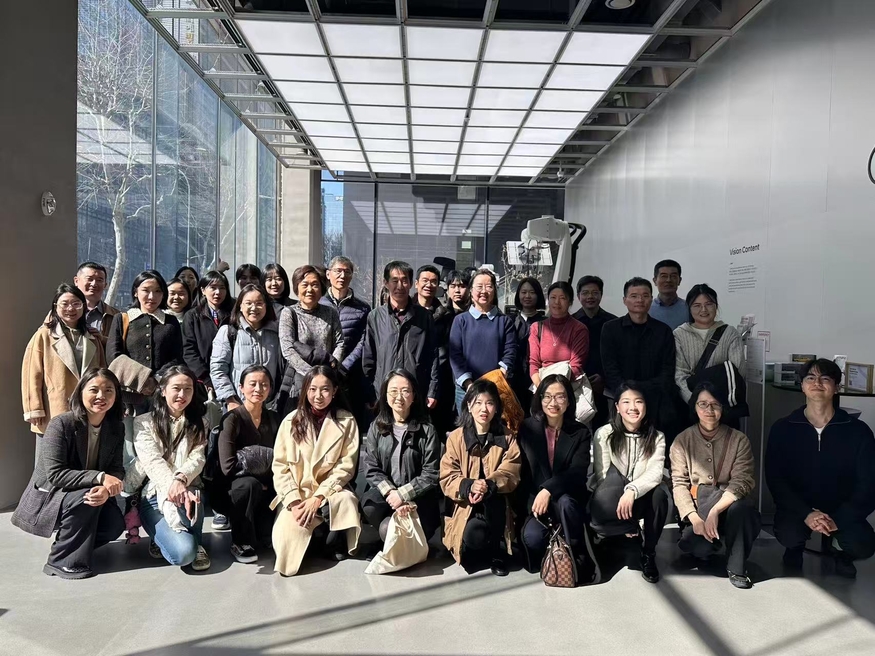
[The Dguru=Reporter Jeong Ye-rin] A delegation from the Chinese Embassy in Seoul visited Hyundai Motor Group and Kia’s user-experience (UX) mobility research hub to evaluate the automakers’ competitiveness in next-generation technologies. With Hyundai Motor Group accelerating electrification and localization to regain momentum in China, the visit could help deepen bilateral automotive cooperation.
On the 20th, the Chinese Embassy in Korea said Economic Counselor Wang Zilin visited UX Studio Seoul in Gangnam on the 13th. The visit was arranged at Hyundai’s invitation and included guided tours and hands-on demonstrations of vehicle R&D and design workflows.
Wang called Hyundai Motor an important corporate group in South Korea’s investment in China and said he expects the company to leverage its strengths to deepen its presence in the Chinese market. He added that he hopes Hyundai and Chinese partners will build a Korea–China automotive innovation network to deliver new mobility experiences.
Hyundai said the group has long prioritized aligning brand and experience and will continue to deepen practical cooperation with China. The company said it plans to design products that meet Chinese consumer demand and to contribute further to Korea–China economic and trade ties.
UX Studio Seoul, opened by Hyundai and Kia in July last year, is an experiential R&D space that incorporates user participation into vehicle development and design. Unlike a conventional showroom, it combines customer experience with R&D capabilities and is equipped to support the shift to software-defined vehicles (SDVs) and the era of autonomous driving.
Hyundai has recently reorganized its China operations to strengthen a China-tailored electrification strategy. The company has established a joint R&D framework with Beijing Automotive Group (BAIC) and is repositioning Beijing Hyundai from a production-and-sales unit into a China-focused technology and product development hub. See our Jan. 16, 2026 exclusive: Hyundai President Munyos met the BAIC chairman to overhaul joint-venture operations and reposition it as a technology and product development center
In October, Hyundai announced its \”Smart Start 2030\” strategy, pledging to introduce six electric-vehicle lineups by 2030. The planned portfolio spans C- to D-segment sedans, SUVs and MPVs and aims to restore brand trust and grow market share with products tailored to Chinese buyers.
Regaining competitiveness in China, the world’s largest EV market, remains a core challenge for Hyundai. The company sold more than 1 million vehicles in China in 2016, but sales declined amid the rise of local rivals and shifting market conditions. Sales totaled 169,765 units in 2024.





Most Commented