
Translation result
● Model 3 Performance and Model YL prices rise up to 5,000,000 KRW (about $3,750) … Model Y Long Range AWD up 4,000,000 KRW (about $3,000)
● Tesla cut prices by as much as 9,400,000 KRW (about $7,050) at the end of last year … then reversed course in just three months
● Option policy updated … White seats discontinued, consolidated into ‘Zen Gray’ seats
Hello.
I’m Uniz (YukaPost), an automotive influencer.
Do buyers still choose electric cars primarily to save on operating costs, or are they now weighing broader market trends as well?
Rising tensions between the U.S. and Iran have disrupted crude supplies and pushed fuel prices higher at home.
As drivers feel the squeeze, interest in electric vehicles — which typically have lower running costs — has picked up again.
But at this moment Tesla has shifted the market tone again by raising Model 3 and Model YL prices by up to 5,000,000 KRW (about $3,750).
Consumers who were considering EVs to avoid fuel bills now face higher sticker prices as well. We need to watch whether this adjustment remains a simple price hike or changes the criteria Korean buyers use to choose EVs.
Tesla raises prices again
Tesla Korea surprised the market on the morning of April 10 by increasing prices on several top-selling models.
The focus of the adjustments was the Model 3 and Model YL.
The Model 3 Performance jumped from 59,990,000 KRW (about $44,993) to 64,990,000 KRW (about $48,743) — a 5,000,000 KRW (about $3,750) increase. The Model Y Long Range AWD rose from 59,990,000 KRW (about $44,993) to 63,990,000 KRW (about $47,993) — up 4,000,000 KRW (about $3,000). The recently highlighted Model YL also climbed from 64,990,000 KRW (about $48,743) to 69,990,000 KRW (about $52,493), a 5,000,000 KRW (about $3,750) rise.
On paper this looks like a straightforward price change, but consumers will notice the impact.
Subsidies and the final out-the-door price often determine EV purchases. These increases do more than add optional extras — they move buyers into a higher budget bracket.
The mood three months ago looked completely different
Timing matters.
As recently as the end of last year, Tesla cut some model prices by as much as 9,400,000 KRW (about $7,050) in an aggressive push.
Consumers responded positively and sales rose quickly.
Last month, Tesla sold 11,130 vehicles and topped imported brand sales.
Given that momentum, this latest hike reads less like a simple cost pass-through and more like a strategic bet that demand will hold even at higher prices.
Why the Model 3 and Model YL hit buyers harder
This round of increases will be most noticeable for the Model 3 Performance and Model YL.
The Model 3 is one of the most popular imported electric sedans in Korea.
Buyers praise its driving dynamics, over-the-air software updates and charging network.
But once the price moves from the low-60 million KRW range into the mid-60 million KRW range, many buyers stop seeing it as a value-oriented EV.
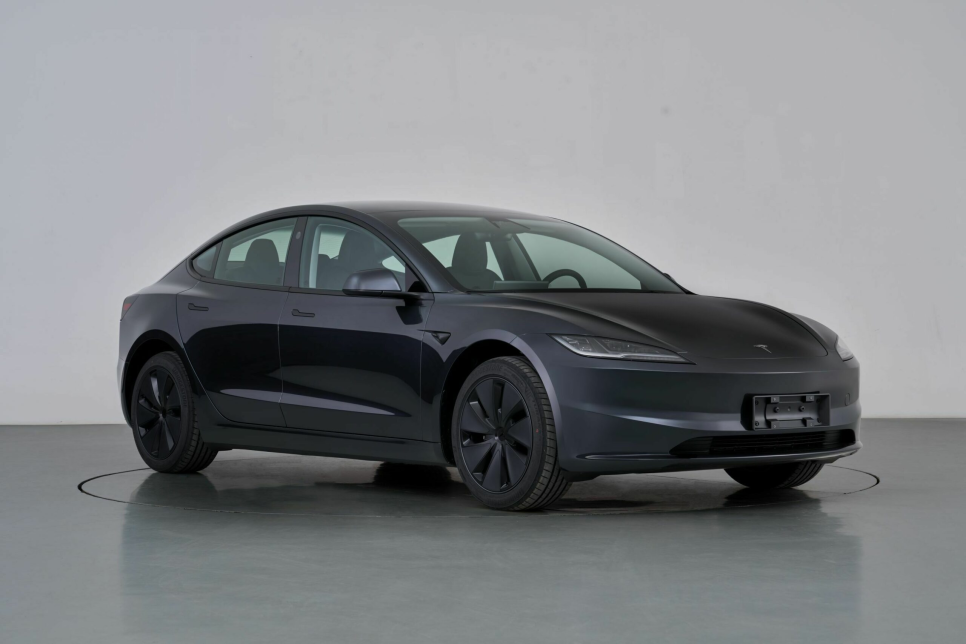
Meanwhile, the Model YL targets family electric SUV buyers.
With a six-seat layout, wider body and an advertised range of about 553 km (roughly 344 miles), it emphasizes practicality.
But with the price now in the 69,990,000 KRW (about $52,493) band, it faces renewed scrutiny as buyers reassess value rather than treat it as an automatic choice.
Options changed too — and that raises the perceived price
The shift didn’t stop at list prices.
Tesla also revised option policies.
The 1,286,000 KRW (about $964) white-seat option previously available on Model Y RWD and Long Range AWD has been discontinued and replaced with a single 1,929,000 KRW (about $1,447) ‘Zen Gray’ seat option.
In addition, the 20-inch Helix 2.0 wheel finish changed from chrome to dark gray.
These may look like cosmetic updates, but they increase what buyers actually pay when configuring a car.
Once base price and option costs are combined, the perceived increase is larger.
It becomes clearer when you compare rivals
The Model 3 competes in the imported electric sedan segment alongside the BYD Seal, BMW i4 and Polestar 2.
Each offers distinct strengths, and price ranges are converging.
Where Tesla once held a clear pricing edge, these hikes put it in a range where buyers compare it directly with rivals.
The Model YL faces a similar dynamic.
Domestically, it overlaps with demand for the Kia EV6 and Hyundai Ioniq 5.
On cabin space and family utility, it competes with local mid-size electric SUVs; on brand and software experience, Tesla retains advantages.
The Model YL’s six-seat layout differentiates it from domestic mid-size electric SUVs by offering a family-focused approach rather than just extra space.
Editor’s note
This price increase carries implications beyond a simple list adjustment.
Tesla appears to believe it has gained a degree of pricing power in the Korean market.
If sales remain steady after the hikes, other imported EV brands may shift away from discount-driven strategies.
Conversely, if consumers pull back, price competition could return quickly.
When fuel prices rise, EVs can look like a smarter choice.
But when a leading EV brand like Tesla starts raising prices, buyers revisit the math.
Ultimately, the question isn’t whether it’s an EV, but whether the price still delivers clear value.
These price increases for Tesla’s Model 3 and Model YL have reopened that question in Korea.
We’ll watch whether buyers continue to choose them at these levels or whether consumer expectations shift again.
Please leave your thoughts in the comments.






Most Commented